
<– Part 172 – November 4, 1917 | Part 173 – November 11, 1917 | Part 174 – November 18, 1917 –>
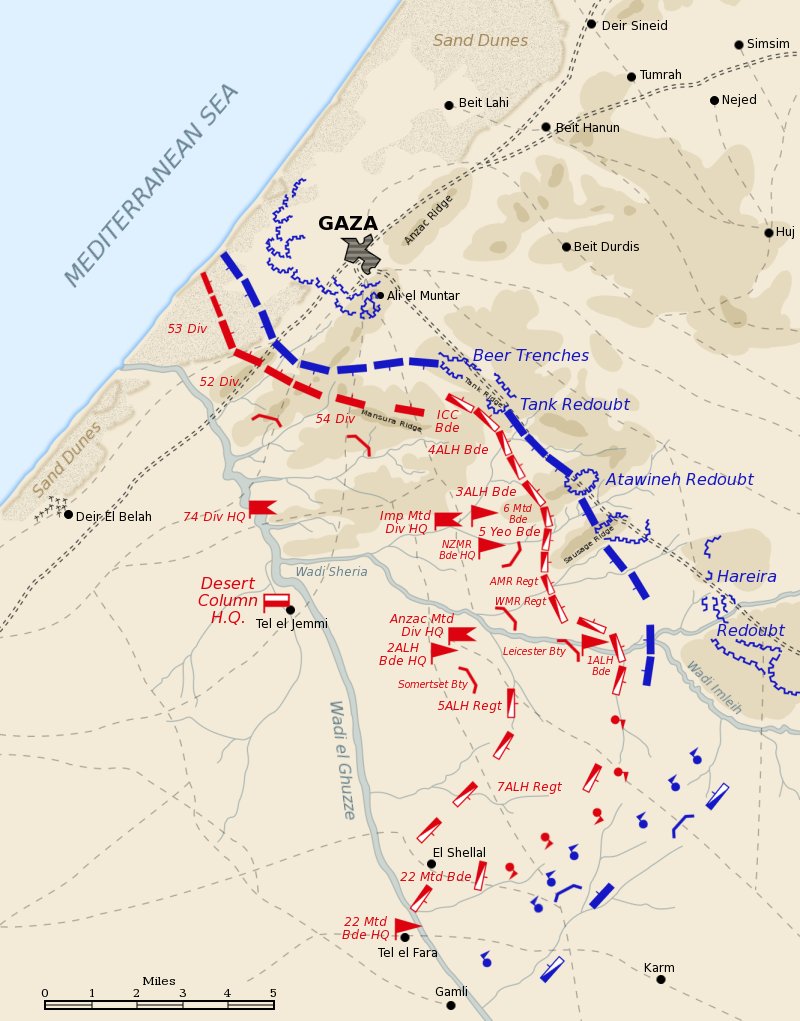
Map of the Second Battle of Gaza

New York Times headline, November 9, 1917
Following two British defeats approaching Gaza, a new commander launched a night attack last month, and following a gradual series of Ottoman trenches being taken, Ottoman supplies to the city being cut off, and a continual bombardment beginning October 27, British forces entered Gaza November 7, finding the village abandoned. Casualties amounted to 2,700 British to 1,500 Ottomans, including 300 captured. Elsewhere in Southern Palestine, victorious British forces at Beersheba push on to Tel el Khuweilfe, in the Judean hills. British cavalry charges throughout the region have been successful in breaking Ottoman defenses.

2nd Moscow Women Death Battalion, the final defenders of the White Palace
Following growing disillusionment with the Provisional Government of Russia, in Petrograd, Bolshevik forces assaulted Kerensky’s government on November 7, helped by the arrival of pro-Bolshevik marines and other sailors. Red Guard forces elsewhere took key military, government, and other key facilities. The Bolshevik forces were held up at the Winter Palace, where the government was supported by 3,000 soldiers. During the evening, groups of soldiers left, while a cruiser fired a blank shot towards the palace at 9:45.
By 2am on November 8, the Bolsheviks entered the palace, and the government surrendered. In all, minimal resistance during this October Revolution (the Russians still use the old-style calendar) led to a nearly-bloodless revolution. The center & right wing soviets are protesting this “illegal” taking of power by the leftist Bolsheviks and walked out of the assembly – Leon Trotsky mocking them with, “You are pitiful isolated individuals; you are bankrupts; your role is played out. Go where you belong from now on – into the dustbin of history!” Vladimir Lenin was elected the new Russian leader later that day; on November 9 the Mensheviks (center-right) declared Georgia an independent republic. Protests against the Bolsheviks began November 10, and the following day Kerensky himself entered Petrograd with a Cossack force and demanded the garrison to surrender, who refused. Kerensky then fired on them before withdrawing – a fatal mistake, as this is exactly what the deposed Tsar would have done.

Armando Diaz in 1921

Luigi Cadorna
On November 8, Armando Diaz was appointed Chief of the General Staff of the Italian army, following Luigi Cadorna’s disaster at Caporetto, called “the greatest defeat in Italian military history.” Italian forces continue retreating towards the Piave river and Monte Grappa.
On November 10, British forces finally reached Passchendaele at 8am, following the third stage’s beginning only two hours earlier. The Third Battle of Ypres is over, with most objectives reached, although still just short of the Passchendaele-Westrozobeke Ridge line. With winter approaching, fighting is expected to wind down. In this latest iteration of Ypres, 300,000 Allies and 300,000 Germans were casualties
Pingback: Dispatches from the Front – November 4, 1917 – The 4G Blog
Pingback: Dispatches from the Front – November 18, 1917 – The 4G Blog