<– Part 99 – June 11, 1916  | Part 100 – June 18, 1916 |  Part 101 – June 25, 1916 –>

German trenches destroyed in the shelling.

The fighting at Mont Sorrel ended June 14. After 1.5 days of intense shelling of their trenches, the Germans were taken by surprise and forced rearwards. Several counter-attacks failed, and the Germans have settled into new defensive lines.

Brusilov’s offensive against the Austro-Hungarians and Germans is slowing, as his supporting offensives are not being executed. A minor one began earlier today, led by Alexei Evert, commander of the Russian West Army Group.


<– Part 98 – June 4, 1916  | Part 99 – June 11, 1916 |  Part 100 – June 18, 1916 –>

HMS Hampshire

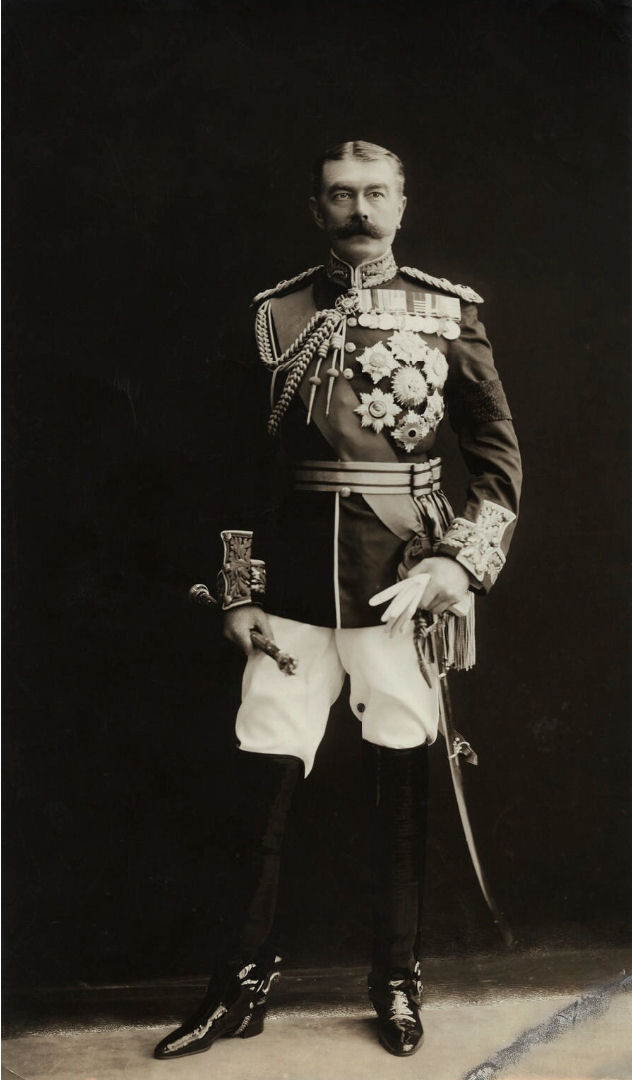
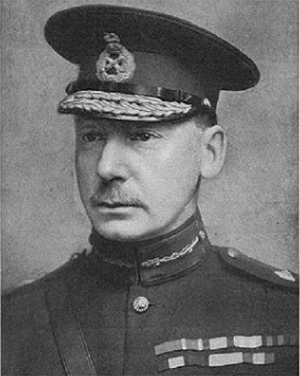
Dire news from England June 5, as the Secretary of State for War, Field Marshall Lord Kitchener, was lost at sea when his ship, HMS Hampshire, was sunk off the Orkney Islands, presumably by a German mine.

Horatio Herbert Kitchener

An enormous revolt has erupted June 5 in the heart of the Ottoman Empire as Arab nationalists seek to establish an Arab nation. Both sides are claiming religious motives while seeming to have secular purposes. On June 10, the Sharif of Mecca fired a shot from his window, signaling 5,000 Arabs to attack the 1,000 man Turkish garrison (who was ordered to surrender by the Sharif). An Arab force was also dispatched to take Medina.

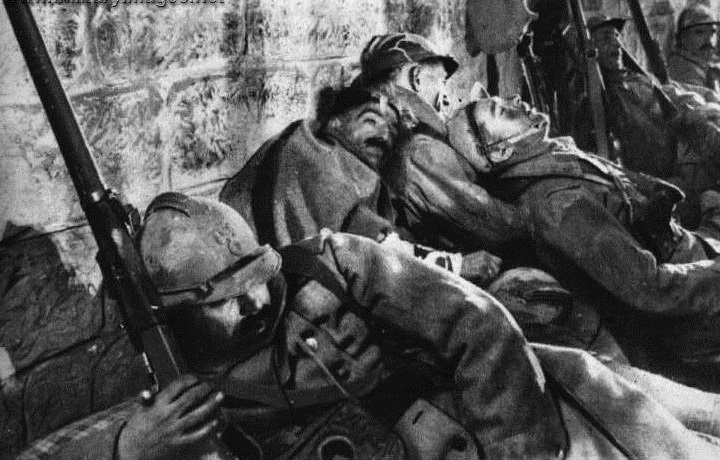
The French defenders (underground) at Fort Vaux near Verdun surrendered June 7. In the 5-day assault on the fort, the Germans lost 2,700 men to the 20 French defenders, and gained only 70 yards.

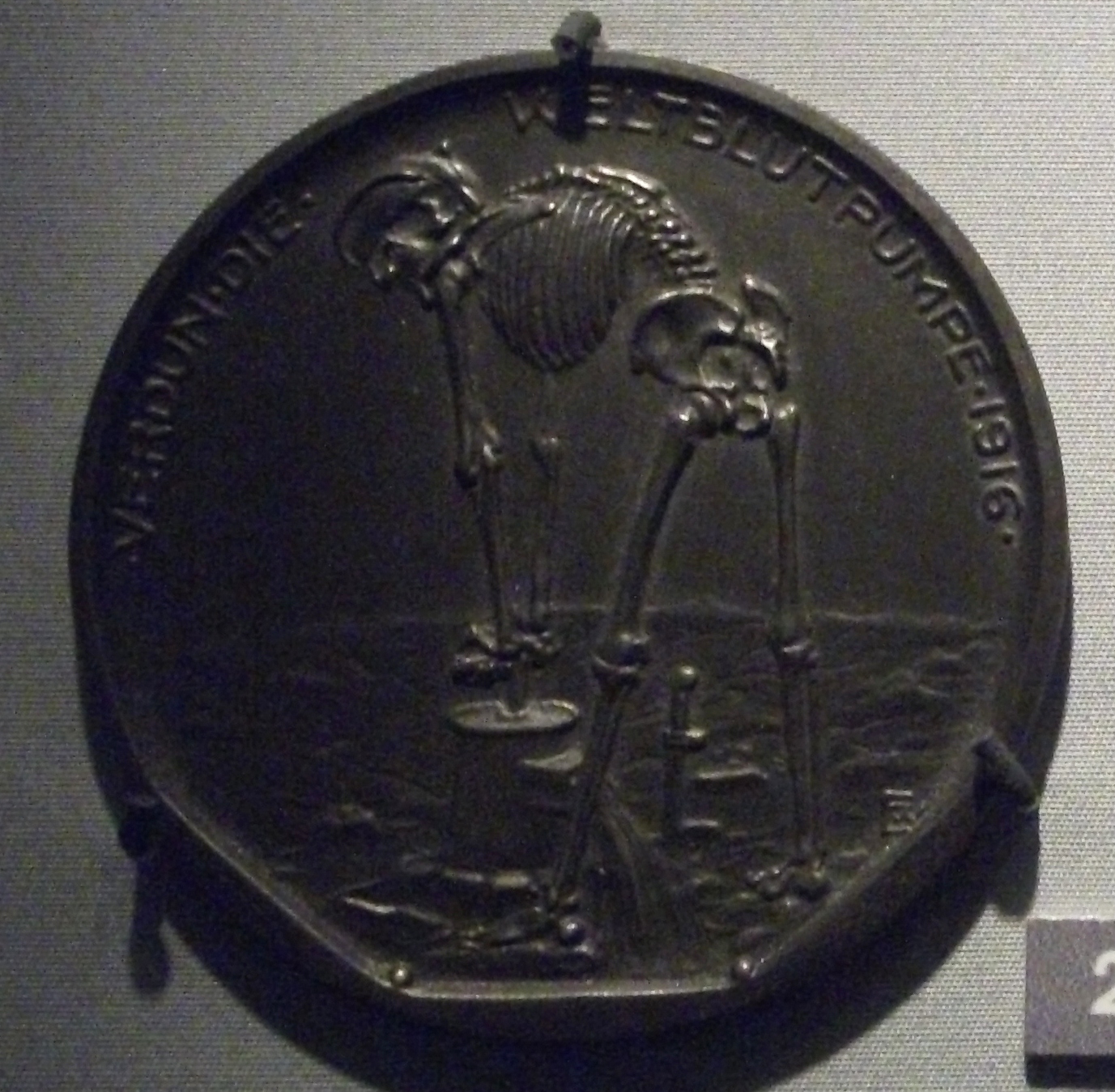
German propaganda metal commemorating the losses at Verdun – “Verdun the Worldpump”

Further East, the Russian advance took Lutsk June 8, nearly capturing the Austrian commander. Indeed, the Austrian army is in full retreat, having already had 200,000 men captured by the rushin’ Russians. In the Mediterranean, an Italian troop transport was sunk the the Austro-Hungarian sub U-5.

On June 10, with half of all Austrian divisions moving east to counter the Russian assault, and coupled with Italian reinforcements arriving, the battle of Asiago has come to an end. Despite halting the advance, public sentiment against the Italian government has forced the Prime Minister and his cabinet to resign.

Exhausted French defenders at Fort Vaux


<– Part 97 – May 28, 1916  | Part 98 – June 4, 1916 |  Part 99 – June 11, 1916 –>

The heavily-damaged SMS Seydlitz, following the Battle of Jutland.

The Battle of Jutland, May 31-June 1, 1916

A clash of steel titans took place May 31, as the first combat of battleships in the war took place at Jutland, in the North Sea (and indeed only the third in history, following two twelve years ago during the Russo-Japanese War). The German High Seas fleet sailed against the British, and the German scouts successfully lured the British scouts into combat. After losing two battlecruisers, the British scouts in turned sailed to their own main fleet, and the two hour combat, from 6:30-8:30pm, saw a colossal loss of life before night fell. During the night, the British fleet sought to prevent the Germans from reaching port, and sunk several German vessels in the dark hours of the morning, but the Germans slipped the noose. Of the 151 British warships, 28 of them battleships, 6,100 sailors were killed, 700 wounded, and 200 captured, with 14 ships sunk. The Germans loss 2,600 sailors, and 500 wounded, with 11 ships sunk.

Battle of Mont Sorrel, June 6

To the south, on June 1, a German assault at Verdun with 10,000 men has taken a ridge and the French forts atop it, including Fort Vaux, which was captured June 2. French defenders continue fighting underground. Later that day, German forces, in an attempt to draw forces away from a buildup at the Somme, launched an attack against an exposed Canadian position on Mont Sorrel, following an artillery barrage. The Canadian trenches were swiftly overrun (in part due to German practice against trenches dug behind their lines in exact replication of the Canadian trench system. The Canadians launched a counterattack the following morning, but only had minimal success due to forces starting at different times and advancing in broad daylight. The Germans also detonated bombs underneath the advancing Canadians, wiping out an entire company. Allied artillery has been brought to bear to prevent further German entrenching.

Across the Atlantic, the National Defense Act has authorized a five-year increase in size and funding for the United States Army.

A Russian assault against Khanaqin, in Persia, was repulsed by reinforced Turks, who then have launched a counter-attack.

Earlier today, Russian forces under General Brusilov have launched an enormous offensive against German and Austro-Hungarian forces. The assault has achieved surprising success, due in part to an intense and accurate artillery barrage which was much shorter than normal, leaving the defenders expecting more time before the assault. Nearly half of Austrian forces in Italy, at the Asiago, have been ordered East.

<– Part 96 – May 21, 1916  | Part 97 – May 28, 1916 |  Part 98 – June 4, 1916 –>

The punitive Strafexpedition at Asiago by the Austro-Hungarians continues, as the Italians are rushing reinforcements (including the recently-formed Fifth Army) to prevent a total encirclement of their forces at the Isonzo.

On May 22, the Anglo-Egyptian force in Darfur encountered Fur forces entrenched around the city of Berengia, and drove them back with artillery and maxim guns. A counter-attack by the Fur encountered an infantry square, and forty-minutes of intense fighting against several artillery batteries, infantry companies, and maxim sections forced a retreat. The Fur lost approximately 1,500 men to the British 5 dead, 22 wounded. The following morning, the British column was attacked twice, but the Fur were driven back and the British entered the capital city of Ofto el Fasher with only one wounded soldier. The Sultan has fled, and sent emissaries to discuss surrender.

At Verdun, the French assault on Fort Douaumont with severely-understrengthened regiments (some having only 40 men) commenced at 11:50am. The left and center were pinned down, but the right flank made some progress and captured about 1/2 the fort by nightall. German reserves repelled French reinforcements the next day, and then retook the fort, capturing 1,000 men inside. In three days, France lost 5,600 of the 12,000 men in the attack, to the German 4,500.

In Persia, the Turks have begun an advance against the Russians. Meanwhile, in Sinai & Palestine, Australian reinforcements have arrived in extreme, deadly heat. In German East Africa, the Allies are pushing towards Bismarckburg.

<– Part 95 – May 14, 1916  | Part 96 – May 21, 1916 |  Part 96 – May 28, 1916 –>

May 15 saw the Austro-Hungarian forces in Northern Italy’s Asiago region seize the initiative in Trentino. After a massive artillery bombardment, they began an advance towards Vicenza. The Italian center is already weakening, despite a nearly 2:1 advantage.

Verdun and vicinity, May 1916

On May 18, the Ottomans entered Said near the Sinai canal, and captured the air field there. The British have responded to Turkish bombings with their own. Meanwhile, the railway in the area has been completed, allowing British reinforcements to arrive. Further south, the expedition into Darfur, while capturing some Fur scouts and bombing others, has had no other contact with the enemy force.

A French heavy mortar, of the type used against the fort

At Verdun, the French are assaulting the captured Fort Douaumont, which has inflicted serious casualties on them, with some divisions facing 90-95% casualties. Heavy bombardment of the fort has killed many of the defenders, as the shells turn the walls to dust, which mixes with exhaust, while exposed corpses spread disease. Additionally, French aircraft has been effective in destroying German balloons, rendering artillery ineffective.

Finally, there are rumors of a secret British-French meeting, in which the spoils of war were determined as they each look to expand their sphere of influence. The rumors seem partially true, as the diplomats Sykes and Picot have been spotted meeting.

<– Part 94 – May 7, 1916  | Part 95 – May 14, 1916 |  Part 96 – May 21, 1916 –>

The fighting in East Africa at Kondoa Irangi ended May 10, as several waves of German assaults were repulsed by the British defenders, who in turn were unable to completely drive their opponents away. Both sides remains in defensive positions. The German Empire also announced, once again, the suspension of unrestricted submarine warfare.

Battle_of_Kondoa_Irangi ends may 10. several waves of german assaults repulsed; ends may 10. each side remains in position

May 10 Germany suspends unrestricted submarine warfare.

On May 12, in Darfur, the British-Egyptian forces have begun an advance into the heart of Fur territory, while planes dropped propaganda leaflets earlier this week promising the deposing of the ruler and an increase in religious freedoms.

In Persia, the Turks have strengthened their defenses near Khanagin as they await the approaching Russian thrust. Turkish planes also bombed Port Said near the Sinai canal, killing 22.

<– Part 93 – April 30, 1916  | Part 94 – May 7, 1916 |  Part 95 – May 14, 1916 –>

Verdun, May 1916. Hill 304 is just to the left of center.

The Anglo-Egyptian force in Darfur has used the last week to reinforce its supply and communication lines, despite some interference by small Fur detachments. In East Africa, near Kondoa Irangi, a South African force of 3,000 is in prepared defensive positions, as a German force of 4,000, with artilley, advances towards it.

At Verdun, the German offensive on the west bank has captured the north slope on May 4 and the crest of Hill 304 on May 7, but were unable to advance further. They have successfully resisted French counter-attacks in the last few days.

<– Part 92 – April 23, 1916  | Part 93 – April 30, 1916 |  Part 94 – May 7, 1916 –>

A rebellion erupted April 24 in Ireland, Easter Monday, several thousand strong. It was the largest since the Rebellion of 1798. Despite the large size and success in seizing several government buildings; however, despite shooting dead a guard and occupying the gatehouse of Dublin Castle, seat and emblem of London Rule, the superior British forces put the rebellion down by the 29th. During this same time, a meeting of worldwide socialists was held in Kienthal, a Swiss village, who stated their opposition to the war and the Central Powers as well.

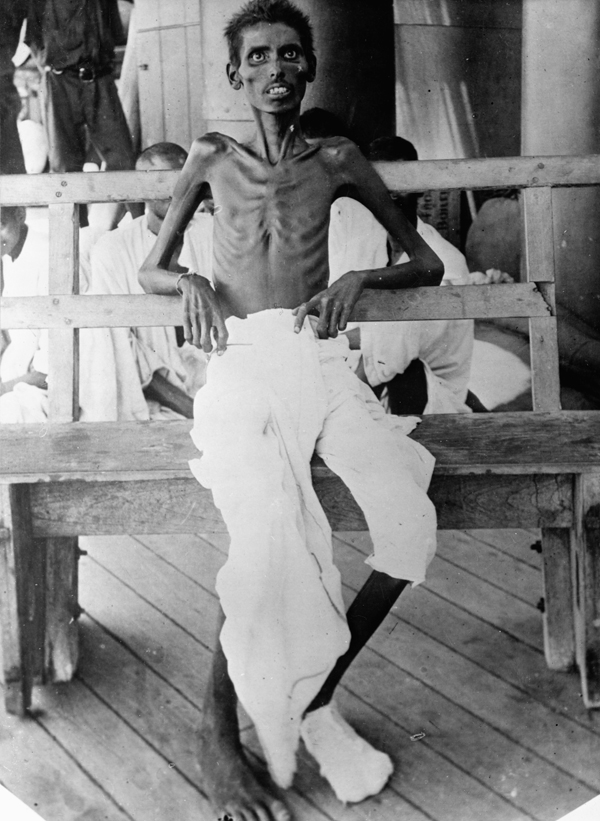
One of Townshend’s men, an Indian soldier, after the surrender.

General Townshend, commander of the forces at Kut

However, despite this reassuring news from Ireland, bad news in the form of a crushing defeat of British troops arrived that same day – the beseiged forces at Kut, ridden with disease and starvation, were forced to surrender – over 13,000 British troops have been captured in Mesopotamia by the Ottomans. It is the largest defeat in decades, and follows just 4 months after the defeat at Gallipoli. The failure of a paddle steamer to reach the troops was the final nail in the coffin.

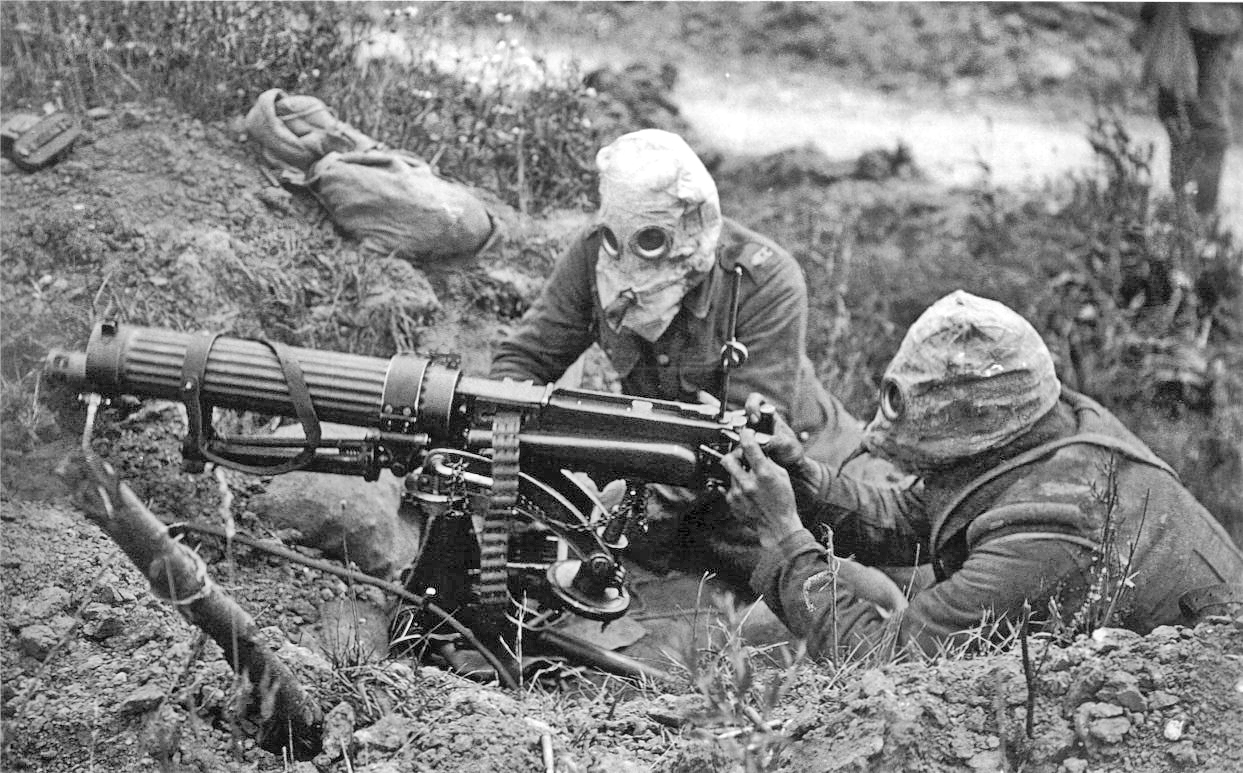
On April 27, the Germans launched a gas attack against British troops, whose gas masks were unable to protect them. The beginning of an offensive in the Halluch area, it ground to a halt when wind position shifted in the following days, blowing the gas into the German lines and killed hundreds. Despite this, the German assault was ordered, but British troops drove them back into their trenches. The British lost 1,600 men to gas and another 350 in the actual fighting, while the Germans suffered 1,500 casualties from gas alone.

Aerial view of the trenches at Hulloch.

Also on April 27, Field Marshal Lord Kitchener, British Secretary of State for War, asked the Americans for military assistance in Europe.

On April 30, the Lake Naroch offensive by the Russian Empire was halted, as the Russian artillery and infantry was unable to breach the strong German defensive positions. Of the 372,000 Russians and 82,000 Germans present for fighting, approximately 100,000 Russians and 30,000 Germans are casualties.

Vickers machine gun crew with gas masks.

One of the 1915 PH gas masks worn by the British troops. This one is missing its ventilator.


<– Part 91 – April 16, 1916  | Part 92 – April 23, 1916 |  Part 93 – April 30, 1916 –>

Fighting continues at Verdun, as German forces attempt wide-front assaults with unlimited objectives. Intelligence from German command indicates that the Germans are assuming 5 French casualties for every 2 of their own, holding to last month’s orders to preserve infantry. In keeping with this, the Germans have begun using Storm Trooper assault forces – 2 infantry squads and one engineer squad, armed with flamethrowers, hand grenades, automatic weapons, and small mortars. However, even with this new assault method, German advances are limited.

Ottoman troops at Katia

The German general commanding the Ottoman troops in the Sinai campaign: Friedrich Freiherr Kress von Kressenstein

On the 19th, US President Woodrow Wilson gave a speech in which he called on the German submarines to stop attacks on any ship in enemy waters without first issuing a warning, and attempting to determine if it is, in fact, an enemy ship. In Mesopotamia, the German general has died of cholera.

The German submarine SM U-69 has avoided being destroyed by the new British “depth charges,” shedding further light on this revolutionary weapon.

New Zealand infantry in the Sinai campaign

Near the Sinai canal, Ottoman troops under a German general have achieved a surprise attack against scattered British cavalry guarding a water pipeline at Katia on April 23. British forces have been sporadic and scattered in the area; it is assumed that they will increase and strengthen their patrols.


<– Part 90 – April 9, 1916  | Part 91 – April 16, 1916 |  Part 92 – April 23, 1916 –>

Although their defensive positions are exposed to artillery fire on three sides, and cover is minimal due to their own previous artillery bombardment, the German forces at Verdun have voted to continue the fight rather than withdraw. The sausage grinder continues.

The garrison at Abiad was attacked by Fur forces on April 14 & 15, but no casualties have been reported to the Anglo-Egyptian DarFur expedition.

The German submarine SM U-67 reported that on April 15 a British ship attempting to sink it dropped several charges into the water which detonated at specific depths. This could, perhaps, be the new weapon that sunk her sister ship U-68 on March 22.

Finally, the Ottoman forces have evacuated Trebizond/Trabzon, and the elements of the Russian Caucasus Army occupied it April 15.