<– Part 189 – March 3, 1918 | Part 190 – March 10, 1918 | Part 191 – March 17, 1918 –>

American soldiers stationed at Fort Riley, Kansas, have been falling ill with influenza this week. Beginning with Private Albert Gitchell on March 4, nearly 100 soldiers are now sick.

21 men of the American 165th Infantry Regiment were killed at Rouge Bouquet on March 7, when an artillery shell landed atop the roof of their trench dugout, burying them alive. A regimental sergeant, Joyce Kilmer, wrote a poem memorializing it, which has spread across American newspapers the following weeks.

British and Ottoman forces continue fighting in Palestine as the British secure their flank near the Jordan, with fighting across nearly the entire front beginning March 8, but especially focused at Tell ‘Asur. The tide of battle has steadily been swinging in British favor.

Advancing German forces in Ukraine encountered the Czechoslovak Legions March 8, elements of the Russian Army, on March 8 at Bakhmach. Fighting has erupted, as any captured Czechoslovaks receive a summary execution as deserters from Austria-Hungary. Fighting peaked earlier today, with the Germans surprisingly receiving the bulk of the losses.

<– Part 188 – February 24, 1918 | Part 189 – March 3, 1918 | Part 190 – March 10, 1918 –>

Territorial gains in the treaty

After 3 years, 6 months, and 14 days, fighting on the eastern front has finally ended.

The German advance into Russia continues, with Kiev firmly in their hands. On March 3, the Treat of Brest-Litovsk – this time between the Central Powers and Russia herself – was signed, with Leon Trotsky on the Soviet side. Russia defaulted on all commitments to the allies, ceded the Baltic states to the German Empire as princely vassals, parts of the Caucasus to the Ottomans, and recognized an independent Ukraine. The terms have been seen as shockingly harsh; Estonia, Finland, Latvia, Lithuania, Poland, and Ukraine have all been lost.

Additionally, the ceasefire signed 2 months ago between Romania and the Central Powers is more easily established, as there are no longer hostile forces within Romanian lands.

Russian forces in the Caucasus – consisting of about 1000 cavalrymen – have been assisting the British forces, in defiance of the new government.

In Mesopotamia, British troops captured Hit and Khan al Baghdadi, continuing their advance, although it is expected that troops will be transferred to Palestine soon.

<– Part 187 – February 17, 1918 | Part 188 – February 24, 1918 | Part 189 – March 3, 1918 –>

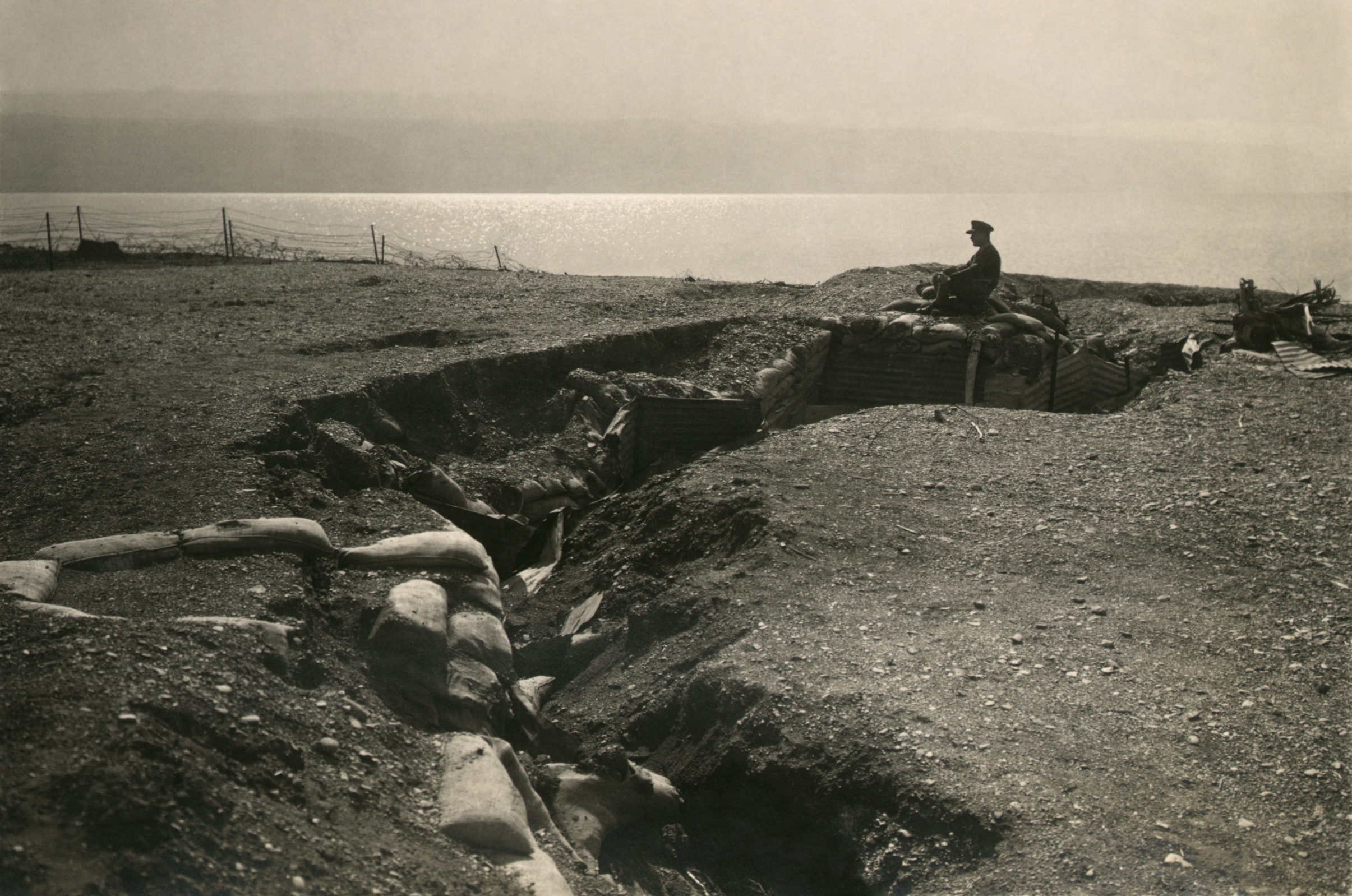
Turkish trenches at the Dead Sea

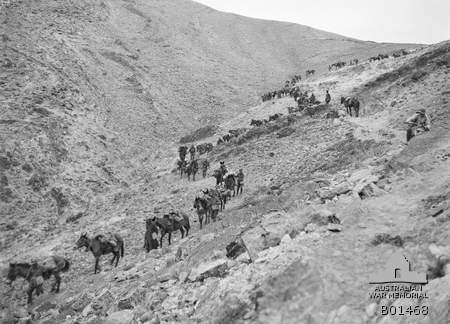
Australian Light Horse Regiment advancing down a hill

Negotiations have broken down between the Central Powers and Russia, with Germany & Austria-Hungary demanding full annexation of all occupied territories, and the Soviet leadership countering that they consider the war over and negotiations finished. On February 18, the day after the ceasefire was to have lapsed, a major Central Powers offensive was launched, and captured several key cities in the last week, including Pskov, Minsk, and Zhitomir. German forces are now within 100 miles of Petrograd, the Soviet capital, and the Soviets have moved their headquarters to Moscow. The German advance has met little resistance, and has primarily been conducted on trains using Russian railroads, from point to point.

In Palestine, the winter pause allowed the British to consolidate their positions; now, fearing the possibility of a flanking attack on the right, General Allenby launched an attack towards Jericho on February 19. Following several days of fighting though hills, cliffs, valleys, and rivers, British forces entered Jericho the morning of February 21. The British line stretches from the Dead Sea and Jordan river to the Mediterranean.

<– Part 186 – February 10, 1918  | Part 187 – February 17, 1918 |  Part 188 – February 24, 1918 –>

French sub Bernoulli

US President Woodrow Wilson delivered his “Four Principles” speech to the US Congress on February 11, further outlining his ideal terms for peace. They were, in summary: 1) All part of the final settlement should be solely focused on preserving peace within its context, 2) “people and provinces” will not be used as “mere chattel” in the peace context, moving from party to party, 3) all territorial settlements should ultimately benefit the citizens of the territory, and not national interests, and 4) all settlements should be used to benefit all nations involved, and avoid heavy punishment, as much as possible, to prevent another breakdown of peace.

On February 13, the French submarine Bernoulli was sunk in the Adriatic Sea after hitting a mine.

On Europe’s Eastern Front, Polish forces within the Austro-Hungarian army, dissatisfied by last week’s Treaty of Brest-Litovsk because of its failure to establish a Polish state, and especially upset by the transfer of Chelm province (heavily inhabited by Poles), mutinied en masse on February 15, attempting to cross the front lines to join Russia’s Polish First Army Corps. Although some of the Polish Legionnaires made it, many were captured by their Austro-Hungarian neighbors, who captured nearly 4,000 of them. Trials will begin soon, although Austro-Hungarian Emperor Charles is expected to delay them until the war’s conclusion.

<– Part 185 – February 3, 1918  | Part 186 – February 10, 1918 |  Part 187 – February 17, 1918 –>

Signing the treaty

Austro-Hungarian forces entering Ukraine following the treaty’s signing

After a Bolshevik delegation entered Ukraine & took Kiev last month to support the local soviet, the Central Powers signed a treaty with the Ukrainian People’s Republic on February 9 at Brest-Litovsk, outlining the terms of peace, which included territorial boundaries favoring Germany and Austria-Hungary, abrogation of war reparations for both sides, and allowances for Central Powers supply lines within Ukraine to be secured by German and Austro-Hungarian forces. This latter point has been seen as an occupation; further negotiations with Austria-Hungary regarding a unified Ukrainian province in exchange for grain and other supplies has met with fierce opposition from Polish residents of the empire, who have received no such territory of their own.

<– Part 184 – January 27, 1918  | Part 185 – February 3, 1918 |  Part 186 – February 10, 1918 –>

Ukrainian People’s Republic and Central Powers delegates during a break in negotiations earlier this week

Although the conflicts between Russia & Romania, as well as the simmering Russian Civil War, continue to grind along, the major belligerents remain in their camps, awaiting the various Spring offensives no doubt being planned at this time.

Delegates from the Central Powers have been meeting with representatives of the Ukrainian People’s Republic (a Soviet propped up by Russia), regarding the terms of peace between their respective nations.

<– Part 183 – January 20, 1918 | Part 184 – January 27, 1918 | Part 185 – February 3, 1918 –>

On January 20, an Ottoman fleet, led by a battlecruiser and light cruiser, sunk two unescorted British monitors near Imbros in the Aegean sea, but then sailed into a minefield, sinking the light cruiser and disabling the battlecruiser – a stunning victory immediately changed into a stunning defeat.

At Galati, following heavy Russian artillery fire, the Romanian launched a counter-attack January 22 using their own artillery, gunboats, rifles, and bayonets. The Russians capitulated later in the day, were disarmed, and sent home. Fighting continues throughout the country between the two erstwhile allies, with the worst earlier today at Faltceni, where nearly 100 Romanians and 600 Russians were casualties.

In Russia itself, fighting is increasing between the Bolsheviks seeking to centralize power, loyalists to the czar, and soviets declaring their own independence (encouraged in part by a Bolshevik declaration supposedly allowing them to be independent). The first soviet to declare independence, Finland, is now stuck in its own civil war.

<– Part 182 – January 13, 1918  | Part 183 – January 20, 1918 |  Part 184 – January 27, 1918 –>

Although forces in most areas continue to observe a lull, the Russian-Romanian tension has escalated to open warfare between the two formerly-allied parties. At the Romanian city of Galați, Russian forces attempting to desert the front have opened fire on the civilian center with artillery, as the heavily-outnumbered Romanians attempt to stop their rampage through the area, with minimal success in halting them.

<– Part 181 – January 6, 1918  | Part 182 – January 13, 1918 |  Part 183 – January 20, 1918 –>

Two opposing views of the reality of Wilson’s speech

Two opposing views of the reality of Wilson’s speech

US President Woodrow Wilson delivered a speech to the US Congress on January 8, outlining 14 points upon which a European speech should be established. Widely viewed positively by the Allies (although some question the idealism of Wilson), it is also seen as a like-response to Lenin’s Decree on Peace last November, and was similar to a statement made by the British last week.

The 14 Points can be divided into three main divisions: the first regarding lasting peace, the second regarding specific territorial issues among the combatants, and the third an establishment of an international peacekeeping force.

The first five points call for public treaties (thus preventing the secret alliances that dragged many nations into the war), freedom of international ocean navigation and trade, reduction of nations’ weapons of war, and colonial self-determination of sovereignty.

Points 6-13 call for all Russian, Belgian, French, Italian, southern Europe territories occupied by Germany and her allies to be returned (including the portion of France taken by Prussia in 1871 and portions of Austria-Hungary with a dominant Italian population), self-determination of the people of Austria-Hungary and Turkey, and the establishment of an independent Polish state with access to the Baltic sea (which would split Germany in half, as Prussia would be isolated from the rest of the Germanic peoples).

Finally a loose coalition of nations, the “League of Nations,” should be established to enforce the preceding principles, as well as provide a venue for nations to peacefully negotiate conflicts with the support of an international body.

It has been well received by the Allies (although French Prime Minister George Clemenceau lamented that God only had 10 Commandments), and elements of the Central Powers government, including the German Imperial Chancellor Prince Maximilian of Baden, view it as a just, non-punitive peace and support an immediate armistice. Others, more cynically, see it as “one more scrap to the diplomatic waste paper basket,” as former US President Theodore Roosevelt put it.

In Russia, fighting between Bolsheviks, other leftists, and forces loyal to the imperial family continue.

In Romania, tensions between Romanian forces and the Russian soldiers there continue to increase. Russian forces, embracing Bolshevik ideals of equality, have been executing officers, becoming brigands, and looting, pillaging, and raping throughout the Romanian countryside. Russian forces are being sent back to Russia on trains, as more and more divisions leave the front. Local Romanian gendarmerie patrol behind the front lines to eliminate bands of Russian soldiers roaming around.

<– Part 180 – December 30, 1917  | Part 181 – January 6, 1918 |  Part 182 – January 13, 1918 –>

The new year has brought relative stagnation in the military theaters, although the political theater in Russia continues to see the Bolsheviks under Vladimir Lenin consolidate their control over the nations. All military titles, ranks, decorations, and even saluting has been prohibited and removed as the equality of man is forced upon the people. On January 2, a new secret police organization, the Cheka, was formed by Lenin to further the aims of the new Soviets.