<– Part 175 – November 25, 1917  | Part 176 – December 2, 1917 |  Part 177 – December 9, 1917 –>

The Hong Kong Mountain gun battery in action near Jerusalem

At Monte Grappa, the Central Powers called off their attacks November 26, with the Italians successfully defending the region. The Austro-Hungarians and Germans lost 21,000 to the Italians’ 12,000.

At Cambrai, British assaults ended November 27; the German counter-attack came at 7am on November 30. The Germans have made rapid success; although the British are fighting fiercely, they are being pushed back from their gains, and the salient at Bourlon is threatened.

In the hills and plains approaching Jerusalem, the Ottomans have spend the last week launching counterattacks, many of them gaining ground before losing it again to arriving British reinforcements. Elsewhere, the British advance on the city continues.


<– Part 174 – November 18, 1917  | Part 175 – November 25, 1917 |  Part 176 – December 2, 1917 –>

Cambrai salient in the north, facing the Bourlon Ridge

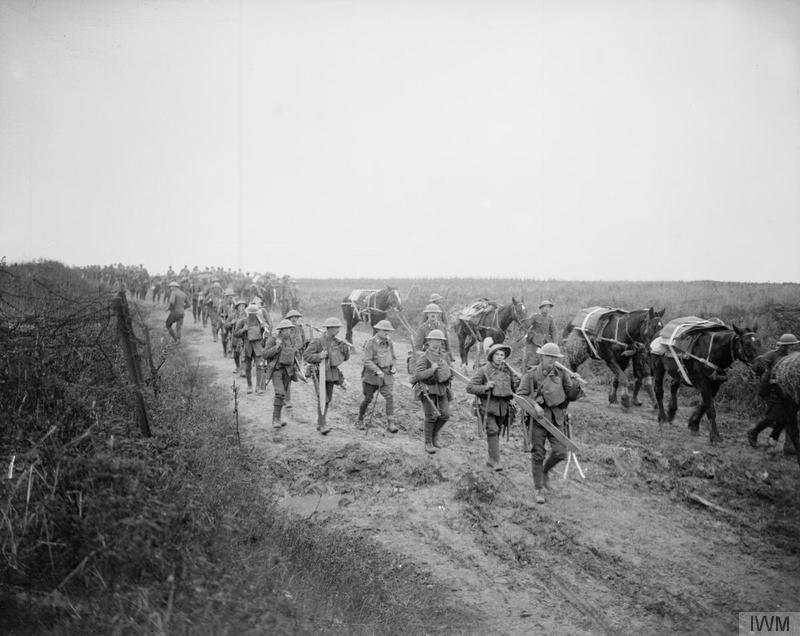
Members of the 16th Battalion, Royal Irish Rifles, on November 20 at Cambrai

On the Western Front, following careful planning, artillery calculations, and the massing of nearly 450 tanks, the British launched an offensive at dawn November 20 towards Cambrai. However, the Germans were aware of an imminent attack and the use of tanks. Although enjoying great success at first, with the Hindenburg line being penetrated at depths approaching 5 miles in places, the mechanical failure of tanks, together with improved artillery and infantry tactics, has led to the British forces bogging down. Near the center, British tanks under the command of George Montague Harper encounted a German unit trained in anti-tank tanks; this, combined with Harper’s unorthodox use of his own tank tactics, led to nearly 80 tanks being taken out by artillery. The west flank also lost 180 tanks (mainly mechanical failures), although reaching its objectives at the cost of 4,000 casualties, taking 4,200 Germans prisoners. This advance has accomplished more in 6 hours, and with far fewer casualties, than 3 months of fighting at Ypres. German reinforcements have begun to arrive and are contesting British gains in the center, which has formed a salient pointing towards the Bourlon Ridge (the primary objective). British forces are becoming exhausted, and are grinding through reinforcements, while the German reinforcements entrenched on the ridge are holding their positions. Rumors of a German offensive operation began November 23.

At Nebi Sawmil, in Palestine, fighting shifted to alternating offensives, exhaustion, counter-attacks, reinforcements, and repeat; for both sides. British assaults ended November 24, having made considerable gains towards Jerusalem.

Following his Pyrrhic victory at Mahiwa, the 1,800 German East African forces (mainly colonial troops) under Paul Emil von Lettow-Vorbeck invaded Portuguese East Africa for food. Although warned November 25 at 7am that a German attack was imminent, Portuguese troops at Ngomano were caught unawares, due in large part to distracting artillery fire from the Germans that allowed them to slip behind the Portuguese lines and attack from the rear. Losing 200 soldiers, including most of their officers, the remaining 700 Portuguese surrendered. German losses were minimal, and they have raided much-needed supplies.

In Russia, a Constituent Assembly was elected, which included mandatory delegates from the major parties. Following this election, only one Bolshevik and 7 Soviet Revolutionary delegates were among the dozens elected. Fortunately for the Bolsheviks, however, the SR is only a shadow of its former power, and now is in league with the Bolsheviks.

<– Part 173 – November 11, 1917  | Part 174 – November 18, 1917 |  Part 175 – November 25, 1917 –>

View from the peak of Monte Grappa towards the Austro-Hungarian lines

The Russian Bolsheviks took Moscow November 13 following a week of street fighting, in which nearly 700 civilians were killed by indiscriminate artillery fire. In spite of this, public opinion for the Bolsheviks is largely positive.

Italian forces have been ordered to hold the defensive line at Monte Grappa and on the Piave river, halting their retreat. Austro-Hungarian forces, with support from the German Alpenkorps, are attempting to take the summit.

In France, following a series of military blunders and political infighting, Georges Clemenceau has been named Prime Minister, replacing Painlevé. Clemenceau was a vocal critic of the (now previous) administration’s handling of the war, and is vehemently opposed to any peace settlement that does not benefit France.

The Judean Hills in 1917

In Palestine, at the Mughar Ridge, two corps of British Empire forces assaulted two Ottoman armies holding a defensive line approaching Jerusalem. British infantry advances, with cavalry charges, succeeded in breaking the Ottoman flanks & center, while a further cavalry maneuver by the British took the Turk’s rearguard position. The Turk’s link to Jerusalem has been cut. The British lost 1,200 while the Turks lost 10,000 in prisoners alone.
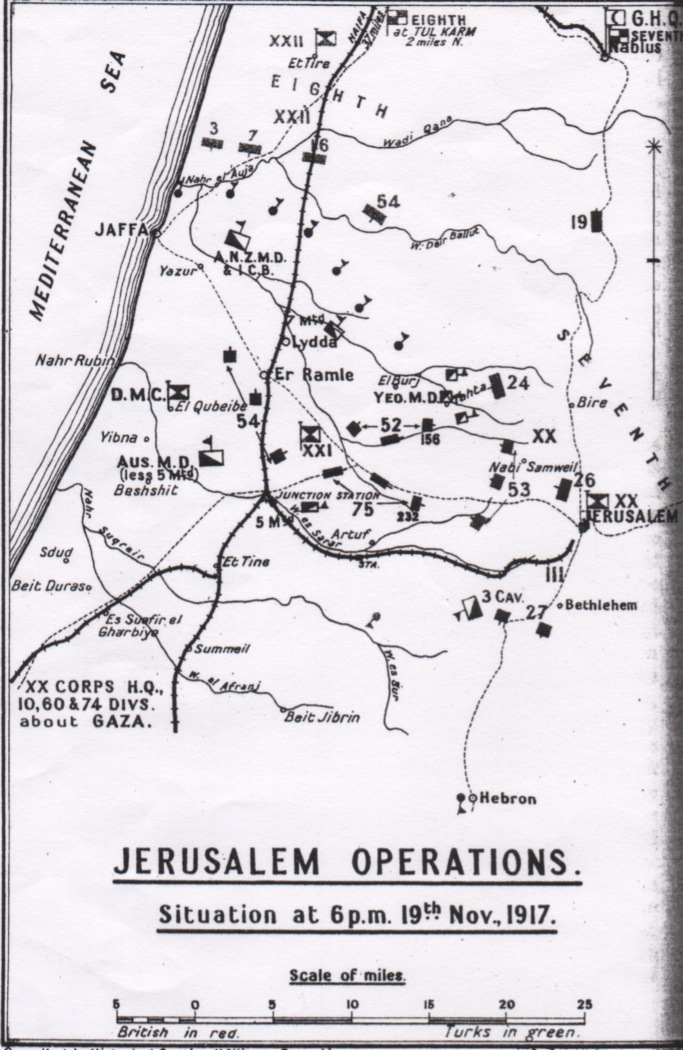
Sketch of British operations towards Jerusalem

The following day, November 14, the advancing Egyptian Expeditionary Force’s flank was caught out in the open by an Ottoman rearguard entrenched on a ridge. The New Zealand Mounted Rifles, around 1,500 strong, advanced against the similarly-sized force supported with machine guns and artillery. An Ottoman bayonet charge failed, while British cavalry AND infantry bayonet charges into hand-to-hand combat succeeded in breaking the center. The Allies lost 200 men to the Turk’s 500.

The British are forcing the advance into the Judean hills, despite the area favoring defense, to keep the Ottomans off-balance and unable to fortify their position.

“[A]ll the armies that have sought to take Jerusalem have passed this way, save only that of Joshua. Philistine and Hittite, Babylonian and Assyrian, Egyptian and Roman and Greek, Frankish Knights of the Cross, all have passed this way, and all have watered the hill of Amwas with their blood.”
— R. M. P. Preston, of the Desert Mounted Corps

On November 17, the ANZAC and British forces attacked the Ottomans at Nebi Samwil (“Tomb of Samuel”), a vital advance to Jerusalem. British forces have begun encircling Jerusalem and taking key supply lines into the city.

USS Nicholson in 1915

U-58’s crew abandoning ship

A German force of minesweepers, supported by several German cruisers, destroyers, and battleships was ambushed at the Heligoland Bight for the second time by several British cruiser squadrons. Despite losing one minesweeper, the German forces retreated, laying an ‘expert smokescreen.’ Maneuvering was difficult for both sides due to the naval minefields. One cruiser on each side was damaged.

While on convoy escort in the Atlantic, the US destroyers Fanning and Nicholson spotted the periscope of U-58 and dropped depth charges, forcing the sub to surface. After firing on the sub, it surrendered. The crew was taken prisoner as the sub sunk. These ships are the first to sink an enemy sub. The commanders of the vessels, Lt. Arthur S. Carpender and LtCdr. Frank D. Berrien, each received the Navy Cross.

On November 18, the British commander in Mesopotamia, General Maude, died of cholera. William Marshall has replaced him and halted operations for the winter.

<– Part 172 – November 4, 1917  | Part 173 – November 11, 1917 |  Part 174 – November 18, 1917 –>

Map of the Second Battle of Gaza

New York Times headline, November 9, 1917

Following two British defeats approaching Gaza, a new commander launched a night attack last month, and following a gradual series of Ottoman trenches being taken, Ottoman supplies to the city being cut off, and a continual bombardment beginning October 27, British forces entered Gaza November 7, finding the village abandoned. Casualties amounted to 2,700 British to 1,500 Ottomans, including 300 captured. Elsewhere in Southern Palestine, victorious British forces at Beersheba push on to Tel el Khuweilfe, in the Judean hills. British cavalry charges throughout the region have been successful in breaking Ottoman defenses.

2nd Moscow Women Death Battalion, the final defenders of the White Palace

Following growing disillusionment with the Provisional Government of Russia, in Petrograd, Bolshevik forces assaulted Kerensky’s government on November 7, helped by the arrival of pro-Bolshevik marines and other sailors. Red Guard forces elsewhere took key military, government, and other key facilities. The Bolshevik forces were held up at the Winter Palace, where the government was supported by 3,000 soldiers. During the evening, groups of soldiers left, while a cruiser fired a blank shot towards the palace at 9:45.

By 2am on November 8, the Bolsheviks entered the palace, and the government surrendered. In all, minimal resistance during this October Revolution (the Russians still use the old-style calendar) led to a nearly-bloodless revolution. The center & right wing soviets are protesting this “illegal” taking of power by the leftist Bolsheviks and walked out of the assembly – Leon Trotsky mocking them with, “You are pitiful isolated individuals; you are bankrupts; your role is played out. Go where you belong from now on – into the dustbin of history!” Vladimir Lenin was elected the new Russian leader later that day; on November 9 the Mensheviks (center-right) declared Georgia an independent republic. Protests against the Bolsheviks began November 10, and the following day Kerensky himself entered Petrograd with a Cossack force and demanded the garrison to surrender, who refused. Kerensky then fired on them before withdrawing – a fatal mistake, as this is exactly what the deposed Tsar would have done.

Armando Diaz in 1921

Luigi Cadorna

On November 8, Armando Diaz was appointed Chief of the General Staff of the Italian army, following Luigi Cadorna’s disaster at Caporetto, called “the greatest defeat in Italian military history.” Italian forces continue retreating towards the Piave river and Monte Grappa.

On November 10, British forces finally reached Passchendaele at 8am, following the third stage’s beginning only two hours earlier. The Third Battle of Ypres is over, with most objectives reached, although still just short of the Passchendaele-Westrozobeke Ridge line. With winter approaching, fighting is expected to wind down. In this latest iteration of Ypres, 300,000 Allies and 300,000 Germans were casualties

<– Part 171 – October 28, 1917  | Part 172 – November 4, 1917 |  Part 173 – November 11, 1917 –>

At Passchendaele, part of the Third Battle of Ypres, the Allied second stage was launched October 30. While the southern and center divisions reached their objectives, stiff German resistance in the northern sectors prevented the Canadians there from doing more than consolidating what gains they had later that evening. A small attack the evening of November 1 was successful in closing up the lines and preparing for the final stage.

At Caporetto, the 25km German breakthrough area at the Twelfth Battle of Isonzo, Italian forces were ordered October 30 to withdraw across the Tagliamento river. They completed their withdrawal after 4 days, with the Germans having established a beachhead just behind the retreating forces, prompting another retreat order for the Italians. Only a heroic defense on October 29-30 at Pozzuolo by two Italian brigades – one infantry, the other cavalry – prevented the German army from cutting off the Italian army’s retreat. With the German supply lines stretched nearly to breaking, German junior officer, Erwin Rommel, who received the Prussian Pour le Mérite for his heroism in the battle, lamented that his “poorly fed troops” would have been much more successful had the supply lines kept up.


<– Part 170 – October 21, 1917  | Part 171 – October 28, 1917 |  Part 172 – November 4, 1917 –>

Battle of Malmaison

The Ottoman army, marching to retake the Hedjaz Railway, was ambushed at Wadi Musa, in Jordan, October 23, by 700 Arabs. The Ottomans lost 400, with a further 300 captured, before retreating.

A French attack towards the village and fort of La Malmaison on October 23 was wildly successful, after a four day battle. The Germans elected to defend their far forward trenches, rather than more secure areas farther back – a critical mistake. Although the Germans were aware of the timing of the attack – 5:45 am – the French intercepted a German transmission telling troops to be ready by 5:30, so the French attacked at 5:15 am. The French artillery destroyed the German guns, pinpoint fire spotted by French aircraft destroyed German strongpoints, and French gas hanging over low-lying areas behind the forward German lines prevented reinforcements, medical assistance, or resupply from reaching the German defenders. The village and fort were captured by the French on October 27. The French lost 13,000, while the Germans suffered 38,000 casualties and an additional 12,000 prisoners.

German prisoners carrying wounded Allied soldiers at 2nd Passchendaele, part of 3rd Ypres.

The German High Command has sent assistance to the Austro-Hungarian Empire in Italy, fearing that a failure to end the Italian theater will eventually remove Austria-Hungary from the war. After surveying the area for a gas attack, the quiet village of Caporetto was chosen. On October 24, at 2 am, poison gas was dropped onto the Italian trenches, killing 600 and causing the rest to flee. German artillery destroyed Italian trenches, and bombs placed by sappers were detonated under the Italian’s strong points. A new infantry force of “storm troopers,” armed with shotguns, machine guns, and flamethrowers, surged forward and found the Italian lines nearly undefended. The Italians have been ordered to regroup and counterattack, but have been unable to gain momentum.

Ottoman and British forces near Gaza

On October 26, at the third battle of Ypres, another attack at Passchendaele has been launched by the Canadian and ANZAC forces. Heavy mud has called for extra preparations, and the rolling barrages are slower, allowing the men to move through the mud. The objectives have been taken, while stronger German pillboxes have been held with defensive flanks. The first stage has been successful, and the Allies are preparing for a second push. Allied casualties are estimated 10-20,000, with the Germans losing 21,000.

A British force south of Gaza, positioned along the Buqqar Ridge to prevent Turkish artillery from stationing there and firing on the critical railroad in the area, repelled a larger Turkish force on October 27, despite odds of 20:1 in places. The British lost 90, with the Turks losing 50.

<– Part 169 – October 14, 1917  | Part 170 – October 21, 1917 |  Part 171 – October 28, 1917 –>


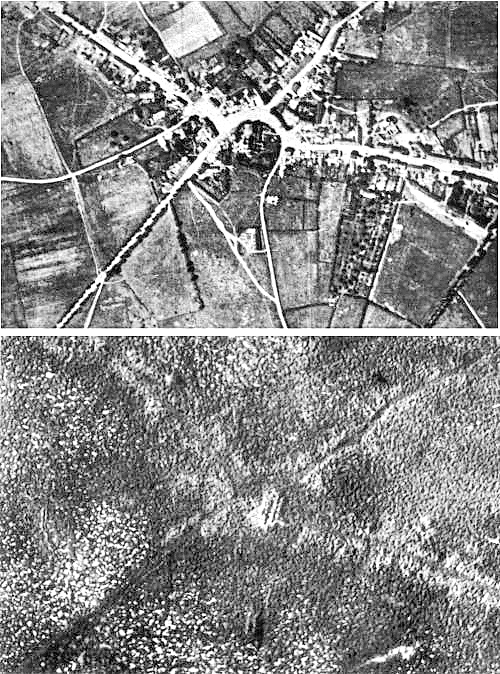
The actual village of Passchendaele. Top photo was taken before last week’s battle, and the bottom just after.

On October 15, German forces under Kurt Wahle came under attack near Nyangao, German East Africa, by a larger British force. Germans under region commander Paul Emil von Lettow-Vorbeck marched to support them but were caught in a pincer movement by British reinforcements. After successfully defending their positions, the Germans withdrew to Mahiwa the next day, defending those positions and counter-attacking on the 17th and 18th. Although ultimately victorious, the 1,500 Germans lost 1/3 of their force, while the British lost 2,700, over half their own force.


Elsewhere on the 15th, the US navy scored their first victory in the Atlantic when destroyer USS Cassin was torpedoed by U-61. An alert gunner’s mate, Osmond Ingram, saw the torpedo coming and warned the crew, who took evasive maneuvers and dropped depth charges. Although damaged by the torpedo, the submarine was severely damaged as well and forced to withdraw. Ingram was killed in the battle but received the Medal of Honor.

At Passchendaele, now also known as the 3rd Battle of Ypres, fighting has paused as both sides assess further winter operations.

<– Part 168 – October 7, 1917  | Part 169 – October 14, 1917 |  Part 170 – October 21, 1917 –>

Map showing flooding near Passchendaele, during the 3rd Battle of Ypres

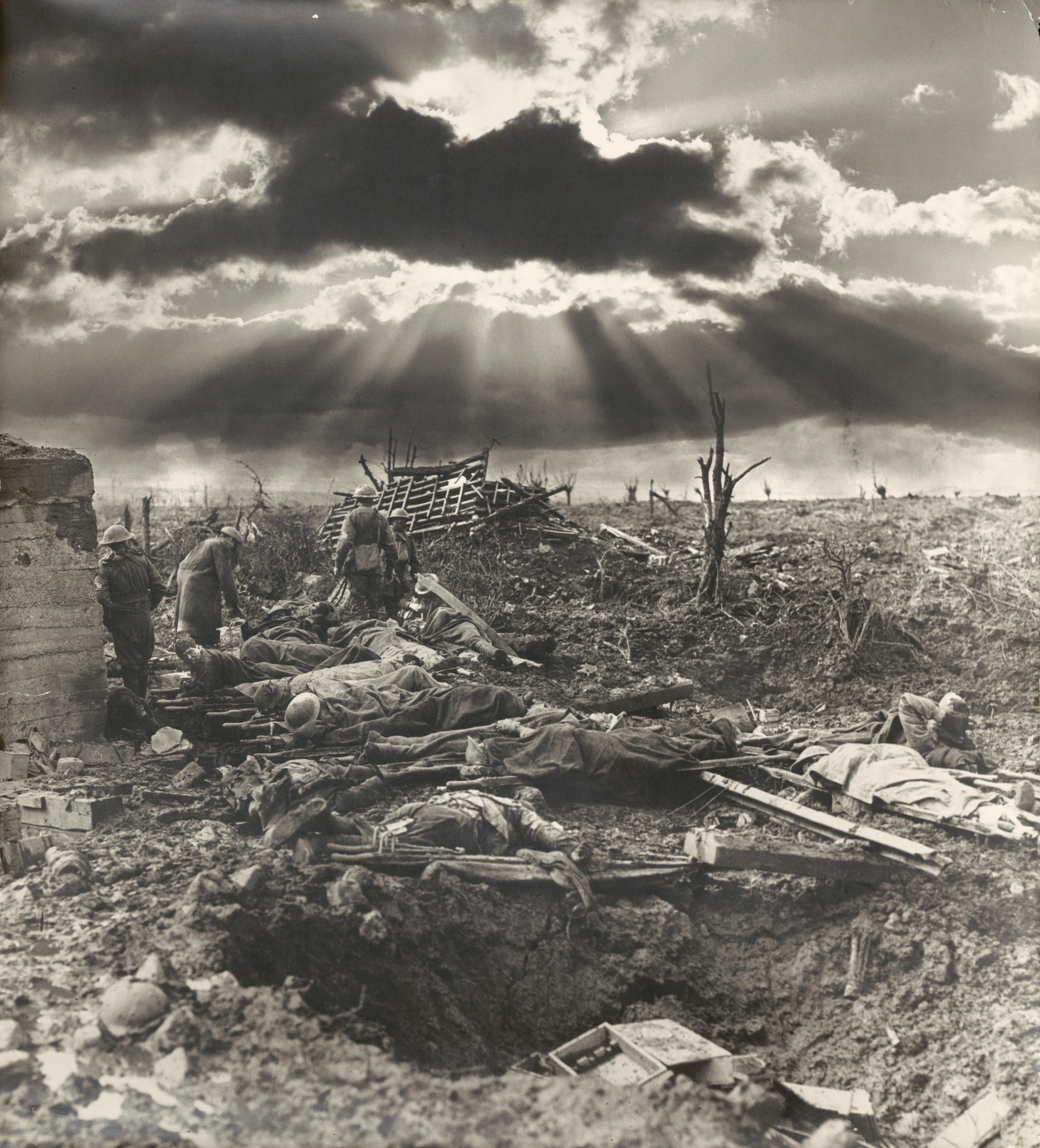
Photo showing the battlefield the morning after the battle

Another British assault at Ypres, this time near Poelcappelle, floundered October 9, following a long stream of success. This time, bad weather and rain hampered the movement of men, artillery, and ammunition, allowing the Germans to defend in the absence of the British artillery barrages – indeed, the British were only able to drop just over half the shells they’ve used in similar battles. The British lost 10,500 troops, with German losses this month reaching 35,000 (13,000 of them missing). On October 12, at the actual village of Passchendaele, near Ypres, the Germans scored another defensive victory, 13,000 British, Australian, and New Zealand soldiers fell, with an additional 10,000 German casualties.

New Zealand artillery in action, October 12

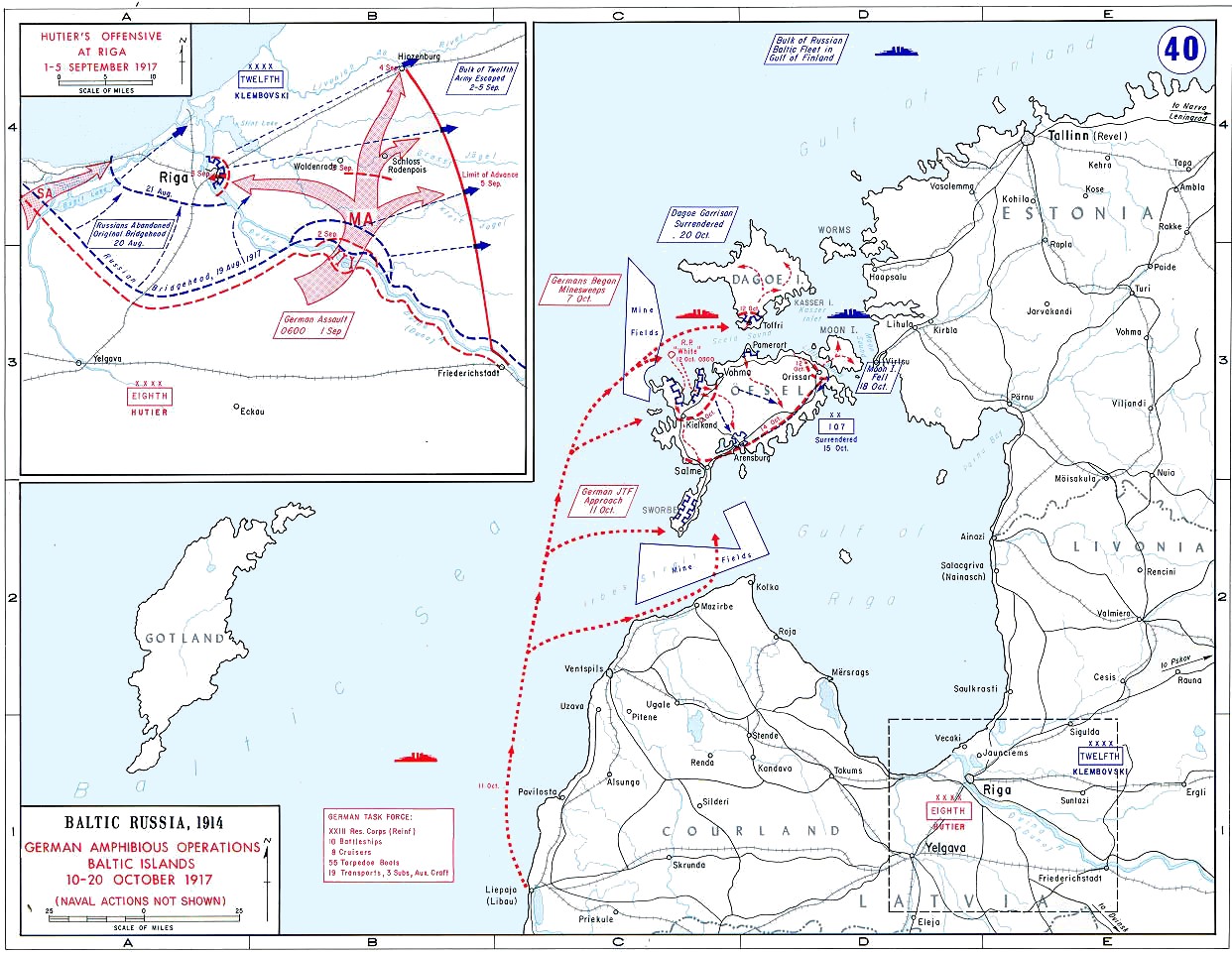
Map of Operation Albion

October 11 saw German forces in Estonia land on islands in the area, continuing their Operation Albion against Russian forces. To the south, naval forces under US command in the Mediterranean attacked the Austro-Hungarian port of Durazzo, in Albania. Following an exchange of fire, in which no American personnel were injured, the Austrian base was destroyed.


<– Part 167 – September 30, 1917  | Part 168 – October 7, 1917 |  Part 168 – October 14, 1917 –>

Battle of Broodseinde planning map

October 4 was a significant day this past week, with events on both sides of the world boding ill for Germany and the other Central Powers.

No-Man’s-Land following the battle, looking towards the German lines

First, the crew of SMS Seeadler, aboard the captured French schooner Lutece, ran aground on Easter Island as was taken into custody by Chile, thus ending the last gasp of Germany’s Pacific campaign.

Near Yypres, at the Broodseinde Ridge, the new British strategy of “bite and hold,” wherein forces take only the ground they can immediately defend against counterattack, has seen another extremely successful application, with more German territory being taken. The British suffered 20,000 casualties, to the German 35,000. Additionally, “the black day of October 4” has brought an enormous hit to German morale.


<– Part 166 – September 23, 1917  | Part 167 – September 30, 1917 |  Part 168 – October 7, 1917 –>

Fighting at the Menin Road Ridge ended September 26, following a German counterattack exhausting itself regaining some ground. The British forces lost 20,000 men to the Germans 28,000, 3000 of whom are prisoners.


British operations at Ramadi. The first advance was east-west along the river; the second battle was from the south.

Following the end of that battle, fighting flared up at nearby Polygon Wood September 26, with another successful British offensive campaign. The Allied forces lost 21,000 in the one day of fighting to the 13,500 Germans. Although the British forces have proven themselves superior in offensive operations, fresh German defenders were encountered. Both sides are scrambling to eliminate the enemy’s advantage.


From September 28-29, British forces in Mesopotamia marched on Ramadi, following a failed attack two months ago. That attack failed due to intense heat (measuring 160 degrees in sunlight, and responsible for half of British casualties), as well as an advance alongside the Euphrates river. This time, an attack from the south, with forces cutting off Ottoman paths of retreat, was successful. The British suffered 1,000 (mostly minor) casualties, to the Turks’ 3,500 (primarily prisoners).