<– Part 135 – February 18, 1917  | Part 136 – February 25, 1917 |  Part 137 – March 4, 1917 –>

The Second Battle of Kut


Herbert Garland

At Bir el Hassana, although the Ottoman garrison surrendered, a stray Bedouin bullet shattered a British soldier’s leg February 19, leading to his evacuation by aeroplane. The rest of the garrison surrendered two days later, and the final Ottoman retreat from the peninsula has commenced.


British and Ottoman forces met at Kut February 23, and the British successfully recaptured the city with their 50,000 men, to the Ottoman 13,000, suffering only 1,000 British and Indian casualties. The Turks lost 3,000.

British intelligence indicates that the Zimmerman Telegram was given to US officials February 24, showing details of the proposed German alliance with Mexico against the United States.

The German withdrawal to the Hindenburg line continues. In Hedjaz, a Turkish train was destroyed by a mine invented by British officer Herbert Garland.


<– Part 134 – February 11, 1917  | Part 135 – February 18, 1917 |  Part 136 – February 25, 1917 –>

Reservations among the British High Command continue as to whether the Americans will be able to muster a force with any fighting ability, should the US enter the war.

The Sinai campaign continues, with Bir el Hassana surrendering February 18 to British forces. The last Ottoman garrison are retreating from the peninsula.

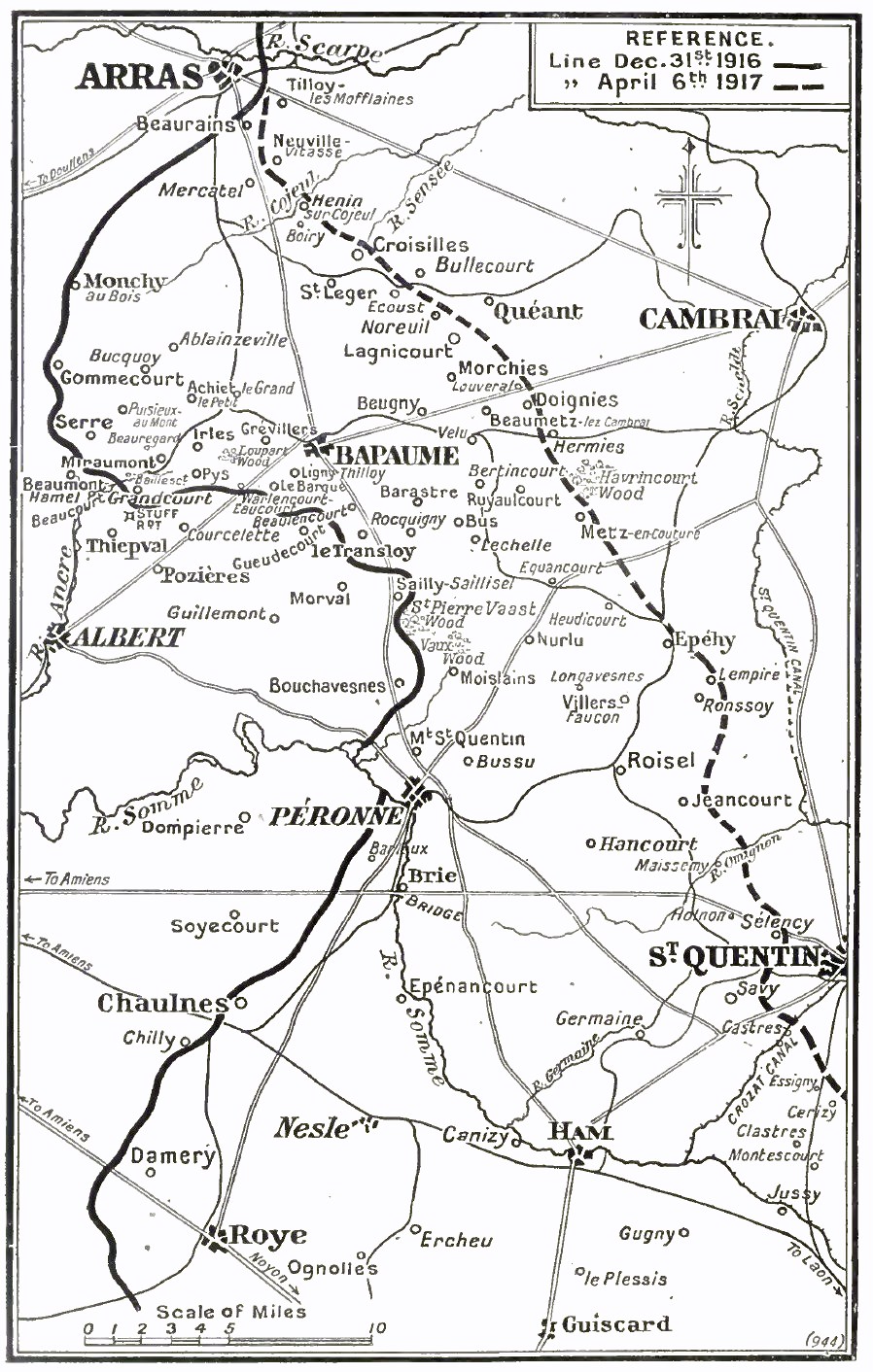
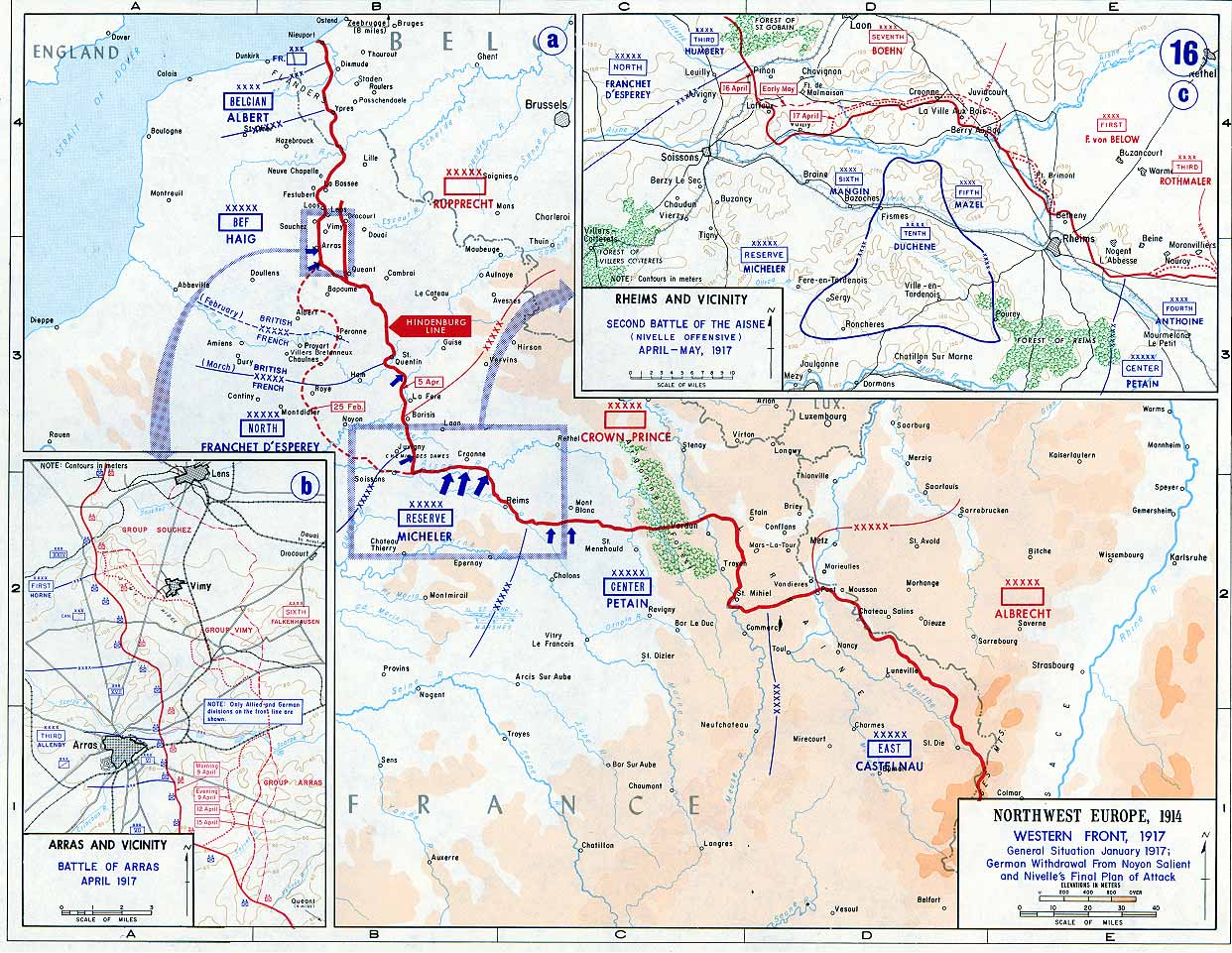
To the West, Operation Alberich continues, with German forces completely obliterating all land they are ceding to the Allies in an horrific scorched earth strategy.

<– Part 133 – February 4, 1917  | Part 134 – February 11, 1917 |  Part 135 – February 18, 1917 –>

Operation Alberich in March 1917

Western Front, early 1917

With American entry into the war seeming increasingly likely, the British General staff has estimated that, at most, only 250,000 American soldiers could be in Europe within one year.

On February 9, German forces in Western Europe commenced Operation Alberich, the planned withdrawal to the Hindenberg line, a defensive position behind the German lines. It is estimated that this withdrawal will take 5-8 weeks.


<– Part 132 – January 28, 1917  | Part 133 – February 4, 1917 |  Part 134 – February 11, 1917 –>

German chancellor Theobald von Bethmann-Hollweg

Germany announced January 31 that it would resume unrestricted submarine warfare the following day. The German Chancellor, Theobald von Bethman-Hollweg, has opposed the decision, stating, “Germany is finished.” Indeed, the United States severed diplomatic ties with Germany on February 3 in response to this decision, and war seems imminent.

In Persia, Grand Duke Dimitri Pavlovich Romanov has joined Russian General Baratov.

On February 3, the British attacked the Senussi at Siwa, catching them by surprise due to a rapid, automobile advance. The rest of the day, however, was spent attempting to drive nearer to the tribesmen over the uneven ground. By early this morning, the Senussi had withdrawn.ttacks on ottoman railroads continue in

In Arabia, attacks on Ottoman railroads by the rebels continue with British assistance.

<– Part 131 – January 21, 1917  | Part 132 – January 28, 1917 |  Part 133 – February 4, 1917 –>

Following Entente statements clearly listing terms of peace in response to US President Woodrow Wilson’s call for warring powers to declare such last month, Wilson has given a speech January 22 to the US legislature called “Peace Without Victory,” calling for the Central Powers to release their terms (to date, they have only mentioned a willingness to discuss peace), as well as stating the necessity of US involvement in such a peace, all with an eye towards forming a world-wide “League of Peace.”

The following day, Bulgarian forces attempting to advance into the Danube delta were halted with heavy casualties by the Romanian defenders.

<– Part 130 – January 14, 1917  | Part 131 – January 21, 1917 |  Part 132 – January 28, 1917 –>

A classified and encrypted telegram was sent from the German government to its ambassador in Mexico, a deviation from agreed-upon terms between the United States and German, whereby all telegrams using US cables would be plain-text. It remains to be seen what the telegram contained…

Several days later, on January 18, the Ottoman forces besieging Yanbu began their retreat after suffering heavy losses.

British forces fighting the Senussi renewed their campaign January 21, advancing towards a defended area held by Sayed Ahmed, supreme leader of the Senussia Order. The operation is expected to last one month,

British forces on the Ancre continue their slow advance, sapping forward during the night and connecting these new trenches to the older ones.

<– Part 129 – January 7, 1917  | Part 130 – January 14, 1917 |  Part 131 – January 21, 1917 –>

British firing line at Rafa

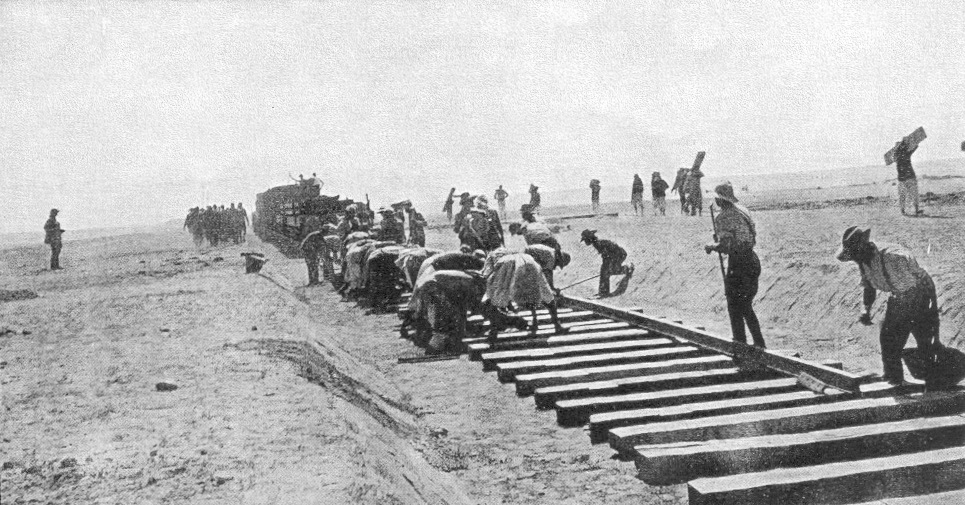
Construction of the British railway across the Sinai. Coupled with a water pipeline, this allowed British offensives to reach much farther into Ottoman land

German leaders formally announced their unrestricted submarine warfare policy January 9. On the Ottoman Palestine – Egyptian Sinai border, British troops attacked an Ottoman defensive position, losing 500 to the Ottoman 400, plus 1,400 prisoners. The recent railway has allowed the British to enter Ottoman land for the first time.

On January 10, the Allied governments released their peace objectives in response to United States president Woodrow Wilson’s request last month.


British flanking operations at Rafa

The following day, British troops went “over the top” at the Ancre zone and assaulted German positions. While movement was slow due to muddy ground made worse by shell explosions, most achieved their moderate gains, although some unwittingly went over German dugouts and were attacked from the rear.

Mametz, Western Front


<– Part 128 – December 31, 1916  | Part 129 – January 7, 1917 |  Part 130 – January 14, 1917 –>

Captain Selous

British defenders at Kibata received reinforcements January 1, including two howitzers, threatening the Germans in the heights above. The Germans withdrew January 6.

In German East Africa, British scouts under Captain Frederick Selous spotted German troops at Behobeho and engaged them January 3-4, before withdrawing. A German marksman killed Captain Selous, prompting the commander of German forces in East Africa, Paul Emil von Lettow-Vorbeck, to send a letter of condolences. Selous was a personal friend of former US President Theodore Roosevelt, prominent British figure Cecil Rhodes (namesake of Rhodesia), and was the basis of the Allan Quartermain character.

On January 4, Russian-Romanian forces abandoned Măcin, then Brăila next day. At El Arish, in Africa, the British railway and water pipeline have reached the newly-conquered city, continuing preparations to turn it into a prominent base. In Hejaz, there are rumors of Hashemite guerillas near Ottoman railroads, leading some to suspect sabotage in the future.

<– Part 127 – December 24, 1916  | Part 128 – December 31, 1916 |  Part 129 – January 7, 1917 –>

Grigori Rasputin

Grigori Rasputin

In the Tirelis Swamp, Russian reinforcements have mutinied, leading the Russian advance to be called off. The Germans, seizing the opportunity, counter-attacked, and were held off by the Latvian Rifles for two days in -35C weather. The Russians attack to the northern flank succeeded in taking 1,000 prisoners by overrunning a German fortified position. Fighting ended December 29, after the largest victory for the Russians on this front.

The German colony of Togoland, abandoned and occupied by the Allies, has been divided into occupation zones by the British and French.

The Russian mystic and royal advisor Grigori Rasputin, seen by many imperial figures as holding inappropriate sway over the royal family, was murdered December 31 by being poisoned, shot, and thrown into a lake. His body was found the next day.

<– Part 126 – December 17, 1916  | Part 127 – December 24, 1916 |  Part 128 – December 31, 1916 –>
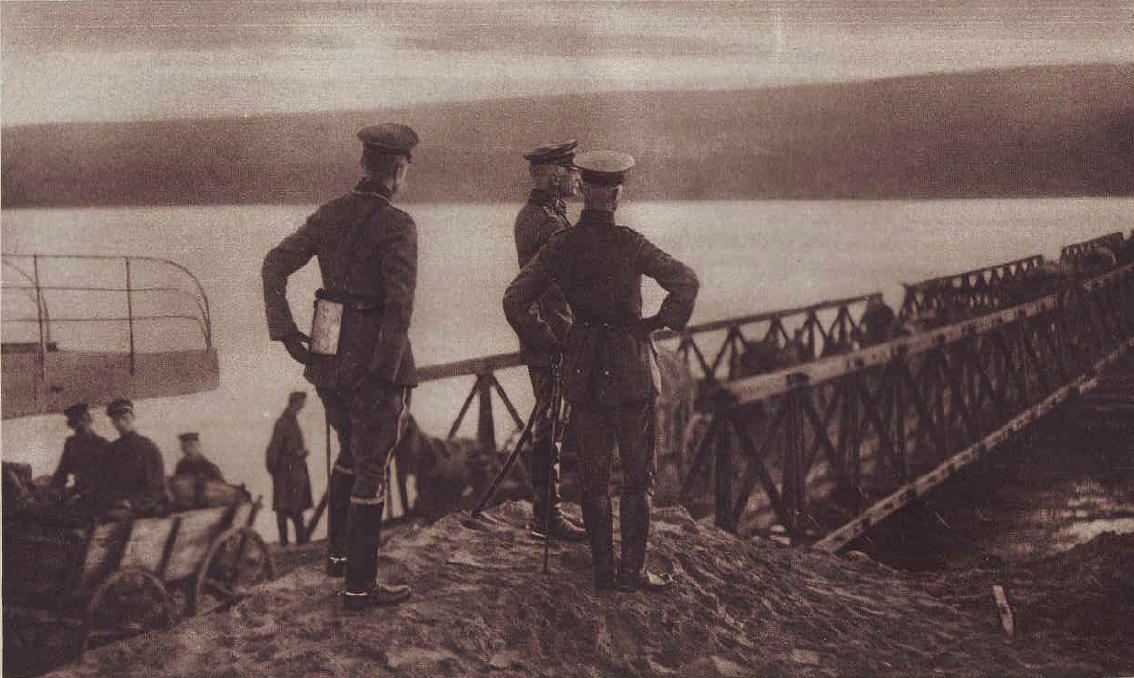
 

Von Mackensen shortly after crossing the Danube into Romania

Von Mackensen shortly after crossing the Danube into Romania one month ago

The German attacks at Verdun ended December 18 with the French holding their positions, bringing to a close one of the costliest battles in human history. Of nearly 2.4 million men, 1 million are casualties of war, slightly over half being French. With this end, US president Woodrow Wilson has asked for all major powers to release a statement of war objectives should peace be achievable.


On December 22, German commander Von Mackensen, in Romania, assaulted Râmnicu Sărat. There are rumors of a German memorandum calling for 600,000 tons of Allied shipping to be sunk each month, the quantity estimated at which Britain will sue for peace in 6 months.


Detail map of the Sinai peninsula, showing El Arish and Magdhaba

Detail map of the Sinai peninsula, showing El Arish and Magdhaba

That night, several Austro-Hungarian destroyers attacked French destroyers in the Otranto Barrage. After damage to each side, the attackers withdrew.


Fighting erupted on the Sinai Peninsula December 23, with the British attacking entrenched Ottoman forces at the village of Magdhaba. With British supply and rail lines sufficiently developed to allow an advance to El Arish, on the coast, the British scouts found the village deserted, the Ottomans having withdrawn to Magdhaba. The 6,000 British forces engaged the 2,000 defenders at 6:30am, and through the use of broad, sweeping envelopments and extensive aerial reconnoitering, the final assaulted commenced at 4:30 that afternoon, the Ottomans surrendering 10 minutes later, having suffered 300 killed, 300 wounded, and 1,300 prisoners to the British 22 dead, 124 wounded. El Arish has now been secured by the British and fortified, the Royal Navy having arrived one day earlier in anticipation of the advance.

The Tirelis Swamp, site of the Christmas Battles

The Tirelis Swamp, site of the Christmas Battles

The German Wall, including bunkers

The German Wall, including bunkers

To the extreme north, a combined Russian/Latvian force attacked at Riga, in the Tirelis swamp. An advance by Latvian rifleman in white snow camouflage cut the German barbed wire and took the first German lines, before climbing the “German Wall” to get further behind the German lines. Many Latvians were unable to climb the wall and chose to lay still in the snow, freezing to death, rather than retreat back to their lines, risk being seen by other German lookouts, and thereby betray the presence of their comrades.