<– Part 185 – February 3, 1918  | Part 186 – February 10, 1918 |  Part 187 – February 17, 1918 –>

Signing the treaty

Austro-Hungarian forces entering Ukraine following the treaty’s signing

After a Bolshevik delegation entered Ukraine & took Kiev last month to support the local soviet, the Central Powers signed a treaty with the Ukrainian People’s Republic on February 9 at Brest-Litovsk, outlining the terms of peace, which included territorial boundaries favoring Germany and Austria-Hungary, abrogation of war reparations for both sides, and allowances for Central Powers supply lines within Ukraine to be secured by German and Austro-Hungarian forces. This latter point has been seen as an occupation; further negotiations with Austria-Hungary regarding a unified Ukrainian province in exchange for grain and other supplies has met with fierce opposition from Polish residents of the empire, who have received no such territory of their own.

<– Part 184 – January 27, 1918  | Part 185 – February 3, 1918 |  Part 186 – February 10, 1918 –>

Ukrainian People’s Republic and Central Powers delegates during a break in negotiations earlier this week

Although the conflicts between Russia & Romania, as well as the simmering Russian Civil War, continue to grind along, the major belligerents remain in their camps, awaiting the various Spring offensives no doubt being planned at this time.

Delegates from the Central Powers have been meeting with representatives of the Ukrainian People’s Republic (a Soviet propped up by Russia), regarding the terms of peace between their respective nations.

<– Part 183 – January 20, 1918 | Part 184 – January 27, 1918 | Part 185 – February 3, 1918 –>

On January 20, an Ottoman fleet, led by a battlecruiser and light cruiser, sunk two unescorted British monitors near Imbros in the Aegean sea, but then sailed into a minefield, sinking the light cruiser and disabling the battlecruiser – a stunning victory immediately changed into a stunning defeat.

At Galati, following heavy Russian artillery fire, the Romanian launched a counter-attack January 22 using their own artillery, gunboats, rifles, and bayonets. The Russians capitulated later in the day, were disarmed, and sent home. Fighting continues throughout the country between the two erstwhile allies, with the worst earlier today at Faltceni, where nearly 100 Romanians and 600 Russians were casualties.

In Russia itself, fighting is increasing between the Bolsheviks seeking to centralize power, loyalists to the czar, and soviets declaring their own independence (encouraged in part by a Bolshevik declaration supposedly allowing them to be independent). The first soviet to declare independence, Finland, is now stuck in its own civil war.

<– Part 182 – January 13, 1918  | Part 183 – January 20, 1918 |  Part 184 – January 27, 1918 –>

Although forces in most areas continue to observe a lull, the Russian-Romanian tension has escalated to open warfare between the two formerly-allied parties. At the Romanian city of Galați, Russian forces attempting to desert the front have opened fire on the civilian center with artillery, as the heavily-outnumbered Romanians attempt to stop their rampage through the area, with minimal success in halting them.

<– Part 181 – January 6, 1918  | Part 182 – January 13, 1918 |  Part 183 – January 20, 1918 –>

Two opposing views of the reality of Wilson’s speech

Two opposing views of the reality of Wilson’s speech

US President Woodrow Wilson delivered a speech to the US Congress on January 8, outlining 14 points upon which a European speech should be established. Widely viewed positively by the Allies (although some question the idealism of Wilson), it is also seen as a like-response to Lenin’s Decree on Peace last November, and was similar to a statement made by the British last week.

The 14 Points can be divided into three main divisions: the first regarding lasting peace, the second regarding specific territorial issues among the combatants, and the third an establishment of an international peacekeeping force.

The first five points call for public treaties (thus preventing the secret alliances that dragged many nations into the war), freedom of international ocean navigation and trade, reduction of nations’ weapons of war, and colonial self-determination of sovereignty.

Points 6-13 call for all Russian, Belgian, French, Italian, southern Europe territories occupied by Germany and her allies to be returned (including the portion of France taken by Prussia in 1871 and portions of Austria-Hungary with a dominant Italian population), self-determination of the people of Austria-Hungary and Turkey, and the establishment of an independent Polish state with access to the Baltic sea (which would split Germany in half, as Prussia would be isolated from the rest of the Germanic peoples).

Finally a loose coalition of nations, the “League of Nations,” should be established to enforce the preceding principles, as well as provide a venue for nations to peacefully negotiate conflicts with the support of an international body.

It has been well received by the Allies (although French Prime Minister George Clemenceau lamented that God only had 10 Commandments), and elements of the Central Powers government, including the German Imperial Chancellor Prince Maximilian of Baden, view it as a just, non-punitive peace and support an immediate armistice. Others, more cynically, see it as “one more scrap to the diplomatic waste paper basket,” as former US President Theodore Roosevelt put it.

In Russia, fighting between Bolsheviks, other leftists, and forces loyal to the imperial family continue.

In Romania, tensions between Romanian forces and the Russian soldiers there continue to increase. Russian forces, embracing Bolshevik ideals of equality, have been executing officers, becoming brigands, and looting, pillaging, and raping throughout the Romanian countryside. Russian forces are being sent back to Russia on trains, as more and more divisions leave the front. Local Romanian gendarmerie patrol behind the front lines to eliminate bands of Russian soldiers roaming around.

<– Part 180 – December 30, 1917  | Part 181 – January 6, 1918 |  Part 182 – January 13, 1918 –>

The new year has brought relative stagnation in the military theaters, although the political theater in Russia continues to see the Bolsheviks under Vladimir Lenin consolidate their control over the nations. All military titles, ranks, decorations, and even saluting has been prohibited and removed as the equality of man is forced upon the people. On January 2, a new secret police organization, the Cheka, was formed by Lenin to further the aims of the new Soviets.

<– Part 179 – December 23, 1917  | Part 180 – December 30, 1917 |  Part 181 – January 6, 1918 –>

Although fighting on most fronts has been put on hiatus as the entrenched troops hunker down for the coldest of the year, an Ottoman counter-attack at Jerusalem was repulsed by British forces December 30, and the line pushed farther away from the city past Ramallah. The British enjoy a tremendous Christmas present – the occupation of Jerusalem by Christian forces – while the Ottomans suffer the humiliating loss of yet another Muslim holy site, together with Mecca and Baghdad.

<– Part 178 – December 16, 1917  | Part 179 – December 23, 1917 |  Part 180 – December 30, 1917 –>

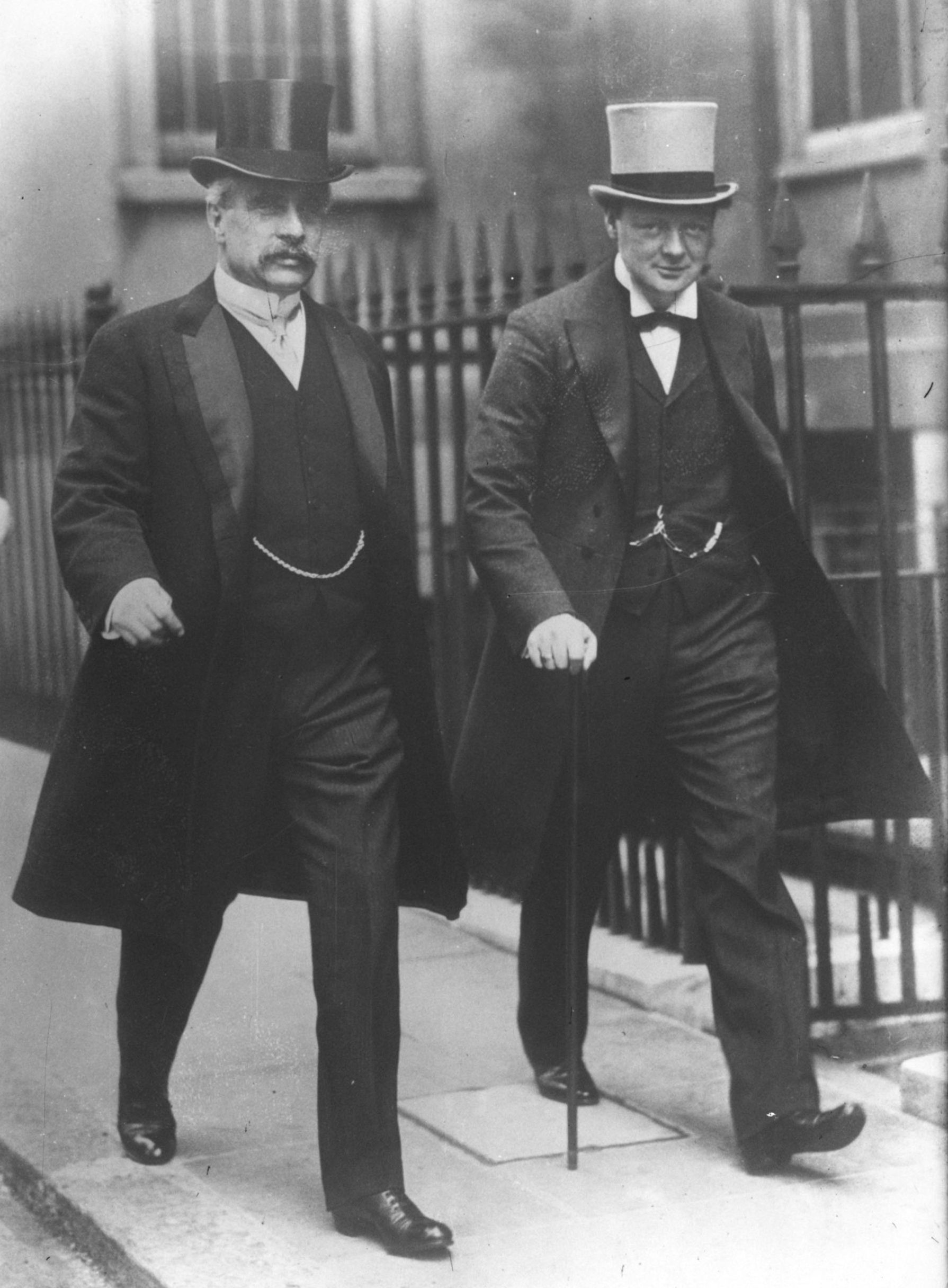
Borden with the British 1st Lord of the Admiralty, Winston Churchill, in 1912. Churchill resigned in 1915, feeling his talents were wasted in government, and, although a sitting member of Parliament, was commissioned a Lieutenant Colonel last year, leading front-line troops on the Western Front. He returned to England after several months, and was appointed Minister of Munitions earlier this summer.

Canada reelected Prime Minister Robert Borden on December 17. Borden was a Conservative until becoming head of the “Unionist Party” this election, which saw the Liberal party split on the subject of conscription to meet personnel demands of the war. The pro-conscription Liberals formed a coalition with the Conservatives and roundly defeated their opponents.

The Russian-Central Powers armistice has officially taken effect.

Late at night on December 20, the British XXI Corps in Palestine conducted stealth crossings of the Auju River, near Jaffa. Finishing in the darkness of the following morning, the Ottoman defenders were taken by surprise and bayonet point, without a shot being fired. The British have taken the key port city of Jaffa and established a beachhead of several miles.

<– Part 177 – December 9, 1917  | Part 178 – December 16, 1917 |  Part 179 – December 23, 1917 –>

This past week saw a minor nation enter the war, and a major one attempt to exit it.

December 10 saw a new nation – Panama – declare war on the Austro-Hungarian Empire. It remains to be seen the Panamanian’s contribution to the war effort for the Allies.

December 15 saw the new government in Russia – formally styled the Russian Soviet Federative Socialist Republic – sign a formal armistice and ceasefire with the Central Powers (Austro-Hungarian Empire, Kingdom of Bulgaria, German Empire, Ottoman Empire), effective two days later. Each side has agreed to hold its current lines, with no expectation for the Germans to withdraw from their lines.

The next day saw another armistice signed between the Ottoman Empire and the Transcaucasian Commissariat, an entity existing in the Caucasus. The exact legal implications of this is uncertain – the Turks see the Commissariat as an independent successor of the Russian Empire, while the Commissariat sees itself as part of the RSFSR. The Russian Caucasus Army has finished its disintegration.

Regardless, these changes in war-footing have seen the Armenians at Van completely cut-off from Allied support. The Allies have encouraged them to hold out and keep fighting until the British advance arrives.

<– Part 176 – December 2, 1917  | Part 177 – December 9, 1917 |  Part 178 – December 16, 1917 –>

4th Sussex Regiment marching through Bethlehem December 9

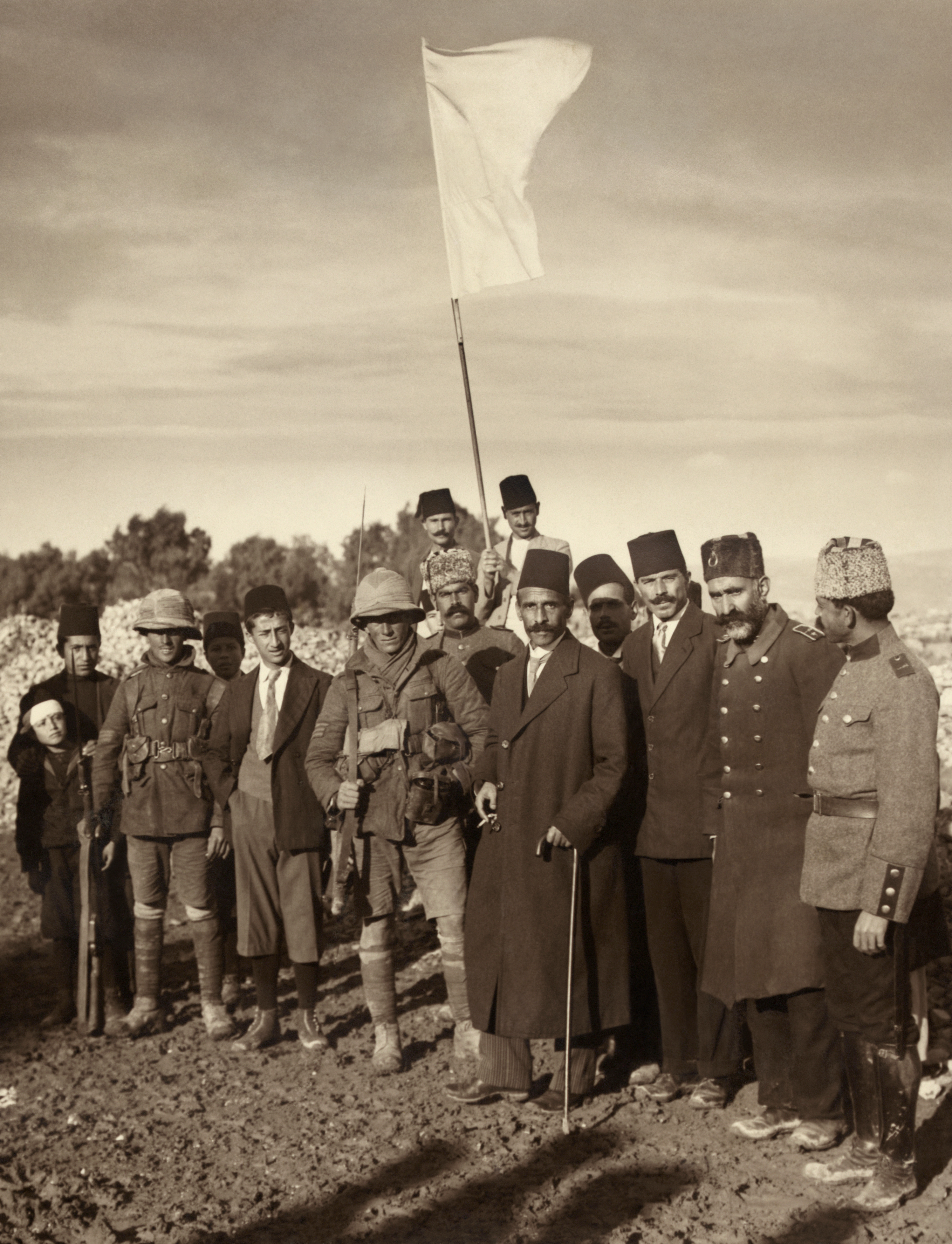
Ottoman surrender of Jerusalem

Following the establishment of the Soviets, the new Russian government has called for a ceasefire with Germany, and immediately shifted focus towards suppressing revolts in the former fatherland.

At Cambrai, Haig ordered a partial retreat from the salient on December 3, following the enormous German counter-attack. By the 7th, all British territorial gains had been erased except a small amount in the north – and even this was offset by German gains to the south. In total, each side lost nearly 45,000 men, together with 179 British tanks (out of 476 total). The battle has proven both the power of tanks in taking “impregnable” static defenses, while the German counter-attack has proven the value of both large and trench artillery, with the stormtrooper tactics.

Australian light patrol car – a Ford Model T with mounted machine gun – operating near Bethlehem

Ottoman fighting in the Judean hills has wound down as they have begun their withdrawal. British forces advancing on Bethlehem took Solomon’s Pools on December 7, while heavy rain the following day saw Ottoman forces withdrawing from Jerusalem. The city was surrounded by the British following a final Turkish rearguard action on the Mount of Olives. The Mayor of Jerusalem left the city December 9 with a letter of surrender delivered to two British sergeants on a scouting mission; they refused it and escorted him to Brigadier General C.F. Watson, who accepted it. The letter read,

“Due to the severity of the siege of the city and the suffering that this peaceful country has endured from your heavy guns; and for fear that these deadly bombs will hit the holy places, we are forced to hand over to you the city through Hussein al-Husseini, the mayor of Jerusalem, hoping that you will protect Jerusalem the way we have protected it for more than five hundred years.”

The decree was signed by Izzat, the Mutasarrif of Jerusalem.

On December 7, 1917, the United States declared war on Austria-Hungary.