<– Part 139 – March 18, 1917  | Part 140 – March 25, 1917 |  Part 141 – April 1, 1917 –>
Georgy Lvov, head of the Provisional Government duma
Nikolay Chkheidze, Chairman of the Executive Committee of the Petrograd Soviet

British General Maude issued the Proclamation of Baghdad March 19, following his occupation of the city. It contains the famous line, “Our armies do not come into your cities and lands as conquerors or enemies, but as liberators.” The citizens seem to welcome the British forces. Otherwise, both armies have halted; the British due to extended supply lines, and the Ottomans in preparation for another advancing enemy column.

The former Russian Tsar Nicholas II has been reunited with his family in the Alexander Palace, where he was greeted by disrespectful sentries as “Nicholas Romanov.” The Provisional Government Duma, although an equal, in theory, to the Petrograd Soviet, has been subordinated by a new decree that the Duma’s authority cannot conflict with the Soviets, but the reverse is not true.

In Serbia, the Toplica Uprising has been crushed, with thousands of civilians dead. At Monastir, the French assaults, begun last week, continue with no signs of success.

<– Part 138 – March 11, 1917  | Part 139 – March 18, 1917 |  Part 140 – March 25, 1917 –>

US President Woodrow Wilson issued an executive order arming US merchantmen on March 12, following Congress failing to approve his proposed bill. In Serbia, an uprising in Toplica against the occupying Bulgarians has been met with violence, as thousands of Serbs have been killed by Bulgarian and Austro-Hungarian forces.

German withdrawal at Ancre

German forces withdraw from the Ancre salient March 13, having lost 5,300 soldiers (many of them as prisoners) to the British, who lost only 2,200 themselves. British forces have launched an offensive towards Samarrah, in Mesopotamia; although Baghdad has been taken by the British, a 10,000-strong Ottoman force evacuating the city to the north of the city is marching towards a 15,000-strong force evacuating Persia from the Russian offensive there. To prevent the two armies from linking up, the British hope to take the strategic Samarrah railroad.


On March 17, Aristide Briand resigned as French prime minister, following disgreements between Allied war planners over a plan developed by Briand’s appointed Commander-in-Chief of French Forces Robert Nivelle, as well the resignation of his minister of war.

In Arabia, Ottoman forces are sweeping the area, dealing casualties to the rebels, but the Ottoman failure to capture Yanbu means the rebels are still well supplied.

In the Russian capital of Petrograd, a company of soldiers refused to muster March 12, shooting its officers and joining the protesting civilians. Other regiments have followed, distributing 40,000 rifles to the workers, while loyal army officers have withdrawn to the admiralty building, one of the few remaining areas not under rebel control. Several members of the duma have formed the “Provisional Committee of the State Duma” in response to loyalist members abiding by the Tsar’s order not to meet. Socialist elements have declared the “Petrograd Soviet.” The following day, the Grand Dukes signed a manifesto calling on Tsar Nicholas II to issue constitutional reforms, removing much power from himself. The Tsar abdicated on March 15 on behalf of himself and his son, nominating his brother Grand Duke Michael Alexandrovich as his successor. Michael declined the next day, unless the people chose him democratically.

<– Part 137 – March 4, 1917  | Part 138 – March 11, 1917 |  Part 139 – March 18, 1917 –>

50,000 British soldiers advanced towards Baghdad March 5, reaching the Diyala river 35 miles south three days later. Following an initial assault the next day, the 25,000 Turkish defenders left their defensive positions and tracked the British, leaving one regiment behind. A surprise assault on that sole regiment March 10 destroyed it, forcing the Ottomans to retreat towards Baghdad, which was evacuated later that day. Baghdad was taken March 11 by the British, who were greeted enthusiastically. 10-15,000 Turks have been taken prisoner.

In Imperial Russia, protests broke out March 8 in the capital of Petrograd on International Women’s Day, comprised largely of women. The protests, initially started against government food rationing, has grown to over 200,000 calling for the Tsar to be replaced. Many in the crowd are waving red flags and banners, supporting the local communist. Industry shut down March 10, and the Tsar (on vacation) ordered the garrison to open fire on the crowd to disperse them. The 180,000 soldiers in the capital, mainly reservists and new recruits (only 12,000 are considered reliable) are low in both morale and officers, and are hesitant to fire on those they know (and many women). Rumors earlier today of police stationed in windows with machine guns have led to attacks on policy. Some troops have mutinied and joined the protesters. Earlier this evening, the Tsar issued a decree suspending the duma (state assembly), leaving it unable to act.

<– Part 136 – February 25, 1917  | Part 137 – March 4, 1917 |  Part 138 – March 11, 1917 –>

US President Woodrow Wilson requested Congressional approval to arm US merchantmen on February 26. The Zimmerman Telegram was released to the press March 1, lending support to the president’s request, and the US House of Representatives passed the Armed Ship Bill that same day. However, following a filibuster in the Senate, the bill failed March 4 – thereby ending what would certainly have been war.

On March 3, the French response to the revolt in North Niger, led by Ag Mohammed Wau Teguidda Kaocen, is harsh, with entire villages destroyed and summary executions the order.

On the Somme, an extremely well-planned attack by Australian forces was launched March 4 against German lines. Few extensively-planned attacks have been undertaken since the catastrophic losses of trained troops in 1914, but the success of this one indicates troops are again gaining experience. German artillery attempting to push the Australians from captured trenches has failed.

<– Part 135 – February 18, 1917  | Part 136 – February 25, 1917 |  Part 137 – March 4, 1917 –>

The Second Battle of Kut


Herbert Garland

At Bir el Hassana, although the Ottoman garrison surrendered, a stray Bedouin bullet shattered a British soldier’s leg February 19, leading to his evacuation by aeroplane. The rest of the garrison surrendered two days later, and the final Ottoman retreat from the peninsula has commenced.


British and Ottoman forces met at Kut February 23, and the British successfully recaptured the city with their 50,000 men, to the Ottoman 13,000, suffering only 1,000 British and Indian casualties. The Turks lost 3,000.

British intelligence indicates that the Zimmerman Telegram was given to US officials February 24, showing details of the proposed German alliance with Mexico against the United States.

The German withdrawal to the Hindenburg line continues. In Hedjaz, a Turkish train was destroyed by a mine invented by British officer Herbert Garland.


<– Part 134 – February 11, 1917  | Part 135 – February 18, 1917 |  Part 136 – February 25, 1917 –>

Reservations among the British High Command continue as to whether the Americans will be able to muster a force with any fighting ability, should the US enter the war.

The Sinai campaign continues, with Bir el Hassana surrendering February 18 to British forces. The last Ottoman garrison are retreating from the peninsula.

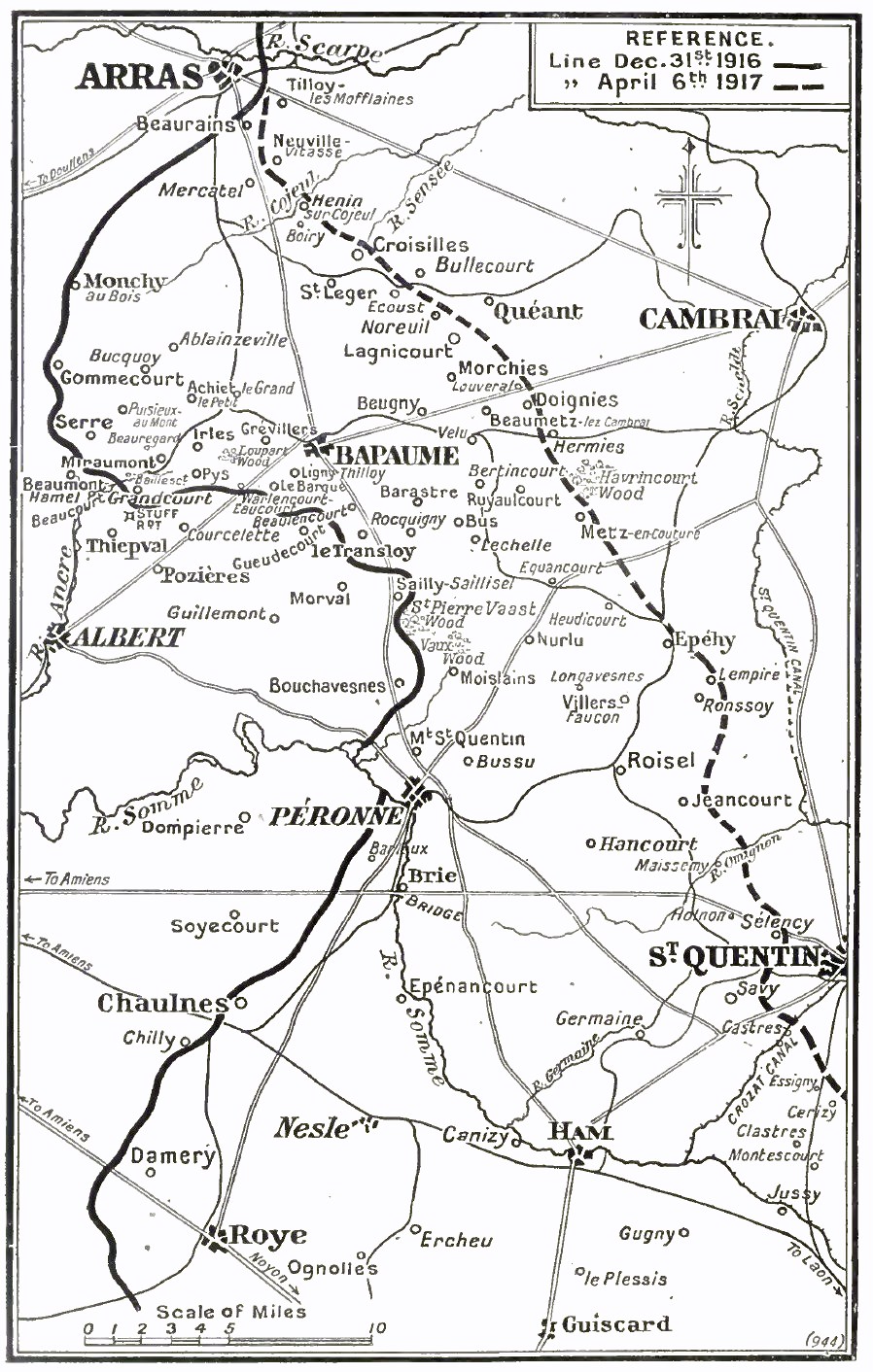
To the West, Operation Alberich continues, with German forces completely obliterating all land they are ceding to the Allies in an horrific scorched earth strategy.

<– Part 133 – February 4, 1917  | Part 134 – February 11, 1917 |  Part 135 – February 18, 1917 –>

Operation Alberich in March 1917

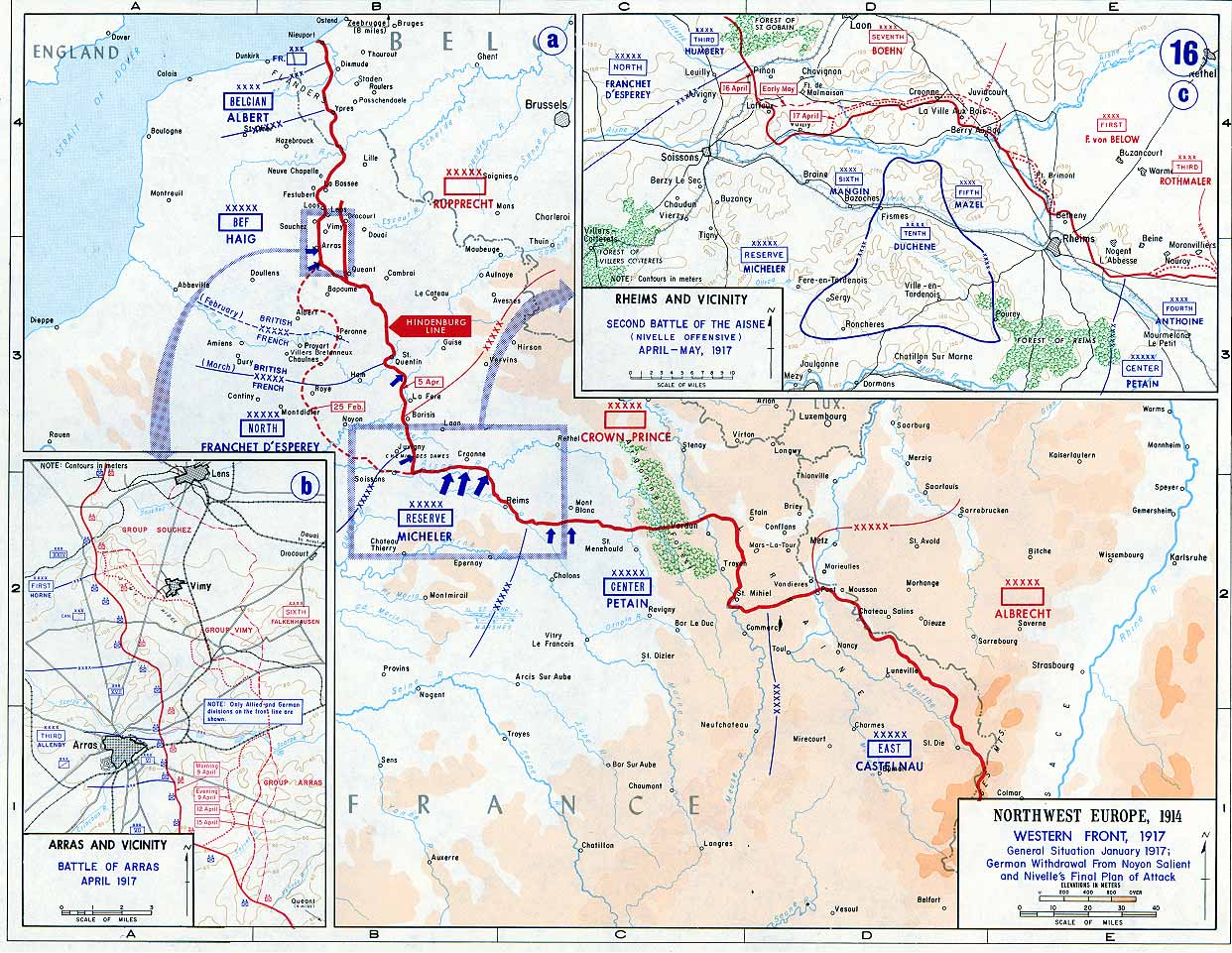
Western Front, early 1917

With American entry into the war seeming increasingly likely, the British General staff has estimated that, at most, only 250,000 American soldiers could be in Europe within one year.

On February 9, German forces in Western Europe commenced Operation Alberich, the planned withdrawal to the Hindenberg line, a defensive position behind the German lines. It is estimated that this withdrawal will take 5-8 weeks.


<– Part 132 – January 28, 1917  | Part 133 – February 4, 1917 |  Part 134 – February 11, 1917 –>

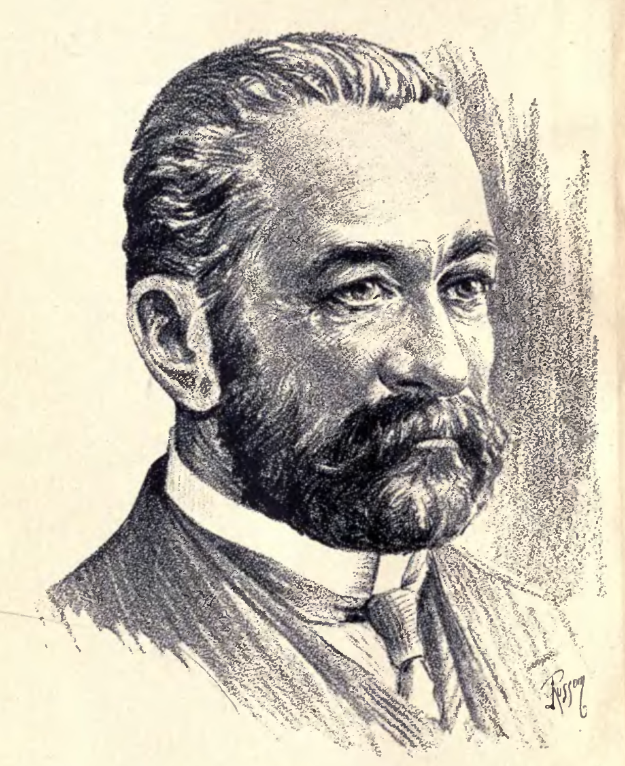
German chancellor Theobald von Bethmann-Hollweg

Germany announced January 31 that it would resume unrestricted submarine warfare the following day. The German Chancellor, Theobald von Bethman-Hollweg, has opposed the decision, stating, “Germany is finished.” Indeed, the United States severed diplomatic ties with Germany on February 3 in response to this decision, and war seems imminent.

In Persia, Grand Duke Dimitri Pavlovich Romanov has joined Russian General Baratov.

On February 3, the British attacked the Senussi at Siwa, catching them by surprise due to a rapid, automobile advance. The rest of the day, however, was spent attempting to drive nearer to the tribesmen over the uneven ground. By early this morning, the Senussi had withdrawn.ttacks on ottoman railroads continue in

In Arabia, attacks on Ottoman railroads by the rebels continue with British assistance.

<– Part 131 – January 21, 1917  | Part 132 – January 28, 1917 |  Part 133 – February 4, 1917 –>

Following Entente statements clearly listing terms of peace in response to US President Woodrow Wilson’s call for warring powers to declare such last month, Wilson has given a speech January 22 to the US legislature called “Peace Without Victory,” calling for the Central Powers to release their terms (to date, they have only mentioned a willingness to discuss peace), as well as stating the necessity of US involvement in such a peace, all with an eye towards forming a world-wide “League of Peace.”

The following day, Bulgarian forces attempting to advance into the Danube delta were halted with heavy casualties by the Romanian defenders.

<– Part 130 – January 14, 1917  | Part 131 – January 21, 1917 |  Part 132 – January 28, 1917 –>

A classified and encrypted telegram was sent from the German government to its ambassador in Mexico, a deviation from agreed-upon terms between the United States and German, whereby all telegrams using US cables would be plain-text. It remains to be seen what the telegram contained…

Several days later, on January 18, the Ottoman forces besieging Yanbu began their retreat after suffering heavy losses.

British forces fighting the Senussi renewed their campaign January 21, advancing towards a defended area held by Sayed Ahmed, supreme leader of the Senussia Order. The operation is expected to last one month,

British forces on the Ancre continue their slow advance, sapping forward during the night and connecting these new trenches to the older ones.