<– Part 79 – January 23, 1916  | Part 80 – January 30, 1916 |  Part 81 – February 6, 1916 –>

January 24 saw the British troops returning to their station after their rough battle against the Senussi, trudging through cold and wet. In Germany, Reinhard Scheer has been appointed commander of the German Empires Hochseeflotte.
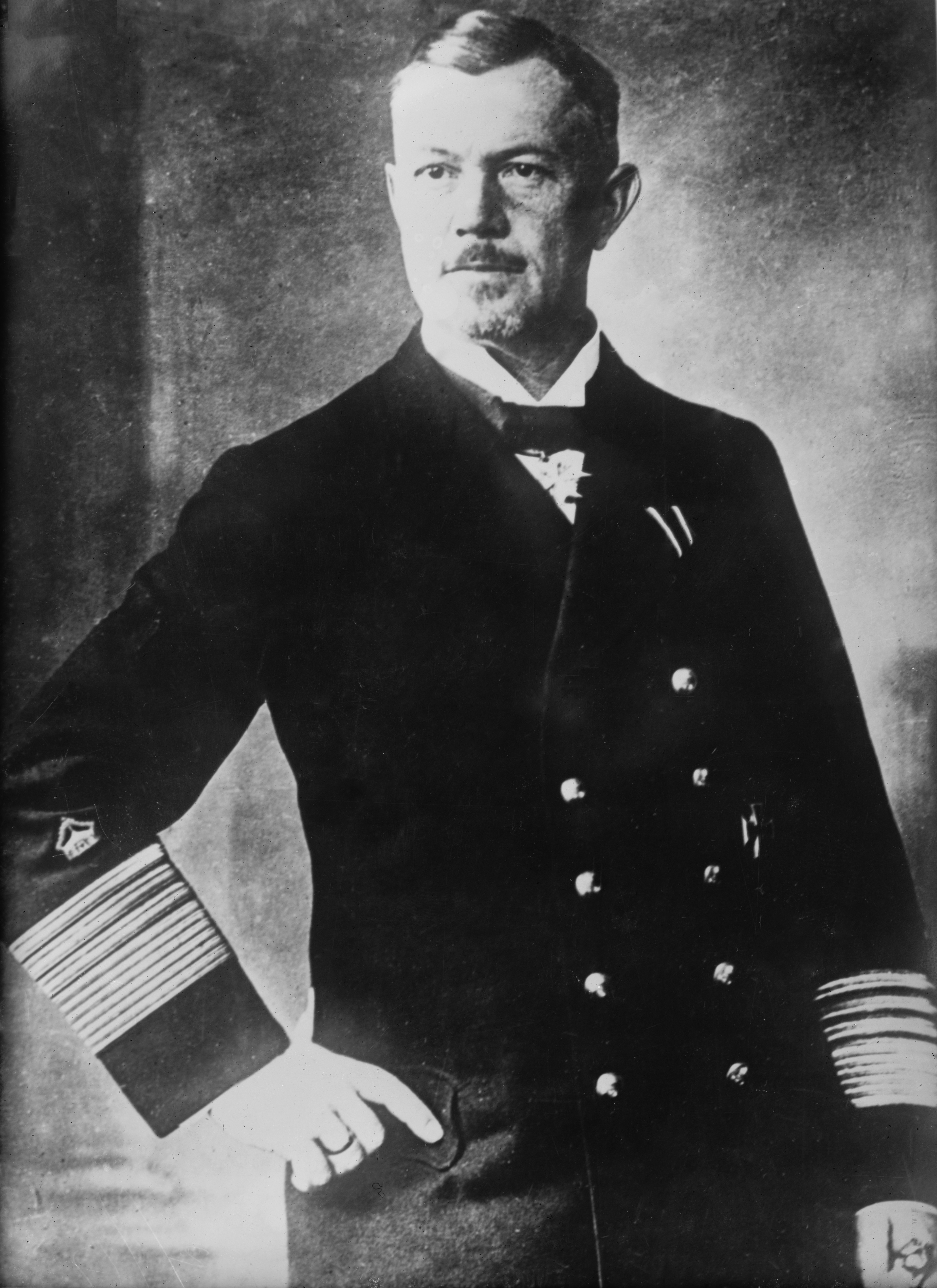
Admiral Richard Scheer

Montenegro has surrendered to Austria Hungary on January 25, after the King fled last week and ordered the head of the army to fight a hopeless campaign.


January 27 was a day of politics: In the United Kingdom, a lack of volunteers for the army has forced the government to institute the Military Service Act, introducing mandatory conscription. Conscientious objectors will be able to perform unarmed (though still war-related) work, while those refusing even this will be jailed. In the United States, coupled with growing confrontations with rebels on the Mexican border, President Woodrow Wilson has begun a nationwide whistle-stop campaign in New York, urging the nation and Continental Army to be prepared for any war that might come.


On January 29, German zeppelins bombed Paris. This may perhaps be an indicator of the future of warfare: mighty zeppelins dropping bombs upon a terrified populace. Germany again has shown herself willing to target civilians, an act which has already begun fanning flames in America because of the attacks of merchant and passenger liners by German submarines.
<– Part 78 – January 16, 1916  | Part 79 – January 23, 1916 |  Part 80 – January 30, 1916 –>

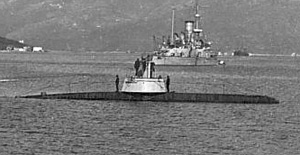
SM U-11

January 18 saw the Austro-Hungarian submarine U-11 sink the Italian hospital ship King Albert. This follows rumors of a new British anti-submarine weapon, although details are unavailable at this time.

The Senussi campaign of Africa continues in earnest, as British aircraft identified the main Senussi camp on January 19. The British troops attacked three days later; after a day of flanks and counter-flanks, the Senussi trenches were overrun that afternoon by Sikh South African and New Zealand infantry. The main Senussi body then retreated, having suffered 700 casualties to the British 300,.

The fighting near Kut continues. On the 21st, following a two-day bombardment, the 10,000-man British 7th Division charged across flooded, open terrain towards 30,000 heavily entrenched Turkish soldiers near Hanna, suffering 2,700 casualties to the Ottoman’s 500. No medical care was provided as temperatures dropped below freezing during the night, further crippling British morale.

The Russian push to Erzurum continues at Koprukoy, where the Russians finally achieved a breakthrough after taking advantage of the lack of Turkish reserves. The Ottoman Third Army retreat following was organized, although several rearguard units were destroyed. 20,000 of the 65,000 Ottoman troops fell, compared to 12,000 of the 75,000 Russian Caucasus Army. Further south, in Persia, the Russian thrust under Baratov has taken Hamedan.

Rumors of a massive Ottoman victory over the British South Arabia troops have been traced back to a minor skirmish January 12, in which British scouts searching for the Ottoman army found said army. They sustained approximately 40 casualties after inflicting over 200 on the Turks and then withdrew, their mission accomplished. The Ottomans have trumpeted this into a victory over the entire British force. Minor fighting continues in the area.

The general retreat of German forces in German Kamerun has been confirmed. They are reported to be withdrawing into the colonies of neutral parties nearby, including Spanish lands.

<– Part 77 – January 9, 1916  | Part 78 – January 16, 1916 |  Part 79 – January 23, 1916 –>

A massive offensive was launched January 10 by the Imperial Russian Army, seeming to be aimed at Erzurum. 350,000 Russian troops of the Caucasus Army face off against 134,000 of the Ottoman Third Army. Major losses from the Ottoman IX Corps have been reported as it has been pushed back by the Russian troops.

Allied troops have occupied the Greek island of Corfu since January 11, undoubtedly to assist in evacuating the Serbian Army.

British troops attempted another relief of the Kut garrison on January 13, but the 19,000 British soldiers, while taking the Ottoman positions at the Wadi River, were unable to press their advantage, having taken nearly 1,600 casualties.

Reports from the colonial fronts are similar. The Allied troops in Senussi have found abandoned camps, but are unable to find the main Senussi army. Similarly, in German Kamerun, the lack of enemy contact parallels rumors that the German commander in the area has ordered his men to scatter to neutral colonies around them, mainly those of Spain.

<– Part 76 – January 2, 1916  | Part 77 – January 9, 1916 |  Part 78 – January 16, 1916 –>

The forces of Austria-Hungary entered Montenegro on January 5, following the retreating Serb army. The Montenegrin army was entrenched at Mojkovac and encountered the following day. Fighting went on for two days, allowing the Serbian army more time to retreat. The 6,500 troops from Montenegro successfully held of 30,000 Austro-Hungarians, though at the cost of 2,500 casualties. The Austro-Hungarians have withdrawn

At Gallipoli, weathering many attacks from the Ottomans, the last troops were withdrawn the night of January 7/8, boarding boats early on the morning of the 8th. The last rearguard troops withdrew earlier today. The Gallipoli Campaign is over, lasting over 8 months. Of the 570,000 Allied troops and 316,000 Ottomans engaged, 252,000 Allies and approximately 230,000 Turks have been lost.

On the colonial front, in German Kamerun, there are rumors that the German general will surrender soon. In French North Africa, the Zaian raids continue against the French colonial troops.

A British Hospital ship evacuating casualties from Sheik Sa’ad.

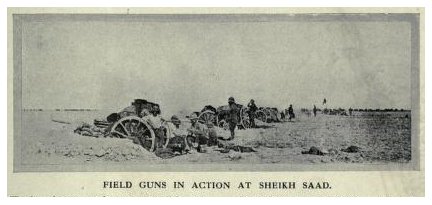
In Mesopotamia, the Anglo-Indian forces attempted to break the siege lines around Kut at Sheik Sa’ad. Although the British forces took one bank of the Tigris, achieving their goals, the losses were much higher than hoped – 4,300 of the 13,300 British forces, compared to only 1,200 of the 9,000 Ottomans (elements of the Sixth Army). With this incomplete breakthrough with high casualties, Kut has not been bought any more time.

Indian machine gunners serving anti-aircraft duties.

<– Part 75 – December 26, 1915  | Part 76 – January 2, 1916 |  Part 77 – January 9, 1916 –>

Reports of wide-scale evacuation of Allied troops from Gallipoli have begun flooding in since December 28. Ottoman forces have made some attacks at the retreating troops, but have been held at bay by stalwart Australian rear-guard units.

In Africa, the British forces have destroyed some Senussi camps, but all tribesmen have fled upon contact.

December 30 brought another diplomatic incident when the German sub U-38 sunk the SS Persia off Crete while her passengers were eating lunch. In violation of international law, the German boat fired a torpedo without warning, without provocation, and without allowing the passengers an opportunity to reach lifeboats.

Further west, in the Adriatic, the skirmishing Austro-Hungarian ships have been forced back to port, but not before ramming and sinking the French sub Monge.

<– Part 74 – December 19, 1915  | Part 75 – December 26, 1915 |  Part 76 – January 2, 1916 –>

The sun rose December 20 above Anzac cove and Suvla and shone upon empty trenches; it would appear that the Allied troops in the area have effected their withdrawal. Several ingenious devices were rigged to trick the Ottomans into thinking the trenches were still manned. One of them was a rifle whose trigger was tied to a bowl into which water dripped, causing it to fire at various intervals.

Geoffrey Spicer-Simson, commander of the British forces on Lake Tanganyika, shortly after the victory over the Kingani. He is on the far left, wearing a kilt.

In Africa, the fighting on Lake Tanganyika has scored another Allied victory December 26, when the British motor boats Mimi and Toutou (“Meow” and “Fido” in Parisian slang) captured the German ship Kingani after an 11 minute fight. The Kingani, having only a fore-mounted gun, was unable to target the more agile motor boats, who scored a direct hit on the single German gun, killing her captain and two officers. Additionally, two sailors were killed in the fighting. The British have renamed her Fifi.


Christmas Day in Senussi saw two British columns marching, one of which was sighted before sunrise by the tribal forces. Fighting raged all day, before the Senussi were repelled by artillery and machine fire. Delays in communication with the other column allowed the Senussi to escape at sunset.

<– Part 73 – December 12, 1915  | Part 74 – December 19, 1915 |  Part 75 – December 26, 1915 –>

As the winter approaches in the northern hemisphere – the location of much of the fighting, especially in Europe – the fighting is winding down as the troops prepare for another winter spent in the trenches. Douglas Haig has been named Commander-in-Chief of British troops in France, replacing Field Marshal Sir John French. With this position, he also commands Canadian forces in Europe.

Great Britain has also announced the formation of the “South Persia Rifles” to help defend against the German troops in the area.

In the Adriatic, the Austro-Hungarian sorties against the Otranto Barrage have sunk additional vessels.


<– Part 72 – December 5, 1915  | Part 73 – December 12, 1915 |  Part 74 – December 19, 1915 –>

Serbian campaign, 1915. This week’s fighting took place in the far southern part of Serbia.

A close-up of the southern region, marking Skopje, Krivolak, and Kosturino.

This week saw fighting between the Bulgarians and British at Kosturino in Serbia, where they engaged December 6 after several days of skirmishing, and a full push was made by Bulgaria two days later, outnumbering the small British division 4 to 1. Fighting finished today with the British withdrawal into Greece towards Saloniki. With this, the last of the Allied troops have left Serbia. The German High Command has ordered Bulgaria not to enter Greece, as there are still hopes among the Central Powers that Greece will join them. The Allies are using this opportunity to reinforce and dig in. All told, the Serbian campaign cost Serbia 90,000 casualties (plus 174,000 captured), against merely 67,000 Central Powered casualties.

The British and Indian forces retreating from their defeat at the hands of the Ottomans at Ctesiphon have withdrawn to a defense of Kut, a city set in a loop of the Tigris River – an area easy to defend, but difficult to supply. 31,000 British and allied troops face off against an Ottoman force of 41,000, who have surrounded Kut since December 7. The British general, Charles Vere Ferrers Townshend (great-great-grandson of the famous Field Marshall George Townshend), has ordered the cavalry to retreat farther south after seeing the greater Ottoman numbers.


There have been reports since December 7 that veterans of Gallipoli have been arriving in other theaters; is a full draw-down and evacuation beginning?

A B.E.2, like those used in North Africa (and elsewhere) for reconnaissance and communications.

In North Africa, a British column of infantry, artillery, and armored cars was attacked by 300 Senussi December 11 but repelled at a cost of 90 Senussi to 35 British, although one of those was the commander of the coast guard in that area, a Lieutenant-Colonel C.L. Snow. Snow had been involved in the (ultimately) failed attempts to maintain peace. Reinforcements were called for via message dropped from aeroplane. Having reconnoitered the following day, a larger British force was attacked by between 1,000 and 1,500 Senussi, 250 of whom became casualties to the British’s 75. There are reports that the British regulars feel that under-trained and under-experienced local and colonial troops cost them a great victory.

<– Part 71 – November 29, 1915  | Part 72 – December 5, 1915 |  Part 73 – December 12, 1915 –>

In German East Afrika, the month of December began with the Kingani, a German ship commander by Lt. Job Rosenthal scouting British positions at the harbor near Kalemie, though he was driven off by shore batteries. The following night he swam ashore, became lost in the dark, and was captured by the Belgians. Meanwhile, across the continent in German Kamerun, the French, British, and Belgian forces have met up and are preparing an assault on the new capital Jaunde.

December 2 saw the end of the fourth battle at the Isonzo, with a cold snap hitting the region and the fighting winding down (although minor skirmishing has continued). There are reports that the Austrians have requested assistance from Germany. This battle saw 50,000 Italian casualties to the Austro-Hungarians’ 32,000.

In Mesopotamia, after the mutual retreat from Ctesiphon by the British and Ottomans, the Ottoman commander Nurredin has turned about and, following a pursuit of the British forces, has surrounded them at Amara on December 3.

The Serbian army retreating through mountainous Albania for evacuation by the French and Italian navies.

Postcard celebrating the fall of Serbia to the Germans, Austro-Hungarians, and Bulgarians.

Serbia’s army has been in full retreat since December 4, with the end of the offensive in Kosovo at the capture of Debar. The entire campaign saw minimal casualties for the Central powers, but 30,000 for the Serbs plus much heavy artillery. Additionally, the French (and their British allies) have been driven back towards Thessaloniki. The Serbian campaign has been an overwhelming success for the Central powers.

In the East, Russia continues her retreat although it is much more orderly than earlier. In Gallipoli, the mass flooding and rain has given way to snow, bringing more misery to the Allied powers. Their positions seems more untenable daily. In Persia, the Shah has appointed a Pro-Ally cabinet, following the capture and occupation of Tehran by the Russians.) In the Caucasus, the Ottomans seem to have begun a withdrawal following massive casualties to the Russians with minimal support of reinforcements coming. This has become a secondary front for them.

Finally, earlier today, December 5, in the Adriatic sea, after attempting blockade duty, the French sub Fresnel was pursued by the Austro-Hungarian SMS Warasdner and run aground. Her crew has been captured.

<– Part 70 – November 21, 1915  | Part 71 – November 28, 1915 |  Part 72 – December 5, 1915 –>

November 22 saw fighting erupt 25 miles south of Baghdad at Ctesiphon between the advancing British troops and the Ottoman defenders. After several days of fighting, both sides withdrew on the 29.

In the midst of this fighting, the Serbian army began a full retreat to the Adriatic with only 150,000 men remaining on November 27. The French and Italian navies are standing by to evacuate them. In Italy, the Fourth Battle of the Isonzo continues, with the casualties this week reaching an all-time high, with little progress to show for it.

North Africa has British troops continuing to land; there are reports of fighting between garrisons, but no major battles yet.

In Persia, Tehran has been taken by Russian forces.

Gallipoli has seen a massive rainstorm the last three days, flooding the trenches, drowning soldiers, and washing bodies into those trenches. Additionally, the temperature is dropping – it could be frozen and snowing soon.