<– Part 105 – July 23, 1916  | Part 106 – July 30, 1916 |  Part 107 – August 6, 1916 –>

The road to Pozieres

Taif has fallen to the allied British & Hejaz forces, as the Arab Revolt in the Ottoman Empire continues.

The Somme offensive near the village of Pozieres continues, as the British have taken the village, resisting brutal German assaults and artillery bombardments. One Australian division has suffered 5,300 casualties, its men describing as looking like they have visited hell, and are marked by a glassy gaze, and seem to be walking in a dream. The British have launched further assaults to the north but, like they Germans, they have been repulsed.

On July 24, an Austro-Hungarian assault south of Kowel has begun, in an attempt to halt the Russian Brusilov offensive. 12 Austro-Hungarian divisions face 29 Russian infantry divisions and 12 cavalry divisions. The Russian strategy of massed artillery bombardment followed by waves of infantry assaults has proven ineffective, as the combatants gain more experience in defensive trench use. Hundreds of thousands of Russian casualties are beginning to wear down the Russian offensive, which was halted for several days before resuming July 28.

Black Tom pier, following the explosion

The Battle of Erzincan, in Turkey, ended July 25 with a victory for the Russians. 17,000 Turks have been killed, with another 17,000 prisoners.

The Black Tom Island munitions plant, in the American state of New Jersey, was completely destroyed in an enormous explosion, killing 7, destroying windows in Times Square and Manhattan, 25 miles away, and embedding debris in the Statue of Liberty. Although the investigation is ongoing, signs point to an act of German sabotage.

The last German holdout in East Africa, at Tanganyika, was captured by the Allies, who found the German warship gone and her weaponry hauled away.


<– Part 104 – July 16, 1916  | Part 105 – July 23, 1916 |  Part 106 – July 30, 1916 –>

Delville Wood, 17 July 1916, showing the British salient

Fighting ended at the Bazentin Ridge July 17, with Allied units completely intermixed in the woods, as fighting at the Sommes continues. In one instance, a British pilot spotted Germans hiding to ambush British cavalry, so he opened fire on them and flew low overhead both to distract them and to alert the cavalry, sketched a layout of their positions, and then dropped it to the cavalry below. With fighting ended overall, the British are skirmishing to straighten their lines around the wooded salient, while the Germans attempt to cut it off.

Fromelles Ridge

A British distracting attack was launched at Fromelles on July 19-20, also at the Sommes offensive, but it was unprepared, undertrained, unsupported, unmotivated, and exhausted, and was launched in broad daylight against entrenched men while overlooked by hostile artillery on ridges surrounding it – and outnumbered 3:1. As expected, the 10,000 British lost 7,100 men, while the 30,000 Germans lost only 1,800. A defending German commander called the attack “operationally and tactically senseless,” and captured Australian troops showed no desire to fight at all, as well as a severe lack of understanding of how trench warfare is carried out.

Captured German bunker “Gibraltar”, with a sandbag team moving into position

Following the failure, 12 British divisions launched an attack July 23 at

Site of fighting between the Russians & Germans

Pozieres, taking several trenches during the day, and repelling 3 German counterattacks thanks to well-placed artillery and “rolling attacks,” wherein the advancing infantry divisions are right behind the artillery detonations. However, due to the well-planned artillery, it has been difficult for the attackers to determine where trench lines are, due to the severe cratering of the landscape. However, Australian units did succeed in taking a German bunker nicknamed “Gibraltar,” on the flank of the fighting.

Finally, also on the Western front, at Verdun, both sides seem to be catching their breath. To the East, a Russian assault at Baranovichi has devolved into a back & forth with well-entrenched and fortified German defenders, as 410,000 Russians vs 70,000 Germans have been unable to breach the German lines. 80,000 Russians have fallen, with 13,000 German casualties – this despite the Russians having a 6:1 advantage in men, guns, and equipment.

<– Part 103 – July 9, 1916  | Part 104 – July 16, 1916 |  Part 105 – July 23, 1916 –>

Battle of the Somme, 1916

Fighting at the Bazentin Ridge, July 1916

Fighting at the Somme continues, with the British capturing the village of Contalmaison July 10. In the fighting, the Germans were tied down, achieving both the British primary and secondary objectives; however, the loss of 12,000 British to only 4,000 Germans has resulted in the commander of the 17th Division being removed from his command. British objectives were also achieved July 13 at the Trones Woods, with confused back and forth fighting in the forest undergrowth. Fighting near Albert is winding down as the offensive shifts eastward & southward, especially at the Bazentin Ridge, which has achieved some success despite German reinforcements slowing the advance. Fighting is ongoing in and around the Delville Wood.


At Verdun, the Germans launched an assault on Fort Souville July 11, but were pushed back and ordered to go on the defensive (though some units did reach the fort, gazing at the highest points of Verdun, including the cathedral). A French counter-attack July 15 gained no ground.

Delville Wood, 14 July 1916

Delville Wood, 15 July 1916

Delville Wood, 16 July 1916


<– Part 102 – July 2, 1916  | Part 103 – July 9, 1916 |  Part 104 – July 16, 1916 –>

Mecca, one of the holiest cities of Islam, was captured by the Arab rebellion on July 4 from the Ottoman Empire. Undoubtedly, this insurgency in the heart of the empire will draw attention away from the Russian front. The Russian advance towards Erzincan continues, as the Ottomans face offensives on multiple fronts.

The Battle of Kostiuchnowka. The Polish Legion is blue (in multiple lines), the Russian Army is red, and the Hungarian forces are green. The black line is a railroad.

The Allied offensive at the Somme, a shifted focus from Verdun, has been gaining ground in several places near Albert. The village of La Boiselle was captured June 7 following fighting since the 3rd, and thrusts towards Mametz Woods and Ovilers seem poised for success as well. Allied prongs also shifted towards Contalmaison and the Trones Woods on the 7th and 8th, respectively.

Due to this shift of focus to the Somme, fighting at Verdun has simmered down somewhat, although a German artillery barrage earlier today on the French defenders of Fort Souville – a key position and high ground – indicates a renewed focus by the Central Powers.


The Russian Brusilov offensive was delayed at Kostiuchnowka by the Polish Legions, an element of the Austro-Hungarian Empire. Fierce fighting July 4-6 by the Legions delayed the Russian sufficiently that the remainder of the Austro-Hungarian army was able to withdraw orderly. However, the legions suffered serious losses, as 2,000 of the 5,500 (or 7,300, due to differing reports) were lost to the 13,000+ Russians, who lost the same.


<– Part 101 – June 25, 1916  | Part 102 – July 2, 1916 |  Part 103 – July 9, 1916 –>

The detonation of the Hawthorn Ridge mine, under German lines.

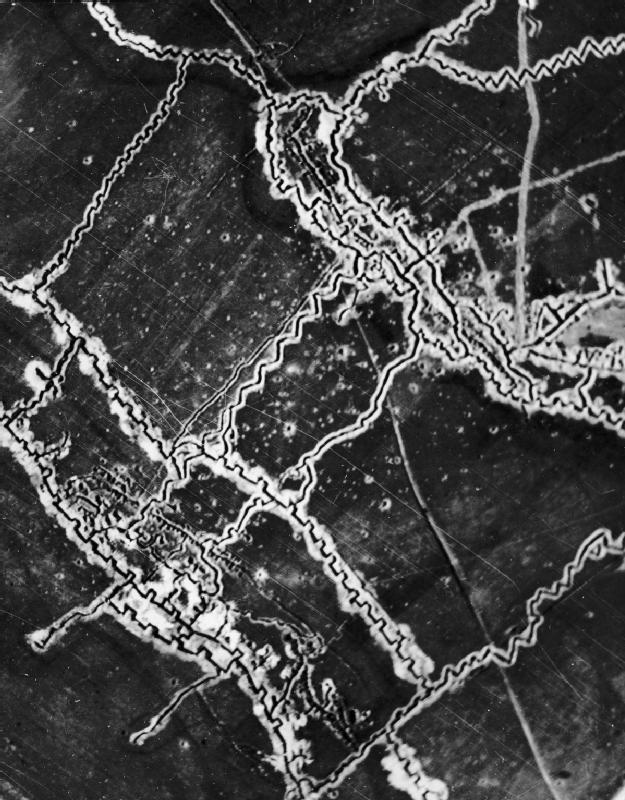
British aerial recon of the German trenches on May 10, 1916.

On June 30, in an attempt to distract the Germans from the pending offensive at the Somme, three battalions from the Royal Sussex Regiment, following an intense artillery bombardment, succeeded in capturing the first two lines at the German defensive position at the “Boar’s Head” before running out of ammunition, halting before the German supply trench. 1,400 British soldiers were casualties, all from Sussex, England – dozens of brothers dead together.

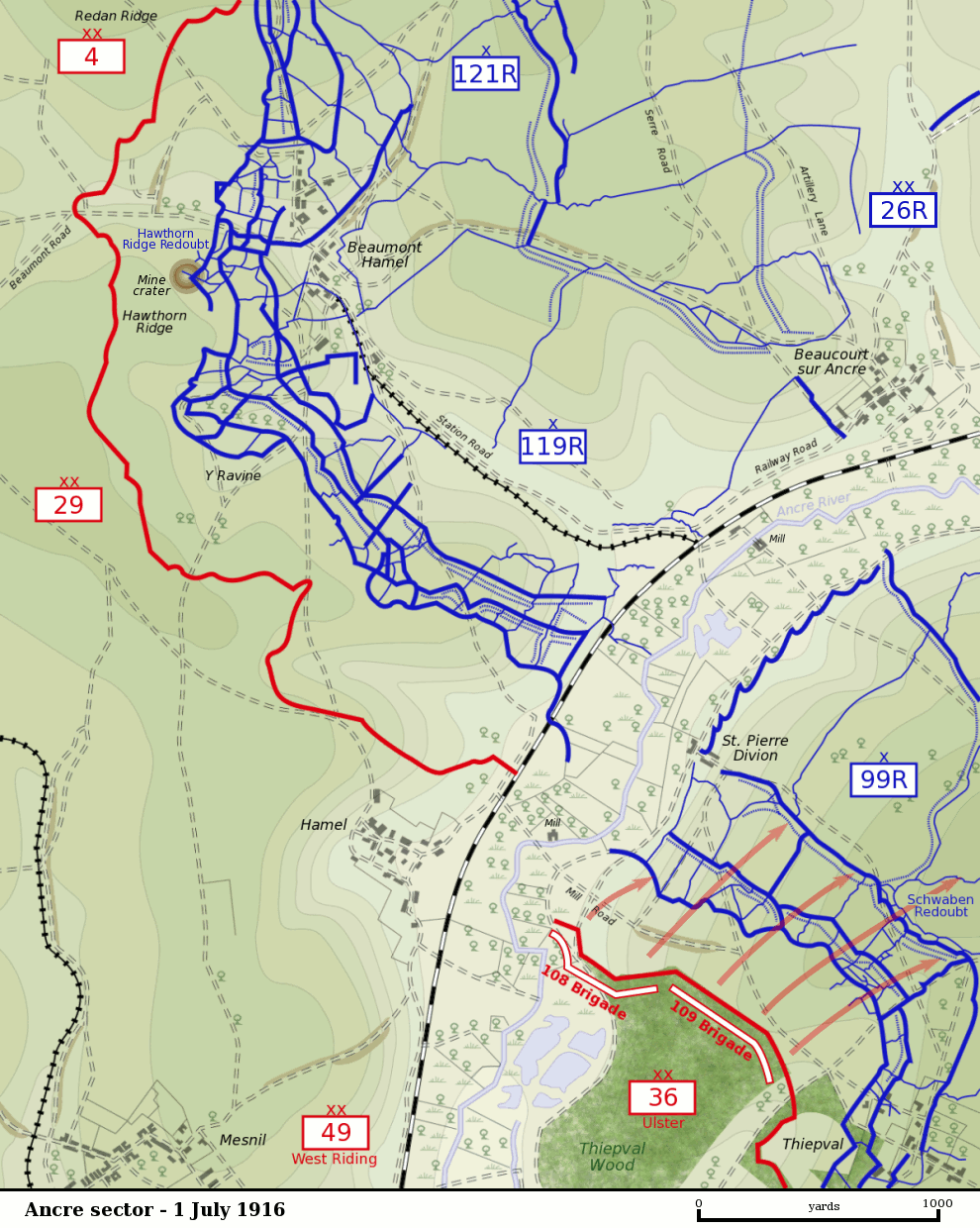
The following day, July 1, an assault by was launched at Albert by 19 Allied divisions, opposed by 6 German divisions. The enormous artillery bombardment preceding the attack was by 60-pounders firing over 1.5 million shells, and was heard in London. Mines were detonated under German strongpoints, and the town of Fricourt – a German salient – was captured. The British military has suffered its greatest number of casualties in a single day – 60,000, nearly 20,000 of them killed. The French lost 7,000, and the Germans 8,000 and 4,200 prisoners. German forces have been withdrawn from Verdun, which has seen over 200,000 casualties on each side so far.

Fighting at the Somme, July 1

British plan of attack on the first day of the Somme offensive. 60,000 soldiers fell, the greatest casualty rate for the British army at the time.

The Russian Caucasus army attacked the Ottomans at Erzincan earlier today as their offensive continues.

Bey and his men

The Turk general Ali İhsan Bey captured Kermanshah, in Iran, later that day. Meanwhile, the joint British-Arab forces are advancing on the Ottoman garrison at Taif.

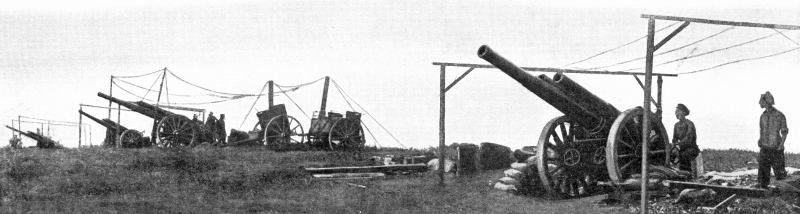
A 60-pounder battery. They were heard in London, 165 miles away

<– Part 100 – June 18, 1916  | Part 101 – June 25, 1916 |  Part 102 – July 2, 1916 –>

German Fifth Army gains at Verdun through end of June.

It has been a relatively quite week, as fighting continues around the world. The Arab Revolt in Mecca has captured the Deputy Governor, who ordered the Turkish soldiers to surrender. They have refused, and a siege and stalemate as set in.

To the East, the offensive under Brusilov continues, with the recently-launched flank attack continuing, although a lack of concentration is resulting in limited gains by the Russians.


At Verdun, an offensive launched by the Germans June 22 has ground to a halt, as the salient thereby formed is vulnerable to artillery fire, and the German infantry are exhausted and under-supplied. The French, likewise, are exhausted from the fighting, and a lull has descended over the field today.

<– Part 99 – June 11, 1916  | Part 100 – June 18, 1916 |  Part 101 – June 25, 1916 –>

German trenches destroyed in the shelling.

The fighting at Mont Sorrel ended June 14. After 1.5 days of intense shelling of their trenches, the Germans were taken by surprise and forced rearwards. Several counter-attacks failed, and the Germans have settled into new defensive lines.

Brusilov’s offensive against the Austro-Hungarians and Germans is slowing, as his supporting offensives are not being executed. A minor one began earlier today, led by Alexei Evert, commander of the Russian West Army Group.


<– Part 98 – June 4, 1916  | Part 99 – June 11, 1916 |  Part 100 – June 18, 1916 –>

HMS Hampshire

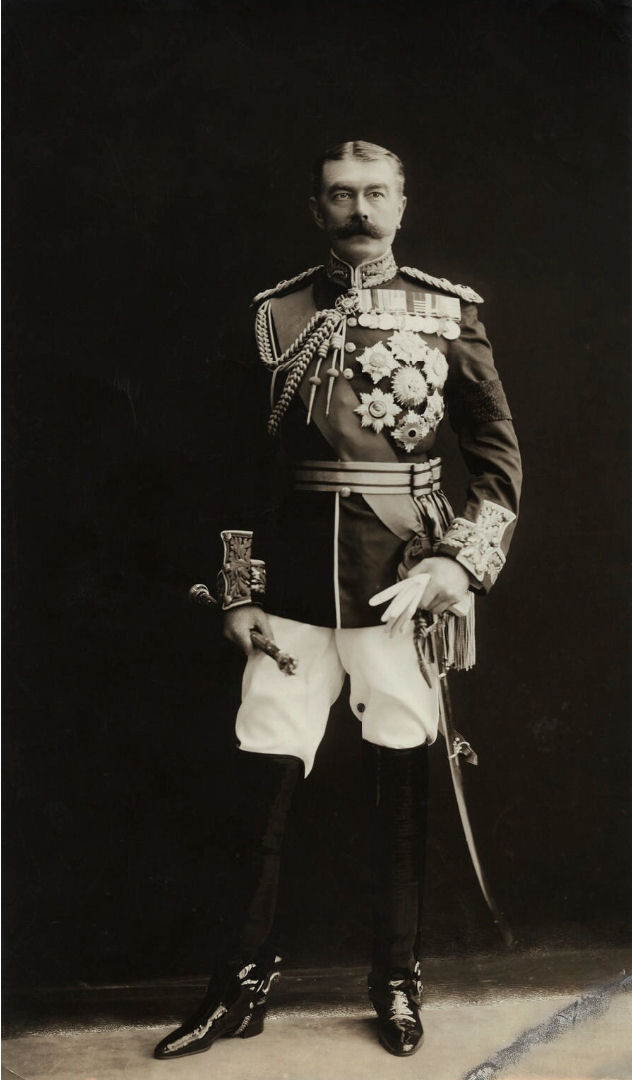
Dire news from England June 5, as the Secretary of State for War, Field Marshall Lord Kitchener, was lost at sea when his ship, HMS Hampshire, was sunk off the Orkney Islands, presumably by a German mine.

Horatio Herbert Kitchener

An enormous revolt has erupted June 5 in the heart of the Ottoman Empire as Arab nationalists seek to establish an Arab nation. Both sides are claiming religious motives while seeming to have secular purposes. On June 10, the Sharif of Mecca fired a shot from his window, signaling 5,000 Arabs to attack the 1,000 man Turkish garrison (who was ordered to surrender by the Sharif). An Arab force was also dispatched to take Medina.

The French defenders (underground) at Fort Vaux near Verdun surrendered June 7. In the 5-day assault on the fort, the Germans lost 2,700 men to the 20 French defenders, and gained only 70 yards.

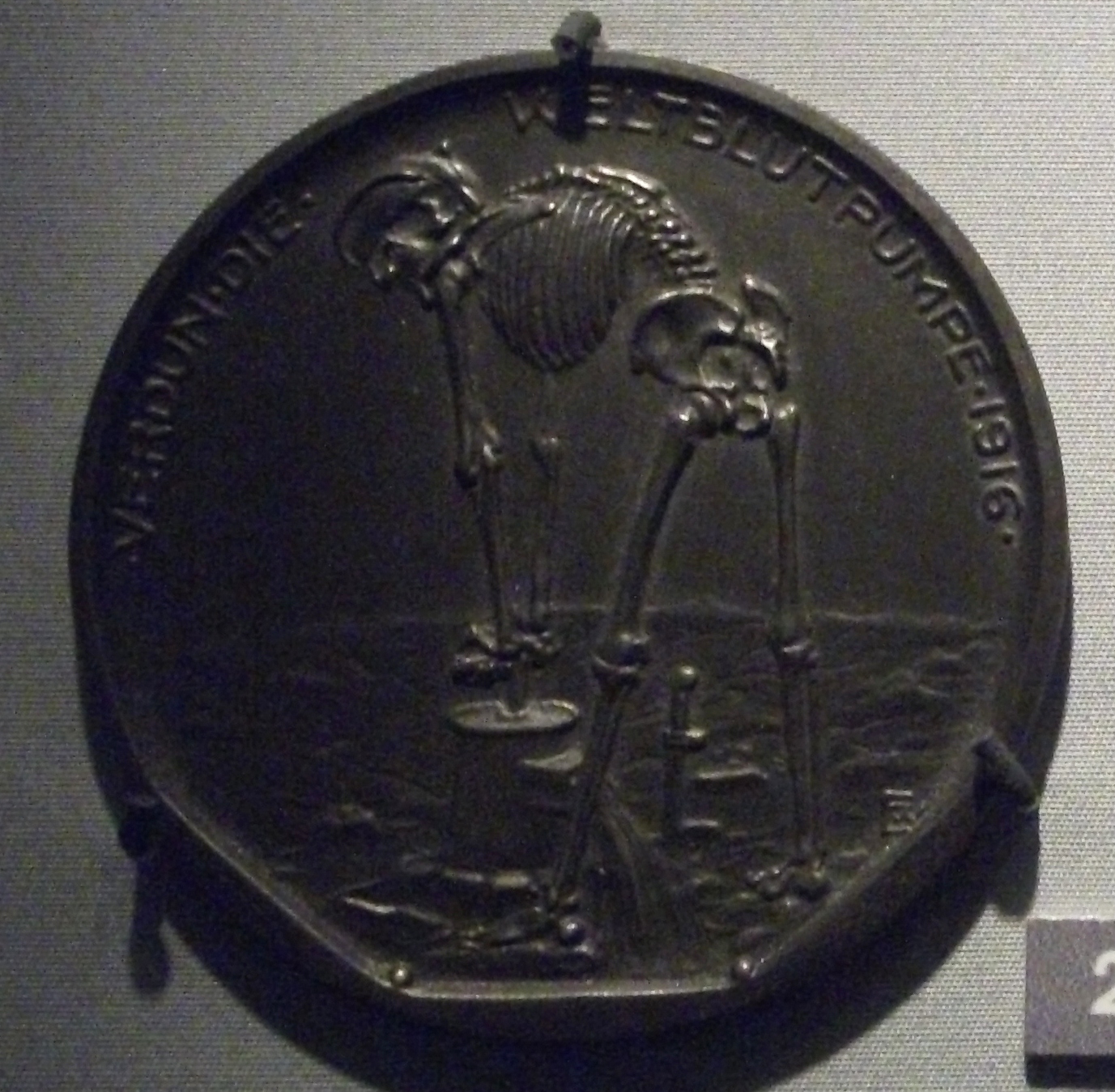
German propaganda metal commemorating the losses at Verdun – “Verdun the Worldpump”

Further East, the Russian advance took Lutsk June 8, nearly capturing the Austrian commander. Indeed, the Austrian army is in full retreat, having already had 200,000 men captured by the rushin’ Russians. In the Mediterranean, an Italian troop transport was sunk the the Austro-Hungarian sub U-5.

On June 10, with half of all Austrian divisions moving east to counter the Russian assault, and coupled with Italian reinforcements arriving, the battle of Asiago has come to an end. Despite halting the advance, public sentiment against the Italian government has forced the Prime Minister and his cabinet to resign.

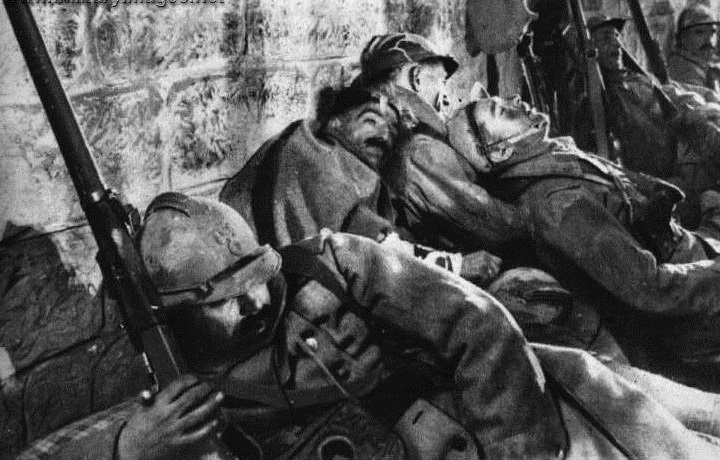
Exhausted French defenders at Fort Vaux


<– Part 96 – May 21, 1916  | Part 97 – May 28, 1916 |  Part 98 – June 4, 1916 –>

The punitive Strafexpedition at Asiago by the Austro-Hungarians continues, as the Italians are rushing reinforcements (including the recently-formed Fifth Army) to prevent a total encirclement of their forces at the Isonzo.

On May 22, the Anglo-Egyptian force in Darfur encountered Fur forces entrenched around the city of Berengia, and drove them back with artillery and maxim guns. A counter-attack by the Fur encountered an infantry square, and forty-minutes of intense fighting against several artillery batteries, infantry companies, and maxim sections forced a retreat. The Fur lost approximately 1,500 men to the British 5 dead, 22 wounded. The following morning, the British column was attacked twice, but the Fur were driven back and the British entered the capital city of Ofto el Fasher with only one wounded soldier. The Sultan has fled, and sent emissaries to discuss surrender.

At Verdun, the French assault on Fort Douaumont with severely-understrengthened regiments (some having only 40 men) commenced at 11:50am. The left and center were pinned down, but the right flank made some progress and captured about 1/2 the fort by nightall. German reserves repelled French reinforcements the next day, and then retook the fort, capturing 1,000 men inside. In three days, France lost 5,600 of the 12,000 men in the attack, to the German 4,500.

In Persia, the Turks have begun an advance against the Russians. Meanwhile, in Sinai & Palestine, Australian reinforcements have arrived in extreme, deadly heat. In German East Africa, the Allies are pushing towards Bismarckburg.

<– Part 95 – May 14, 1916  | Part 96 – May 21, 1916 |  Part 96 – May 28, 1916 –>

May 15 saw the Austro-Hungarian forces in Northern Italy’s Asiago region seize the initiative in Trentino. After a massive artillery bombardment, they began an advance towards Vicenza. The Italian center is already weakening, despite a nearly 2:1 advantage.

Verdun and vicinity, May 1916

On May 18, the Ottomans entered Said near the Sinai canal, and captured the air field there. The British have responded to Turkish bombings with their own. Meanwhile, the railway in the area has been completed, allowing British reinforcements to arrive. Further south, the expedition into Darfur, while capturing some Fur scouts and bombing others, has had no other contact with the enemy force.

A French heavy mortar, of the type used against the fort

At Verdun, the French are assaulting the captured Fort Douaumont, which has inflicted serious casualties on them, with some divisions facing 90-95% casualties. Heavy bombardment of the fort has killed many of the defenders, as the shells turn the walls to dust, which mixes with exhaust, while exposed corpses spread disease. Additionally, French aircraft has been effective in destroying German balloons, rendering artillery ineffective.

Finally, there are rumors of a secret British-French meeting, in which the spoils of war were determined as they each look to expand their sphere of influence. The rumors seem partially true, as the diplomats Sykes and Picot have been spotted meeting.