<– Part 84 – February 27, 1916  | Part 85 – March 5, 1916 |  Part 86 – March 12, 1916 –>

The German colony of Kamerun formally issued its surrender to the Allied forces February 28. Two days later, on March 1, Germany announced the resumption of unrestricted submarine warfare.

Russian advance in Armenia. Bitlis and Mush are in the center.

In Turkey, the city of Bitlis was again the site of an offensive by the Russian Caucasus Army, with her neighboring city of Mush. After fierce hand-to-hand fighting in the falling snow, a Russian corps of Armenian troops took the city during the early morning hours of March 4. The Turks have retreated, but are expected to launch a fierce opposition, as the Russian advance into Turkey is now unhindered otherwise.

In Western Europe, the German offensive at Verdun has ground to a halt as casualties rapidly increase with troop exhaustion. A snowstorm February 29 has allowed the French to bring up nearly 100,000 reinforcements, including artillery. This artillery has opened fire on the Germans, who are unable to return fire due to their own artillery having been left behind in the rapid advance, and now unable to get to the front due to mud and mechanical malfunctions caused by weather.

In North Africa, the British troops are on the march again for the Senussi.
 

<– Part 83 – February 20, 1916  | Part 84 – February 27, 1916 |  Part 85 – March 5, 1916 –>

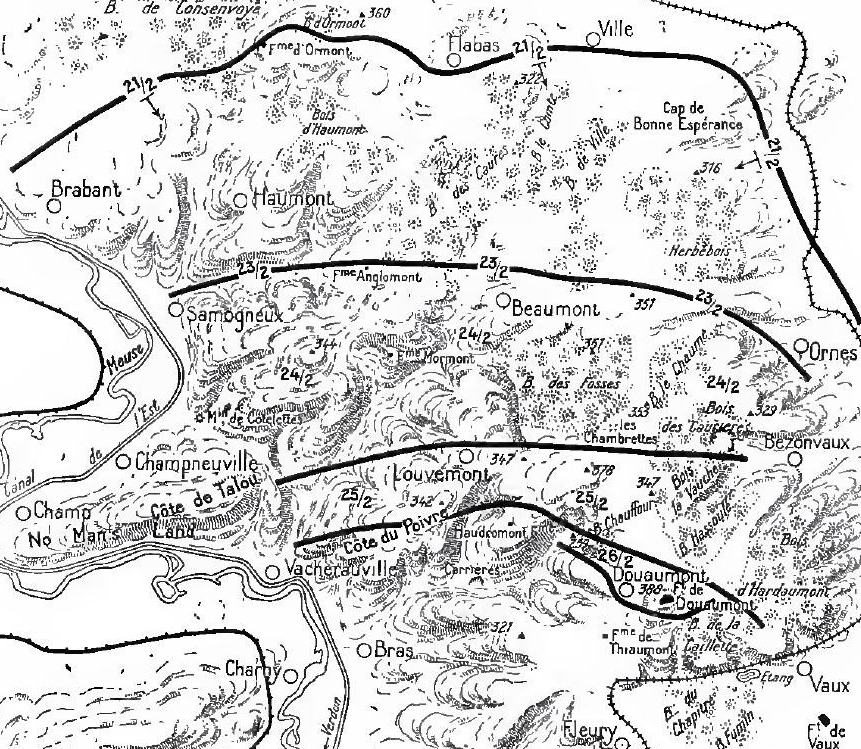
Lines of the German advance at Verdun. The dates are indicated on the lines. Douaumont is in the lower right, and Verdun is not visible off the bottom of the map. (Click to enlarge).

After a ten hour artillery bombardment, in which one million shells were fired, a massive German offensive was launched February 21 towards the city of Verdun. Having been delayed 8 days by winter weather, the German troops, expecting to easily brush aside French opposition, instead found that that time had been put to use establishing strong and multi-layered defensive lines. Nonetheless, the Germans charged forward with troops armed with “flamethrowers”, devices that shoot liquid flame, followed immediately by “storm troopers” armed with rifles and hand grenades. Despite the stronger than expected lines, a complete penetration of French lines was successful for over 3 miles, with minimal casualties. After brushing aside counterattacks and continuing their own assault for several days, the Germans captured the severely-undermanned Douaumont fortress, the first on their way to capturing the city of Verdun. Finally, after nearly a week of advance, the German assault seems to have run out of steam, and no progress has been made today in the face of a thaw turning the ground to a swamp, exhausted soldiers, and French reinforcements.

Douaumont fortress before the battle.

In North Africa, the British army finally caught the Senussi at Agagia on February 27. The attack began at 9:30, and after their trenches were captured, the Senussi began evacuating mid-afternoon. A cavalry contingent sent to cut off their retreat was successful, and after advancing on the rearguard firing from horseback, the British cavalry charged the final 50 yards with drawn sabers, upon which the Senussi broke. All told, though nearly equivalent in manpower forces (1,500 Senussi to 1,400 British) the Senussi suffered 500 losses, to the British 275 (mainly wounded).

In Persia, several towns fell to the Russian advance on February 26. There are rumors that the highest levels of the United States military have begun examining plans in case of a “complete rupture” with Germany. In the Balkans, Serbian troops await evacuation on Allied transports.

Serbian soldiers on the beaches of Corfu.

<– Part 82 – February 13, 1916  | Part 83 – February 20, 1916 |  Part 84 – February 27, 1916 –>

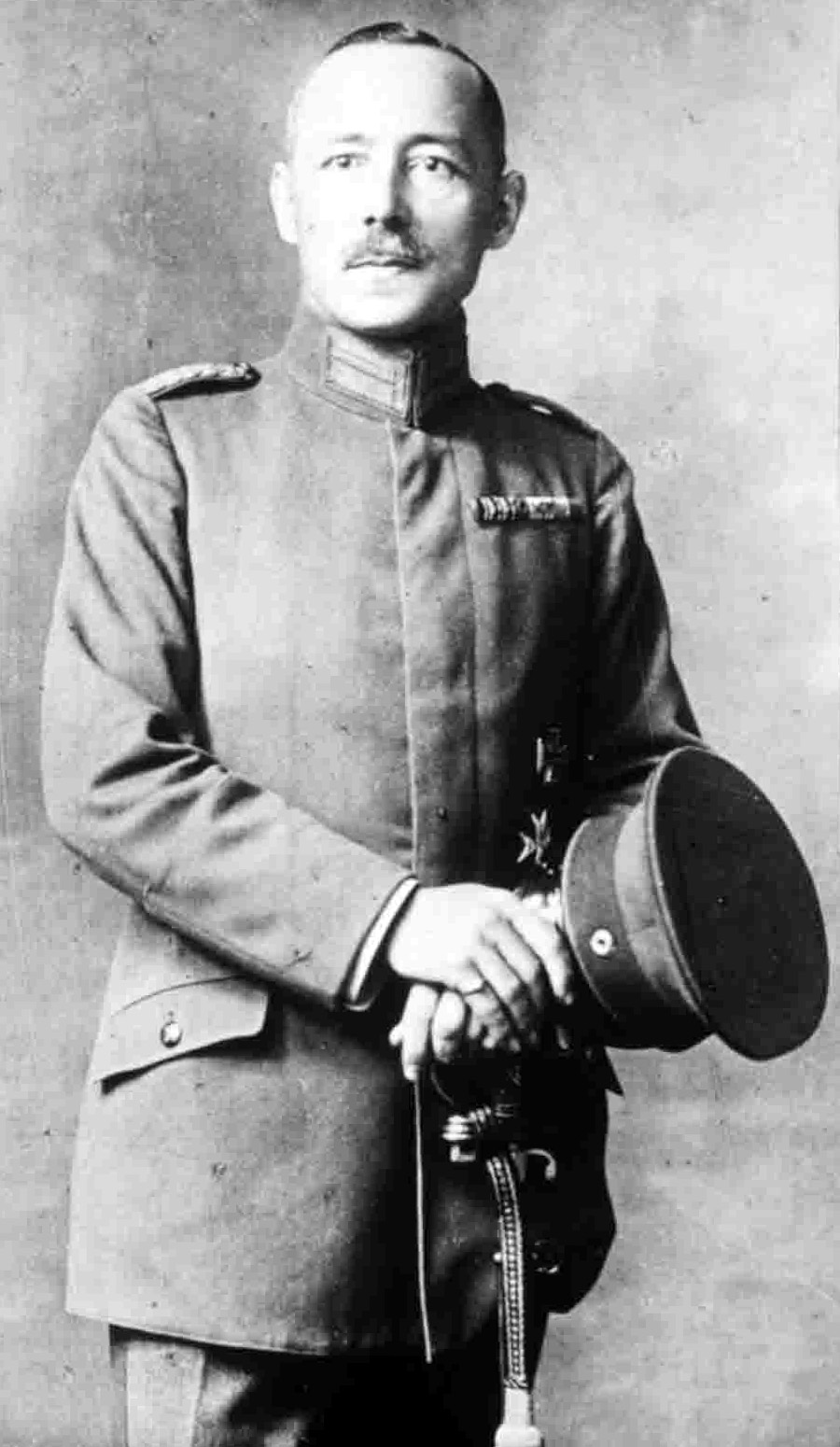
Ernst von Raben, commander of the defense at Mora.

The Erzurum campaign came to an end February 16 as the Cossack vanguard of the Russian Caucasus Army entered the city of Erzurum. The second-most heavily fortified city in the Ottoman empire (second only to the capital Constantinople[1]), Erzurum was surrounded by two rings of fortresses. With the Russians advancing over “impassible” ridges, and the Ottoman defenders too spread to support each other, the forts were abandoned February 15, and the entire city soon after. Although aware of Turkish movements due to aerial reconnaissance, the Russian forces failed to follow up on their victory. Altogether, the Russian troops lost 9,000 of their 325,000 troops, while the Ottoman Third Army lost 10,000 of their 134,000, with an additional 5,000 taken prisoner. Many of the casualties were to frostbite and other winter-related hardships.

The German Kamerun colony has finally fallen. Although the majority of the territory was de facto surrendered to the Allied forces with the evacuation of all German forces, the mountain of Mora, under siege since the beginning of the war 17 months ago has finally fallen with 155 of the 204 original defenders. The German commander, Ernst von Raben, secured the transportation of his askaris (African colonial troops) to their homelands, with £2,000 given to him to pay the troops. The German soldiers are being delivered to England for imprisonment. With this, the German Kamerun colonies has been jointly-occupied by the British and French.


[1] OOC: Istanbul did not come into vogue as the proper name of the city until the 1920’s, and was still referred to as Constantinople by English-speakers beyond that time.

<– Part 81 – February 6, 1916  | Part 82 – February 13, 1916 |  Part 83 – February 20, 1916 –>

Spicer-Simson aboard the Belgian boat Netta.

Action escalated in German East Africa this past week, as the warship Hedwig sailed from her port on Lake Tanganyika February 8 in search of the missing Kingani, presumed sunk but actually captured by the British. Spotting the Mimi and Fifi, the three ships began a circling dance on the lake as each attempted to bring her bow artillery piece to bear upon her enemy. After a half hour of maneuvering (including Fifi’s recoil stopping her in the water and spending 20 minutes clearing a jam), Fifi scored a hit on the Hedwig with her next to last shell. This shell entered the engine room of Hedwig, killed half a dozen sailors, and destroyed her boiler. After placing charges and abandoning the ship, Hedwig was sunk. The British captured 20 sailors and Hedwig’s naval ensign – the first one of the way. The following day, the German ship Götzen sailed the coastline searching for Hedwig. The British did not engage, as the commander, Geoffrey Spicer-Simson, did not feel any of his ships were adequate for such an engagement.

A land engagement February 12 in the same colony at Salaita Hill brought about a British defeat, as inadequate intelligence led to an engagement with an enemy nearly six times the size reported. Additionally, artillery fire was directed upon the German secondary line of trenches rather than the front line, allowing the Germans time to prepare for the assault. Finally, a German flanking attack drove the British back. An interesting story developed, as this battle included British, African, white South African, and Indian troops. The South African troops, after speaking disparagingly of the Indians, fled in the face of a German counter-attack while the Indians stood firm. The Indians returned one of the machine guns abandoned by the South Africans to them with the following note: “With the compilments of the 130th Baluchis. May we request that you no longer refer to our people as ‘coolies'”

The seaplane carrier HMS Ben-me-Chree

The British conscription law has gone into effect February 10. In North Africa, seaplanes from the carrier HMS Ben-my-Chree (Manx for “Woman of my heart”) have spotted the Senussi force at Agagia.


<– Part 80 – January 30, 1916  | Part 81 – February 6, 1916 |  Part 82 – February 13, 1916 –>

In the United States, neutral though definitely pro-Allied leaning, President Woodrow Wilson delivered the last of his speeches on “Preparedness” in St. Louis on February 3.

The the fighting for Erzerum tipping towards the Russian Caucasus Army more and more every day, a combined naval & land operation was launched February 5 for the northern Turkish city of Trebizond, on the Black Sea. Perhaps this operation will be better-fated than last year’s Gallipoli Offensive.

<– Part 79 – January 23, 1916  | Part 80 – January 30, 1916 |  Part 81 – February 6, 1916 –>

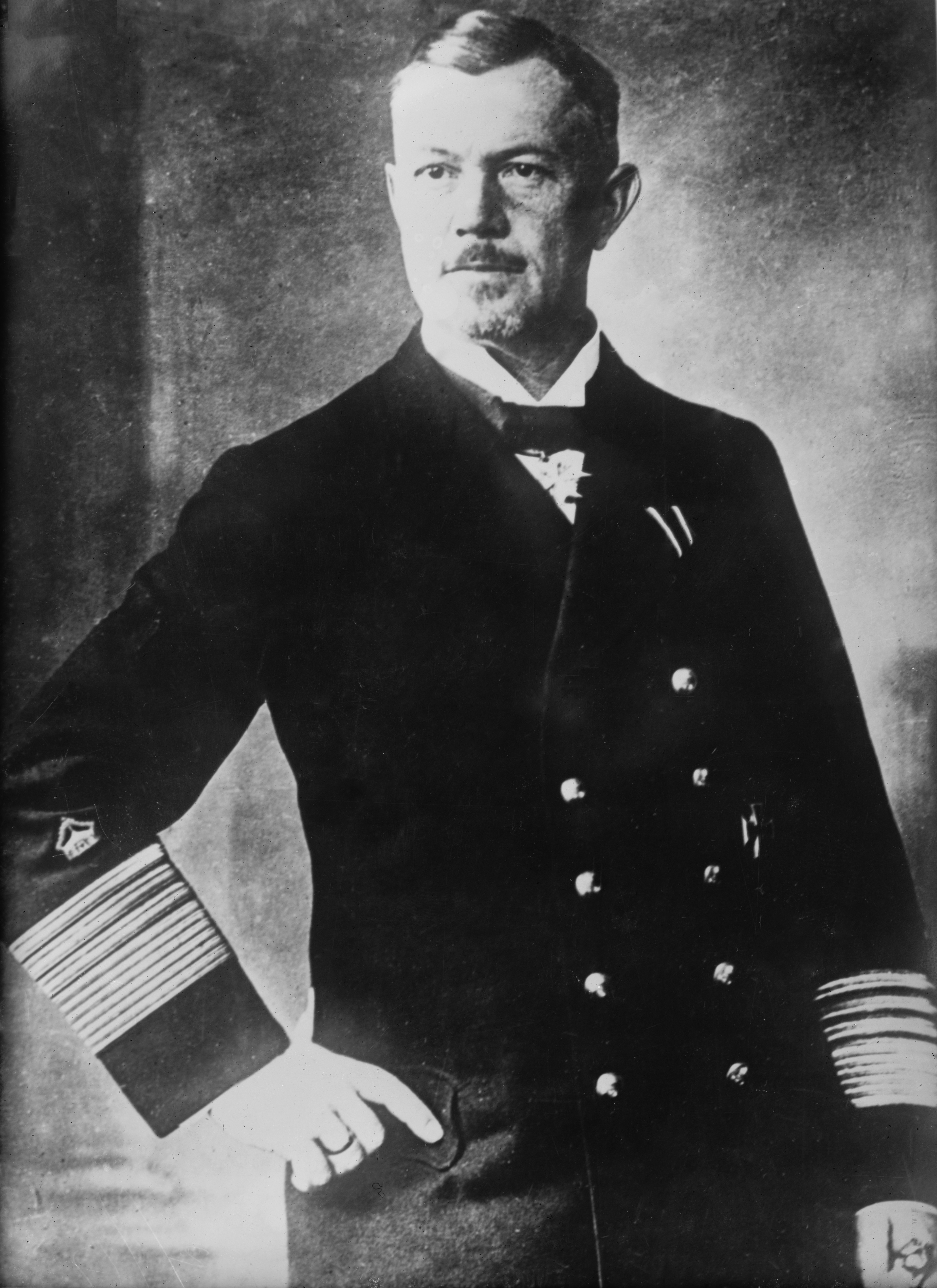
January 24 saw the British troops returning to their station after their rough battle against the Senussi, trudging through cold and wet. In Germany, Reinhard Scheer has been appointed commander of the German Empires Hochseeflotte.

Admiral Richard Scheer

Montenegro has surrendered to Austria Hungary on January 25, after the King fled last week and ordered the head of the army to fight a hopeless campaign.


January 27 was a day of politics: In the United Kingdom, a lack of volunteers for the army has forced the government to institute the Military Service Act, introducing mandatory conscription. Conscientious objectors will be able to perform unarmed (though still war-related) work, while those refusing even this will be jailed. In the United States, coupled with growing confrontations with rebels on the Mexican border, President Woodrow Wilson has begun a nationwide whistle-stop campaign in New York, urging the nation and Continental Army to be prepared for any war that might come.


On January 29, German zeppelins bombed Paris. This may perhaps be an indicator of the future of warfare: mighty zeppelins dropping bombs upon a terrified populace. Germany again has shown herself willing to target civilians, an act which has already begun fanning flames in America because of the attacks of merchant and passenger liners by German submarines.

<– Part 77 – January 9, 1916  | Part 78 – January 16, 1916 |  Part 79 – January 23, 1916 –>

A massive offensive was launched January 10 by the Imperial Russian Army, seeming to be aimed at Erzurum. 350,000 Russian troops of the Caucasus Army face off against 134,000 of the Ottoman Third Army. Major losses from the Ottoman IX Corps have been reported as it has been pushed back by the Russian troops.

Allied troops have occupied the Greek island of Corfu since January 11, undoubtedly to assist in evacuating the Serbian Army.

British troops attempted another relief of the Kut garrison on January 13, but the 19,000 British soldiers, while taking the Ottoman positions at the Wadi River, were unable to press their advantage, having taken nearly 1,600 casualties.

Reports from the colonial fronts are similar. The Allied troops in Senussi have found abandoned camps, but are unable to find the main Senussi army. Similarly, in German Kamerun, the lack of enemy contact parallels rumors that the German commander in the area has ordered his men to scatter to neutral colonies around them, mainly those of Spain.

<– Part 76 – January 2, 1916  | Part 77 – January 9, 1916 |  Part 78 – January 16, 1916 –>

The forces of Austria-Hungary entered Montenegro on January 5, following the retreating Serb army. The Montenegrin army was entrenched at Mojkovac and encountered the following day. Fighting went on for two days, allowing the Serbian army more time to retreat. The 6,500 troops from Montenegro successfully held of 30,000 Austro-Hungarians, though at the cost of 2,500 casualties. The Austro-Hungarians have withdrawn

At Gallipoli, weathering many attacks from the Ottomans, the last troops were withdrawn the night of January 7/8, boarding boats early on the morning of the 8th. The last rearguard troops withdrew earlier today. The Gallipoli Campaign is over, lasting over 8 months. Of the 570,000 Allied troops and 316,000 Ottomans engaged, 252,000 Allies and approximately 230,000 Turks have been lost.

On the colonial front, in German Kamerun, there are rumors that the German general will surrender soon. In French North Africa, the Zaian raids continue against the French colonial troops.

A British Hospital ship evacuating casualties from Sheik Sa’ad.

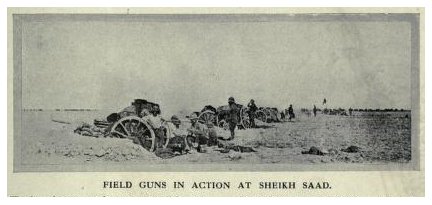
In Mesopotamia, the Anglo-Indian forces attempted to break the siege lines around Kut at Sheik Sa’ad. Although the British forces took one bank of the Tigris, achieving their goals, the losses were much higher than hoped – 4,300 of the 13,300 British forces, compared to only 1,200 of the 9,000 Ottomans (elements of the Sixth Army). With this incomplete breakthrough with high casualties, Kut has not been bought any more time.

Indian machine gunners serving anti-aircraft duties.

<– Part 75 – December 26, 1915  | Part 76 – January 2, 1916 |  Part 77 – January 9, 1916 –>

Reports of wide-scale evacuation of Allied troops from Gallipoli have begun flooding in since December 28. Ottoman forces have made some attacks at the retreating troops, but have been held at bay by stalwart Australian rear-guard units.

In Africa, the British forces have destroyed some Senussi camps, but all tribesmen have fled upon contact.

December 30 brought another diplomatic incident when the German sub U-38 sunk the SS Persia off Crete while her passengers were eating lunch. In violation of international law, the German boat fired a torpedo without warning, without provocation, and without allowing the passengers an opportunity to reach lifeboats.

Further west, in the Adriatic, the skirmishing Austro-Hungarian ships have been forced back to port, but not before ramming and sinking the French sub Monge.

<– Part 74 – December 19, 1915  | Part 75 – December 26, 1915 |  Part 76 – January 2, 1916 –>

The sun rose December 20 above Anzac cove and Suvla and shone upon empty trenches; it would appear that the Allied troops in the area have effected their withdrawal. Several ingenious devices were rigged to trick the Ottomans into thinking the trenches were still manned. One of them was a rifle whose trigger was tied to a bowl into which water dripped, causing it to fire at various intervals.

Geoffrey Spicer-Simson, commander of the British forces on Lake Tanganyika, shortly after the victory over the Kingani. He is on the far left, wearing a kilt.

In Africa, the fighting on Lake Tanganyika has scored another Allied victory December 26, when the British motor boats Mimi and Toutou (“Meow” and “Fido” in Parisian slang) captured the German ship Kingani after an 11 minute fight. The Kingani, having only a fore-mounted gun, was unable to target the more agile motor boats, who scored a direct hit on the single German gun, killing her captain and two officers. Additionally, two sailors were killed in the fighting. The British have renamed her Fifi.


Christmas Day in Senussi saw two British columns marching, one of which was sighted before sunrise by the tribal forces. Fighting raged all day, before the Senussi were repelled by artillery and machine fire. Delays in communication with the other column allowed the Senussi to escape at sunset.