<– Part 73 – December 12, 1915  | Part 74 – December 19, 1915 |  Part 75 – December 26, 1915 –>

As the winter approaches in the northern hemisphere – the location of much of the fighting, especially in Europe – the fighting is winding down as the troops prepare for another winter spent in the trenches. Douglas Haig has been named Commander-in-Chief of British troops in France, replacing Field Marshal Sir John French. With this position, he also commands Canadian forces in Europe.

Great Britain has also announced the formation of the “South Persia Rifles” to help defend against the German troops in the area.

In the Adriatic, the Austro-Hungarian sorties against the Otranto Barrage have sunk additional vessels.


<– Part 72 – December 5, 1915  | Part 73 – December 12, 1915 |  Part 74 – December 19, 1915 –>

Serbian campaign, 1915. This week’s fighting took place in the far southern part of Serbia.

A close-up of the southern region, marking Skopje, Krivolak, and Kosturino.

This week saw fighting between the Bulgarians and British at Kosturino in Serbia, where they engaged December 6 after several days of skirmishing, and a full push was made by Bulgaria two days later, outnumbering the small British division 4 to 1. Fighting finished today with the British withdrawal into Greece towards Saloniki. With this, the last of the Allied troops have left Serbia. The German High Command has ordered Bulgaria not to enter Greece, as there are still hopes among the Central Powers that Greece will join them. The Allies are using this opportunity to reinforce and dig in. All told, the Serbian campaign cost Serbia 90,000 casualties (plus 174,000 captured), against merely 67,000 Central Powered casualties.

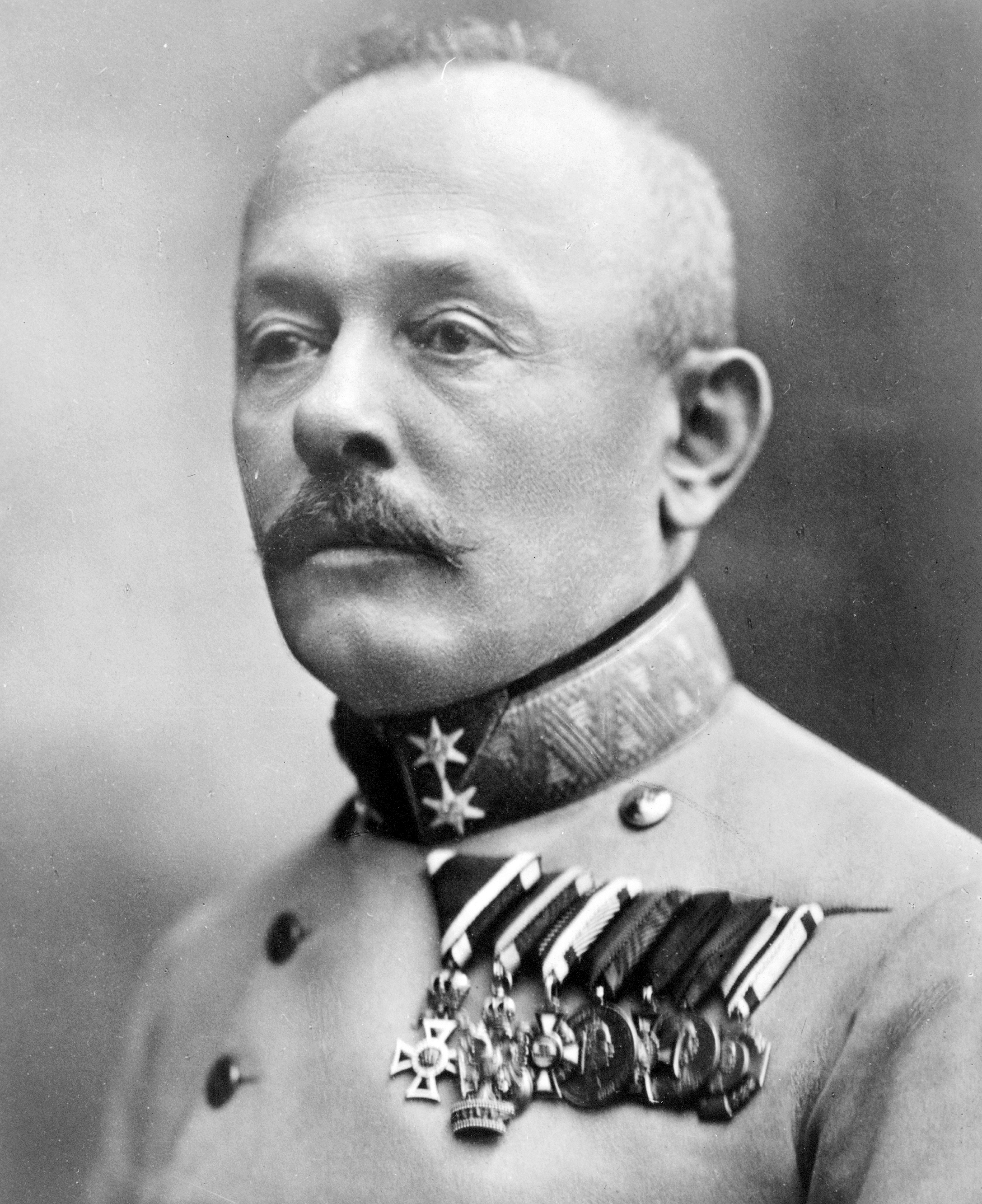
The British and Indian forces retreating from their defeat at the hands of the Ottomans at Ctesiphon have withdrawn to a defense of Kut, a city set in a loop of the Tigris River – an area easy to defend, but difficult to supply. 31,000 British and allied troops face off against an Ottoman force of 41,000, who have surrounded Kut since December 7. The British general, Charles Vere Ferrers Townshend (great-great-grandson of the famous Field Marshall George Townshend), has ordered the cavalry to retreat farther south after seeing the greater Ottoman numbers.


There have been reports since December 7 that veterans of Gallipoli have been arriving in other theaters; is a full draw-down and evacuation beginning?

A B.E.2, like those used in North Africa (and elsewhere) for reconnaissance and communications.

In North Africa, a British column of infantry, artillery, and armored cars was attacked by 300 Senussi December 11 but repelled at a cost of 90 Senussi to 35 British, although one of those was the commander of the coast guard in that area, a Lieutenant-Colonel C.L. Snow. Snow had been involved in the (ultimately) failed attempts to maintain peace. Reinforcements were called for via message dropped from aeroplane. Having reconnoitered the following day, a larger British force was attacked by between 1,000 and 1,500 Senussi, 250 of whom became casualties to the British’s 75. There are reports that the British regulars feel that under-trained and under-experienced local and colonial troops cost them a great victory.

<– Part 71 – November 29, 1915  | Part 72 – December 5, 1915 |  Part 73 – December 12, 1915 –>

In German East Afrika, the month of December began with the Kingani, a German ship commander by Lt. Job Rosenthal scouting British positions at the harbor near Kalemie, though he was driven off by shore batteries. The following night he swam ashore, became lost in the dark, and was captured by the Belgians. Meanwhile, across the continent in German Kamerun, the French, British, and Belgian forces have met up and are preparing an assault on the new capital Jaunde.

December 2 saw the end of the fourth battle at the Isonzo, with a cold snap hitting the region and the fighting winding down (although minor skirmishing has continued). There are reports that the Austrians have requested assistance from Germany. This battle saw 50,000 Italian casualties to the Austro-Hungarians’ 32,000.

In Mesopotamia, after the mutual retreat from Ctesiphon by the British and Ottomans, the Ottoman commander Nurredin has turned about and, following a pursuit of the British forces, has surrounded them at Amara on December 3.

The Serbian army retreating through mountainous Albania for evacuation by the French and Italian navies.

Postcard celebrating the fall of Serbia to the Germans, Austro-Hungarians, and Bulgarians.

Serbia’s army has been in full retreat since December 4, with the end of the offensive in Kosovo at the capture of Debar. The entire campaign saw minimal casualties for the Central powers, but 30,000 for the Serbs plus much heavy artillery. Additionally, the French (and their British allies) have been driven back towards Thessaloniki. The Serbian campaign has been an overwhelming success for the Central powers.

In the East, Russia continues her retreat although it is much more orderly than earlier. In Gallipoli, the mass flooding and rain has given way to snow, bringing more misery to the Allied powers. Their positions seems more untenable daily. In Persia, the Shah has appointed a Pro-Ally cabinet, following the capture and occupation of Tehran by the Russians.) In the Caucasus, the Ottomans seem to have begun a withdrawal following massive casualties to the Russians with minimal support of reinforcements coming. This has become a secondary front for them.

Finally, earlier today, December 5, in the Adriatic sea, after attempting blockade duty, the French sub Fresnel was pursued by the Austro-Hungarian SMS Warasdner and run aground. Her crew has been captured.

<– Part 70 – November 21, 1915  | Part 71 – November 28, 1915 |  Part 72 – December 5, 1915 –>

November 22 saw fighting erupt 25 miles south of Baghdad at Ctesiphon between the advancing British troops and the Ottoman defenders. After several days of fighting, both sides withdrew on the 29.

In the midst of this fighting, the Serbian army began a full retreat to the Adriatic with only 150,000 men remaining on November 27. The French and Italian navies are standing by to evacuate them. In Italy, the Fourth Battle of the Isonzo continues, with the casualties this week reaching an all-time high, with little progress to show for it.

North Africa has British troops continuing to land; there are reports of fighting between garrisons, but no major battles yet.

In Persia, Tehran has been taken by Russian forces.

Gallipoli has seen a massive rainstorm the last three days, flooding the trenches, drowning soldiers, and washing bodies into those trenches. Additionally, the temperature is dropping – it could be frozen and snowing soon.

<– Part 69 – November 14, 1915  | Part 70 – November 21, 1915 |  Part 71 – November 28, 1915 –>

The Serbian front

This week has seen the collapse of much of the Entente’s forces in Serbia to the combined might of Germany, Austria-Hungary, and Bulgaria. The offensive at Ovche Pole has ended with the Serbian army in disarray, and the French troops at Krivolak have begun their retreat. Fighting continues in Kosovo, and the Austro-Hungarian troops at the Isonzo are resisting the Italian offensive.

In Macedonia, however, the Bulgarian army has lost the mountainous peak of Kaymakchalan on November 19, leading to a withdrawal from Bitola.

In North Africa, there are growing reports of attacks on Entente troops (mainly British) and their colonial allies by the Senussi people. The unrest in the area has been growing, and there are fears among British troops that bolder attacks are imminent.

<– Part 68 – November 7, 1915  | Part 69 – November 14, 1915 |  Part 70 – November 21, 1915 –>

Reports have arrived from the Dardanelles indicating the sinking of British sub E20 on November 6. It would appear that she arrived to meet the French sub Turquoise, not knowing that Turquoise had run-aground some days earlier and her papers captured. The Germans, finding news of E20’s meeting, sent U-14 to destroy her. Only 9 of her crew were rescued.

November 8 brought more outrage at the German submarine program, as U-38 attacked and sunk the SS Ancona, an Italian passenger steamer flying under the Austrian flag. 200 passengers died, including 9 Americans. Only 6 months after the sinking of the Lusitania, the US government has sent an angry letter to the Austrian government.

Fighting at the Isonzo in north/north-east Italy. This fourth campaign is primarily focused in the south-east quadrant (lighter blue on this map), though the entire front is engaged.


In Serbia, the Serbian army is in full retreat at Morava. The Bulgarians are pressing their offensive, and on November 10 they have begun attacks across the South Morava river into Kosovo. Meanwhile, across Austria-Hungary, Italian troops are launching yet another offensive at the Isonzo – their fourth to date – directly primarily at Gorizia across the Karst Plateau.

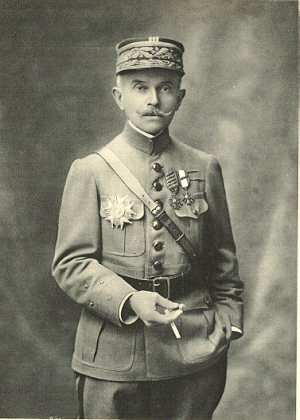
Colonel Noël Garnier-Duplessix, occasionally spelled Duplessis

In Persia, the British town of Shiraz has been captured by the Persian Gendarmerie after a minor defeat of the British-aligned tribes. The Russian General of the Caucasus forces, Nikolai Yudenich, has dispatched two columns into Persian, aimed at Baghdad and Tehran. The Austro-Hungarian and German ministers have left Tehran, but the Shah has vowed to defend it with a motley force of approximately 15,000 men consisting of Gendarmerie and tribal forces.

On November 11, Zaian tribesmen in North Africa attacked a French supply convoy, but were beaten back at bayonet point. The French commander in the area, Colonel Noël Garnier-Duplessix, has launched punitive attacks in response.


<– Part 67 – October 31, 1915  | Part 68 – November 7, 1915 |  Part 69 – November 14, 1915 –>

This week has seen a stunning series of victories for the Central Powers.

November 4 saw the end of the Third Battle of Artois and the third Battle of the Isonzo. Artois ended in a stunning German victory with 110,000 Allied casualties to the 51,000 Germans. The Isonzo was also a a Central Powers victory, with 40,000 Austrians to the 67,000 Italians. Boroević defensive genius has been proved. In an odd twist, Henry Ford peace ship, the Oskar II, has left on its trip to Europe.

Two days later, the Allies received another blow as the Second Battle of Champagne wound down, where 72,500 Austrians fell against 145,000 Allied troops. In all three of these battles, the Central Powers were outnumbered nearly two to one.

Ottoman Colonel Mohammad Taqi-Khan Pessian

However, the same period saw a minor victory for the British: also beginning on the 4th of November, a two day siege ended with the surrender of the German forces, likely signaling the end of German resistance in their Kamerun colony.

In Bulgaria, with the fall of Kragujevac to German forces on November 1, the German and Bulgarian armies at Morava have pushed the Serbians back, capturing the capital of the Serbia Niš on November 5, which united the German and Bulgarian armies, securing an uninterrupted land route from Austria-Hungary to Bulgaria.

In Persia, the Ottomans have secured a minor victory of the Russians (with some of the Cossacks actually switching sides after a rousing speech by Col. Pessian), but the Russian army has counterattacked and repelled the Ottoman forces.


<– Part 66 – October 24, 1915  | Part 67 – October 31, 1915 |  Part 68 – November 7, 1915 –>

Europe at the beginning of the war. Note that Italy has subsequently switched sides and joined the Entente, while Bulgaria and the Ottoman Empire have joined the Central Powers. Greece is leaning towards the Allies, while Romania and Albania would seem to be leaning towards the Central Powers.

The battles on the Western front of Europe, including Artois and Champagne, continue. The offensives in Serbia continue, and there are reports of minor skirmishing in both South Arabia, between the British Empire and the Ottomans, and in eastern Poland/west Russia, between the forces of the German and Russian Empires.

On October 27, a French army landed in Salonika to open a new front in the Balkans against the Bulgarians, Austro-Hungarians, Ottomans, and their allies. Serbia’s forces are being routed, but there is hope that this new front will allow an area for Serbian troops to retreat, should that be necessary.

Otherwise, this All Hallow’s Eve, 1915, sees little new in the world.


<– Part 65 – October 17, 1915  | Part 66 – October 24, 1915 |  Part 67 – October 31, 1915 –>

Svetozar Boroević, the brilliant Austro-Hungarian general whose defense in depth tactics elevated him to the nobility and rank of Generalfeldmarschall by the end of the war.

The Entente actions at Artois and Champagne continue, although the seemingly-desperate attacks on the Hohenzollern Redoubt have resulted in little but the bloodletting of a generation, as the redoubt remains in German hands. While the German line seemed to have faltered, the Germans’ new “defense in depth” technique, with features multiple parallel lines of trenches to fall back into, has led to a foundering offensive by the British and French (although the British have claimed major gains at Champagne).

The Bulgarian offensives at Morava and Ovche Pole continue forcing back the Serbian army, although the Bulgarians have been held up at the fortresses of Pirot and Zajecar. Gains are still being made against the French at Krivolak. October 19 saw Italy and Russia declare war upon Bulgaria.

October 18 saw the Italian army surge against the Isonzo for the third time, although they appear to be making some gains this time. It is worth noting, however, that the Austro-Hungarian field marshall, Svetozar Boroević, is able to hold off enemy forces that outnumber him at a greater than 2:1 margin across all metrics – arms, troops, and artillery and heavy equipment.


<– Part 64 – October 10, 1915  | Part 65 – October 17, 1915 |  Part 66 – October 24, 1915 –>

7,000 more men have died in this small area, with nothing to show for it.

The fighting continues at Artois and Champange. The fighting at the Hohenzollern Redoubt has flaired up; the British have suffered enormous casualties in the first few minutes, and do not seem able to retake it.

October 14 saw Bulgaria’s declaration of war again Serbia (followed by the United Kingdom
and France declaring war on Bulgaria on the 15th and 16th, respectively). The result of intense negotiations by all sides, it would appear the Central Powers have won. Because of Bulgaria’s strategic placement, the Entente powers would have benefited with another ally in the region (and one to engage the Ottomans and relieve Greece), while the Central Powers now have an uninterrupted land connection to all main fronts – Western, Eastern, Baltic, Mediterranean, and Turkish.

A German postcard commemorating Bulgaria’s entrance into the war on Germany’s side. The text reads “Bulgaria with us!”

Bulgarian troops have surged across the Morava river valley, and fierce fighting near Pirot continues, with the harsh weather dealing its own toll on the belligerents. Farther south, Bulgaria has advanced in the Ovche Pole plain, and, after defeating the Serbian troops at Kumanovo with decisive cavalry maneuvering, have engaged French forces at Krivolak.