<– Part 32 – March 7, 1915  | Part 33 – March 14, 1915 |  Part 34 – March 21, 1915 –>


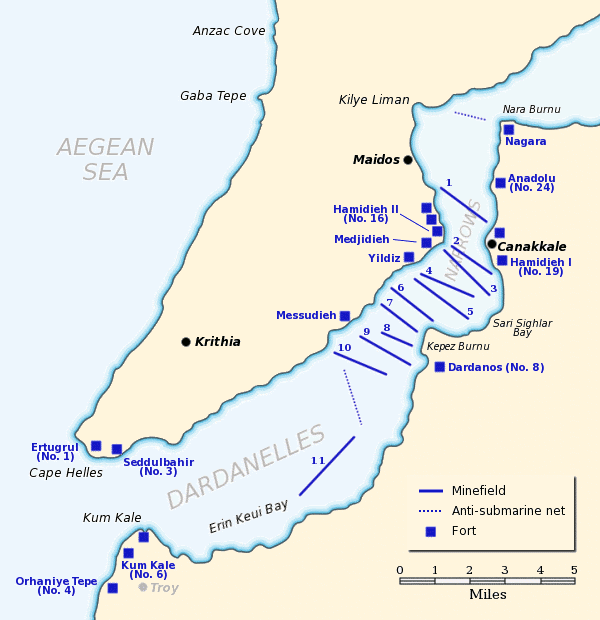
Defenses at the Dardanelles

The Ottoman gendarmerie completed their withdrawal to Qotur March 10, as the Russian advance under Nazarbekov continues in Persia.


In Europe, at Neuve Chapelle, a British assault was launched the same day, having been meticulously planned with aerial reconnaissance, from which maps were created and distributed. Although achieving early successes, poor weather, disrupted communications, and misaligned attacks (one flank attacked a German trench untouched by the initial artillery barrage) caused the offensive to grind to a halt, despite strong efforts by Indian troops, many of whom captured the strongest point of the German line, which included fresh troops, and also had not seen artillery fire. 7,000 British and 4,200 Indian casualties compare to 10,000 German. The battle has been a tactical victory for the British.


On March 13, the British cruiser HMS Amethyst lead a force of six minesweepers into the Dardanelles, but was forced by after taking heavy fire, along with 4 of the minesweepers.


<– Part 31 – February 28, 1915  | Part 32 – March 7, 1915 |  Part 33 – March 14, 1915 –>

British battleships continued their bombardment of Ottoman defenses in the Dardanelles March 1, this time directed at the middle line; however, British minesweepers were unable to clear mines from the strait. An attack by Royal Marines March 4 was repelled, with 23 Marines killed.

A fresh Russian corps has launched an attack on Bitlis, in eastern Asia Minor, as the Russians attempt to take the city once again. In Persia, Nazarbekov’s offensive has forced the gendarmerie of Van province to withdraw from Dilman March 7 towards Qotur.

In Champagne, the stalemate continues at counter-attacks by each side fail to gain any land.

<– Part 30 – February 21, 1915  | Part 31 – February 28, 1915 |  Part 32 – March 7, 1915 –>

Dague’s sister ship Bouclier

Fighting has officially ended for the second time at the Masurian Lakes February 22 with a solid German victory. Despite being outnumbered over 2:1, the Germans lost just 16,000 men, compared to the Russian 200,000 – nearly 90% of their army.

British marines damaged forts 3 and 6 on this map

The French destroyer Dague hit a mine February 24, sinking with the loss of 38 of her 80 crew. The following day, British naval forces attempted a second forcing of the Dardanelles strait. The Ottomans evacuated the outer forts, allowing the British Royal Marines to raid and set demolition charges on several forts.

On the Western Front, counter-attacks at Champagne fail to achieve any significant goals.


<– Part 29 – February 14, 1915  | Part 30 – February 21, 1915 |  Part 31 – February 28, 1915 –>

British ships began a bombardment of Turkish forts in the Dardanelles February 19, testing out defenses and attempting to “force” the straits and reach the Black Sea. Across Europe, the German sub U-28 sunk the neutral tanker Belridge, carrying out the German Empire’s policy of unrestricted submarine warfare.

At the Masurian Lakes, the Russian 20th Corps, left behind to cover the Russian withdrawal, was surrounded February 18 and surrendered February 21, having allowed the remainder of the Russian army to reach defensive positions following their second defeat there.

At Champagne, the French Army continues suicidal counter-attacks.

<– Part 28 – February 7, 1915  | Part 29 – February 14, 1915 |  Part 30 – February 21, 1915 –>

On February 11, Louis Botha took direct command of South Africa’s northern force in its attack against German South-West Africa.

The second battle at the Masurian Lakes continues to rage, with the Russians caught completely off-guard, allowing the Germans to 75 miles in the last week, despite snow drifts 6 feet high. In fact, due to the rapid advance, disordered Russian retreat, and large numbers of Russians taken prisoner, the Germans are able to live off of the abandoned Russian supplies, carrying only ammunition for the guns.

<– Part 27 – January 31, 1915  | Part 28 – February 7, 1915 |  Part 29 – February 14, 1915 –>

Controversy erupted February 1 when the German submarine U-20 fired a torpedo at the hospital ship Asturias, which was clearly marked as such, in violation of international law. Three days later, the German government issued a warning declaring all waters around England and Ireland, including the English Channel, a war zone, and reminding all vessels of the inherent dangers of travel in such a war zone. Additionally, with the use of false flags of neutrality being used by the British, the Germans warned all neutral nations that their ships are at risk when approaching England and may be viewed as an enemy vessel.

On February 3, with the Ottoman attempt to take the Suez canal faltering, they withdraw to prior positions. The 15-20,000 Ottoman force was opposed by nearly 30,000 British defenders; despite several Ottoman brigades successfully crossing the canal, the rest were unable to make any other headway.

In Nyasaland, the British colony in Africa, the Chilembwe rebels have been attacked, Chilembwe himself found dead, by the militia. 300 rebels have been captured, and 40 executed. An additional 30 are thought to have escaped into the neighboring Portuguese colony. The British colonial government, worried about further rebellions, have ordered various punitive measures including mass hut burnings, gun confiscations, and a levy on every African within the troubled areas.

In Persia, Russian General Nazarbekov has launched a counteroffensive against the Ottomans, who successfully are holding Linwe against him.

February 4 saw the Battle of Kakamas, in South Africa. A prominent crossing point on the Orange River, the area is needed by both the Germans and the South Africans to invade the others’ territory. Approximately 1,500 invading Germans were repelled by 6,000 South Africans. The Germans lost 7 dead, 16 wounded, and 16 captured.

The Second Battle of Masurian Lakes began February 7 when the Central Powers launched assaults into northern Poland from East Prussia, surprising the poorly-entrenched and unprepared Russian forces. 100,000 German soldiers, representing nearly 1/3 of the German army, are facing the 220,000 Russians.

Operations on the Western Front in Belgium and Flanders have wound down inconclusively. At Champagne, the back & forth fighting continues.

<– Part 26 – January 24, 1915  | Part 27 – January 31, 1915 |  Part 28 – February 7, 1915 –>

The Allies on the Western Front received early notice of a German attack on Cuinchy from a German deserter January 25. With this notice, several German attacks were repulsed, including one ruse in which German troops claimed (in English) to be engineers. Surprising, such a thing is a legitimate tactic, as defenders are expected to challenge anyone coming from the front, and are only to allow one man to advance.

The fighting in Champagne seems to be winding down, with lands taken from the French Third Army remaining in German hands despite French counter-attacks, including 6 waves that collectively lost 2,400 men. To date, 94,000 French and 46,000 German soldiers are casualties of war.

The three advances from Palestine to the Suez Canal

The Chilembwe Uprising was crushed January 26 after a brief skirmish, and the rebels are fleeing towards the nearby Portuguese colony.

The Ottoman Empire launched an offensive against British defenders of the Suez Canal January 28, with 20,000 attacks advancing in 3 echelons (all advances on the canal). They are opposed by 30,000 defenders, are the attack is imminent.

The German submarine U-20 torpedoed three steamers January 30, without issuing any type of warning. Such an attack has been condemned by many neutral nations.

The German Ninth Army, on the Eastern Front, launched poison gas – xylyl bromide – against the Russian Second Army on January 31, but the wind blew it back on them, and the freezing temperatures rendered it nearly ineffective. The Russians launched a counter-attack but were devastated by artillery fire. 20,000 German and 40,000 Russians fell in one day.

<– Part 25 – January 17, 1915  | Part 26 – January 24, 1915 |  Part 27 – January 31, 1915 –>

German battlecruisers Derfflinger, Moltke, and Seydlitz sailing to Dogger Bank

Opposing forces continue skirmishing at Cuinchy, on the Western front. At Champagne, minor, small German attacks continue, but most focus has shifted to the Eastern front. At Sarikamish, the retreating Turks are confirmed to have suffered 90% casualties, and Enver Pasha has resigned in disgrace.

German armored cruiser Blucher sinking

On January 18, after nearly one month of fighting, Ardahan has fallen to the Russians, as the last Ottoman units are evacuating.

In German East Africa, fighting January 18-19 at Jassin saw the 300 British invaders defending against a German force over five times their size, although British forces swelled with an additional 800 reinforcements. However, after 300 casualties, the British forces surrendered, and their leaders were allowed to return home after promising not to fight anymore. Yet the ammunition and officer losses for the Germans dissuade any further fighting in the field.
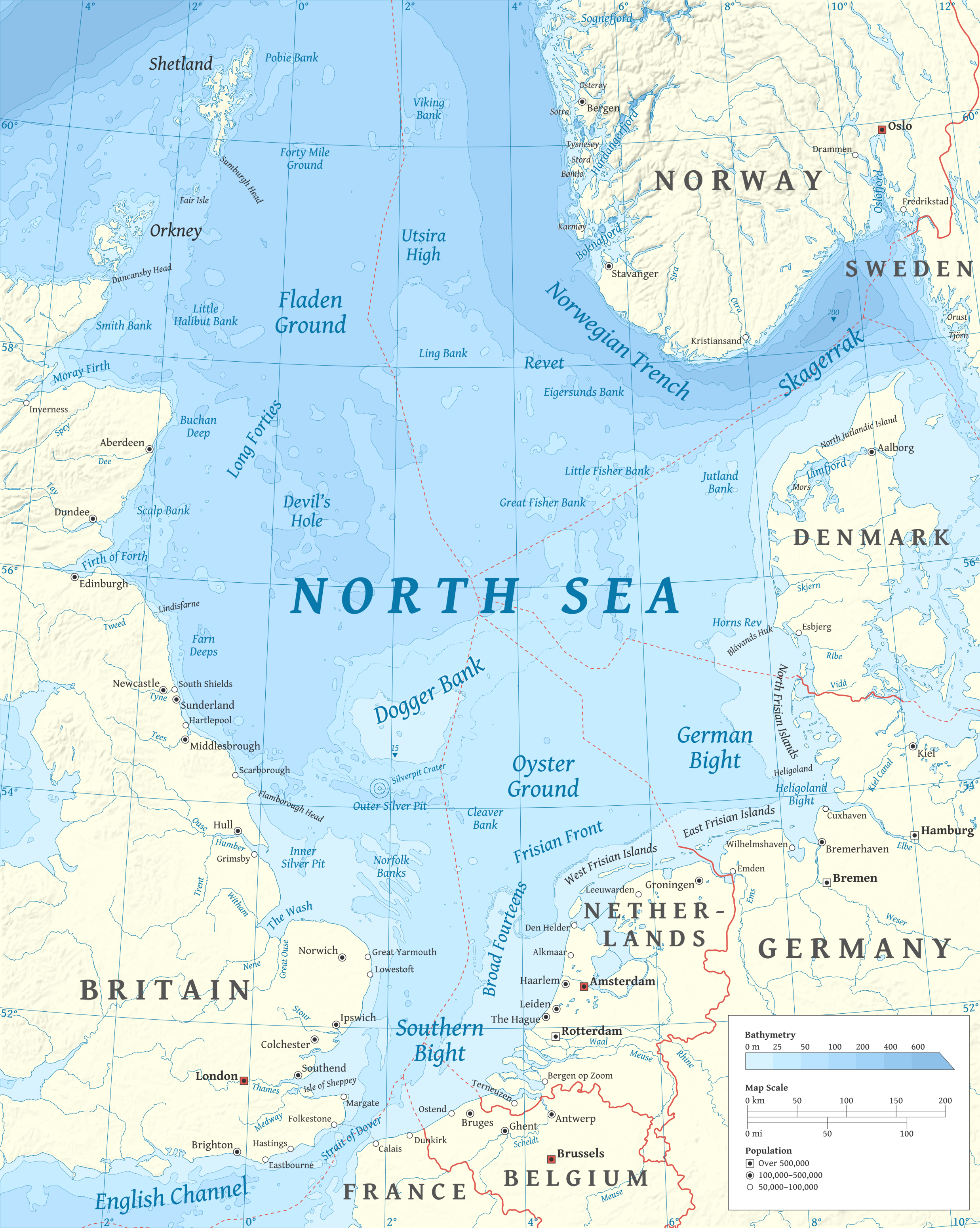
Map of the North Sea. Dogger Bank is towards the middle

Later that day, the first zeppelin raid on Great Britain commenced. On the Western front, fighting has erupted at Hartmannswillerkopf, a peak in Alsace. The French Seventh Army faces the German Army Detachment B, both with 15,000 men.

The night of January 23/24 saw 4000 Russian forces attack near Rafajlowa, attempting to cut off a pass through the Eastern Carpathians. The surprise assault took 2 trench lines before the Polish Legions attacked from three directions with bayonets, repulsing the Russians and retaking the trenches.
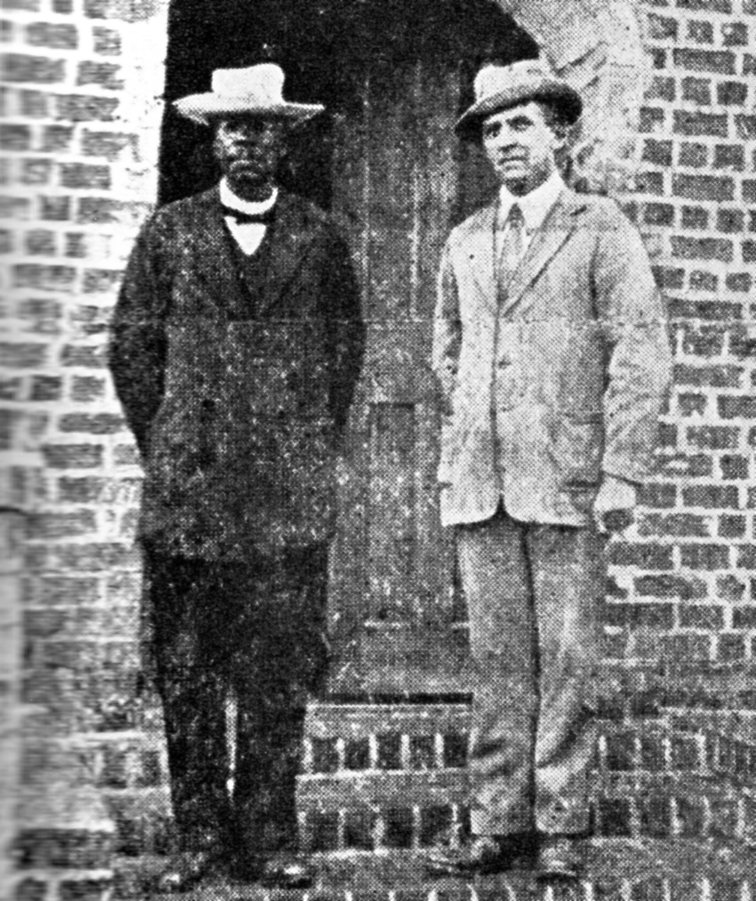
Last picture of John Chilembwe (left), taken in 1914

In the North Sea, at Dogger Bank, the British Grand Fleet was able to decode German naval transmissions and intercept the German High Seas Fleet on January 24. After a day of fighting, the Germans suffered on Armored Cruiser sunk, one battlecruiser damaged, while the British only suffered serious damage to one battlecruiser. Additionally, the British suffered only 45 casualties to the German’s 1,200. The Germans were outgunned, slower, and unable to escape, but managed to due to a lack of British communication, as well as the general appearance of the battle “getting away” from the British commander, stopping the battle from becoming a rout.

Nyasaland, marked in dark red

On January 23, in British Nyasaland (modern Malawi), years of grievances against forced labor, discrimination, and lack of representation & control of ancestral lands erupted in an uprising led by Christian millenialist preacher John Chilembwe, whose name has been lent to the uprising. An attack on the headquarters of a large business landowner killed 3 colonists, while an attempt to take weapons from a large cache failed during the night. This morning the militia has been raised and assembled, and the uprising seems doomed.

<– Part 24 – January 10, 1915  | Part 25 – January 17, 1915 |  Part 26 – January 24, 1915 –>

Tabriz was captured January 11 by the “Mosul Group” of the Ottoman army.

Russian soldiers gathering the frozen corpses of Turkish soldiers at Sarikamish

In Europe, fighting at Artois ended January 13, as the French assault was halted due to its lack of success.

Japan issued a series of demands to China January 15, which would grant Japan a much larger control of the Asian mainland. China is not expected to comply.

In the Caucasus, the battle of Sarikamish ended January 17. The Turkish General staff reached Erzurum, with orders to the defeated Third Army to follow later. Transports launched from Constantinople with supplies were sunk by the Russian Black Sea Squadron. The end of the three week battle was a complete defeat for the Ottoman Empire, who was unable to halt the Russian advance, and seems impossible to now, with all reserves in the region depleted. Of the 118,000 Ottoman soldiers who marched three weeks ago, only 42,000 remain

A 13-year-old Armenian boy, who fought for the Ottoman Empire at Sarikamish. Despite the genocide perpetrated against the Armenian population, many of them still fought for the Turks

combat-ready. Of the nearly 80,000 casualties, nearly half were killed, an additional one quarter were killed by sickness, 7,000 are prisoners, and 10,000 wounded. Russia suffered 16,000 killed and 12,000 sick, mostly from frostbite. The Turkish commander, Enver Pasha, has been removed from command.

At Ardahan, reports indicate that the Russians have crushed the Turkish defenders, and a full retreat seems to have begun. In the Champagne region of the Western front, minor German probing attacks have begun. Elsewhere on the front, the village of Cuinchy continues to change hands every few days.

<– Part 23 – January 3, 1915  | Part 24 – January 10, 1915 |  Part 25 – January 17, 1915 –>

Soissons, on the Western front, site of fighting in the Champagne area.

The fighting on the Western front continues at Artois and Champagne, but it is merely a flurry of attacks, counter-attacks, captures and recaptures, as thousands of men die in the same place day after day.

In the Caucasus, the Russian Caucasus Army has scored a victory at Sarikamish, with large numbers of Turkish soldiers captured and many lost in the mountains. Hafiz Hakki Pasha, the Turkish second-in-command, toured the front lines, realized the situation, and a retreat has been ordered towards Erzurum. In Persia, the skirmishing at Ardahan continues, with the Russians repulsing charge after charge.

On January 4, the Turkish “Mosul Group” marched to and captured Urmia in Persia.

January 5 saw a German attempt to recapture Edea, in the German Kamerun colony, held by the Allies. Of the 1,000 German attackers, over 100 were killed and another 100 wounded. French losses were 4 dead, 11 wounded.