<– Part 49 – June 27, 1915  | Part 50 – July 4, 1915 |  Part 51 – July 11, 1915 –>

The Russians continue their retreat in Eastern Europe. In the south, Italian assaults at the Isonzo continue, though they appear to be weakening.

On June 28, the British troops massed at the Gully Ravine on Gallipoli stormed out of their trenches towards the Ottoman lines. Though it is too early to know for sure, reports from this week indicate that they may have reached their (modest) objectives.

German colonies in Africa. Togoland, the narrow strip to the West, was defeated last August in 2.5 weeks. Next to it is Kamerun. South is German South-West Africa, which seems destined to fall soon. To the east is German East Africa – the SMS Königsberg is currently beached here, and rumors are swirling the Mimi and Toutou are headed towards her destruction.

June 29 saw a modest fight around the town of Ngaundere in German Kamerun, which the British won. They have occupied the town. Two days later, the Germans had another colonial setback to the south, where South African troops under Louis Botha crushed a German force serving as a delaying action. The path seems open now for a complete German defeat in her South-West colony.

Off the coast of Britain, the “mine mystery” was solved July 2, when the HMS Cottingham captured the German sub UC-2. On boarding, it was discovered that she was a minelayer, and had been placing the mines around the British coast for some time.

<– Part 48 – June 20, 1915  | Part 49 – June 27, 1915 |  Part 50 – July 4, 1915 –>

 Fighting seems to maintain a lull in the Western European front. At Gallipoli, British troops have been spotting massing near Gully Ravine, the Entente’s left flank and the only area that has seen no true progress in the campaign. In Mesopotamia, British troops continue a slow advance, brushing aside Ottoman resistance, while the Suez canal is still heavily defended, with Turkish troops only able to advance along the northern coast.

On June 21, the Battle of Bukoba opened with a British assault against German wireless facilities. It culminated two days later with the destruction of the station, giving the British their first true victory in German East Africa. However, with the station destroyed, the Entente is unable to easily intercept German transmissions. Additionally, reports of widespread looting by the British “irregulars” are a point of embarrassment to the British military staff.


June 22 brought the Central Powers a victory in the east, with German General Mackensen breaking through Russian lines at Lviv, finally halting the Russian offensive in that area. The Austrians themselves re-entered the city earlier today. The 23 brought victory to the Polish Legions at Konary, although both they and the Russians have suffered massive casualties.

Also on June 23, The Italians finally launched an attack across the Isonzo river to the north east against the Austro-Hungarians. Although the Italians enjoy a nearly 2:1 advantage, poor strategy – brief (though heavy) artillery barrages followed by massed frontal uphill assaults are showing little success. In the North, SM U-40, a German submarine, was sunk off the coast of Scotland.

June 26 saw the Austro-Hungarian sub U-10 sink the Italian torpedo boat PN 5 just off the coast of Venice

SM U-10 was originally a German sub before being transferred to the Austro-Hungarian navy for operations in the Mediterranean and Adriatic seas.


<– Part 47 – June 13, 1915  | Part 48 – June 20, 1915 |  Part 49 – June 27, 1915 –>


British defense at Sinai are strengthening, although warships farther north have discovered mine off the east coast of Britain; it’s unknown

HMS Ben-my-Chree (“Woman of my Heart” in Manx) after conversion to seaplane tender. She was previously a passenger steamer for the Isle of Man. From Wikipedia.

where they are from. British warships have been spotted sailing south, presumably to Gallipoli. One of them has recently been converted to a seaplane carrier, allowing planes to depart from the ship as a type of “mobile airstrip.” This technology may not be useful; time will tell.

In German South-West Africa, the three columns of British troops are rapidly advancing and brushing Boer resistance aside. The British commanders have experience with this from previous wars.

Germany has raised the “Pola Flotilla”, a U-boat flotilla stationed in Cattaro, Montenegro, at the entrance to the Adriatic.

On June 15, two British motor launches, “Mimi” and “Toutou” (“Meow” and “BowWow” in French – “Cat” and “Dog” having been rejected) have set sail south as well, perhaps to Africa. They had large guns mounted which were tested in the Thames two days earlier – humorously, after firing one of the guns – improperly mounted to the ship – both the gun and the gunner flew off the deck and into the river.

June 16, 17, and 18 saw the additional shellings of the Italian coast by Austro-Hungarian warships, as well as an Italian steamer being sunk and a signal station obliteratede.

Also on the 17, the frontlines at Gorlice seem to have stabilized on the Eastern Front, with the Western Front seeing the second battle of Artois coming to an end (although the German advance had been halted on month previously).

On June 20, the Russians relaunched their offensive in the Caucasus towards Lake Van.

<– Part 46 – June 6, 1915  | Part 47 – June 13, 1915 |  Part 48 – June 20, 1915 –>

German troops manning the defenses at Garua. From Wikipedia.

The past week has been relatively quiet, although fighting continues on the Western front around Artois, as well as the Eastern at Konary. June 9 saw the natives at Garua, in German Kamerun, begin to mutiny and refuse to man the defenses. The naval guns appear to have weakened the defender’s resolve; at 4pm the following day the Germans surrendered the bounty of supplies and weapons, as the siege had been expected to last much longer than two weeks. Also on the 9th, the Entente continued their shellings of the Austro-Hungarian coast.

June 13 saw the Russians finally reach their initial front line from fall of last year, before the Turkish offensive.

<– Part 45 – May 30, 1915  | Part 46 – June 6, 1915 |  Part 47 – June 13, 1915 –>

In Western Europe, the second battle for Artois continues. This last week saw renewed Allied offenses around the world.

German Trenches at Garua. From Wikipedia.

On May 31, the German fort at Garua was surrounded by Allied soldiers, who entrenched around the fort. The Germans are reported to be well-supplied in anticipation of a lengthy siege, although there have been reports of drooping morale as shelling from naval guns causes casualties among the defenders. There are no reports of British or French casualties at this time.

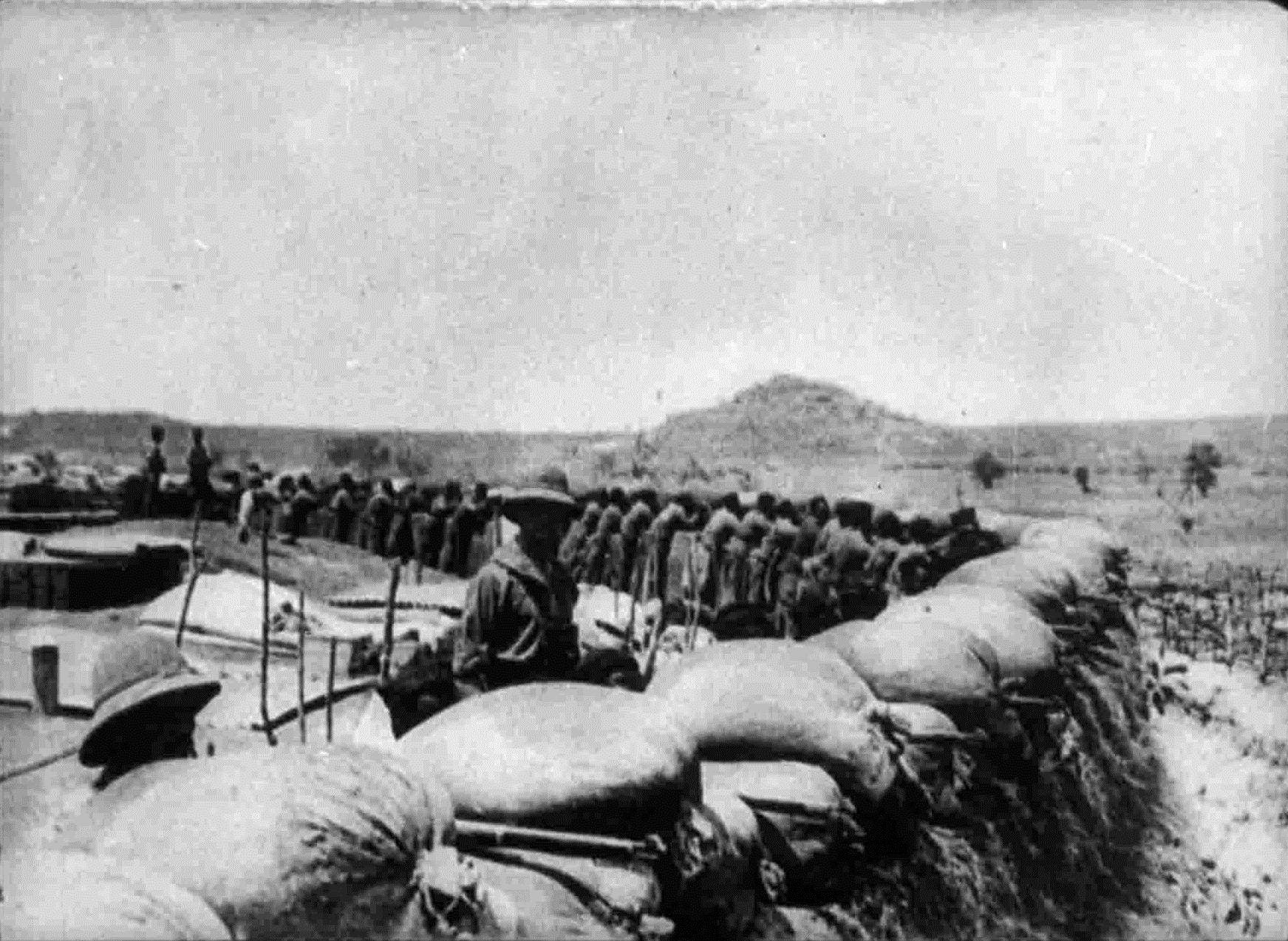
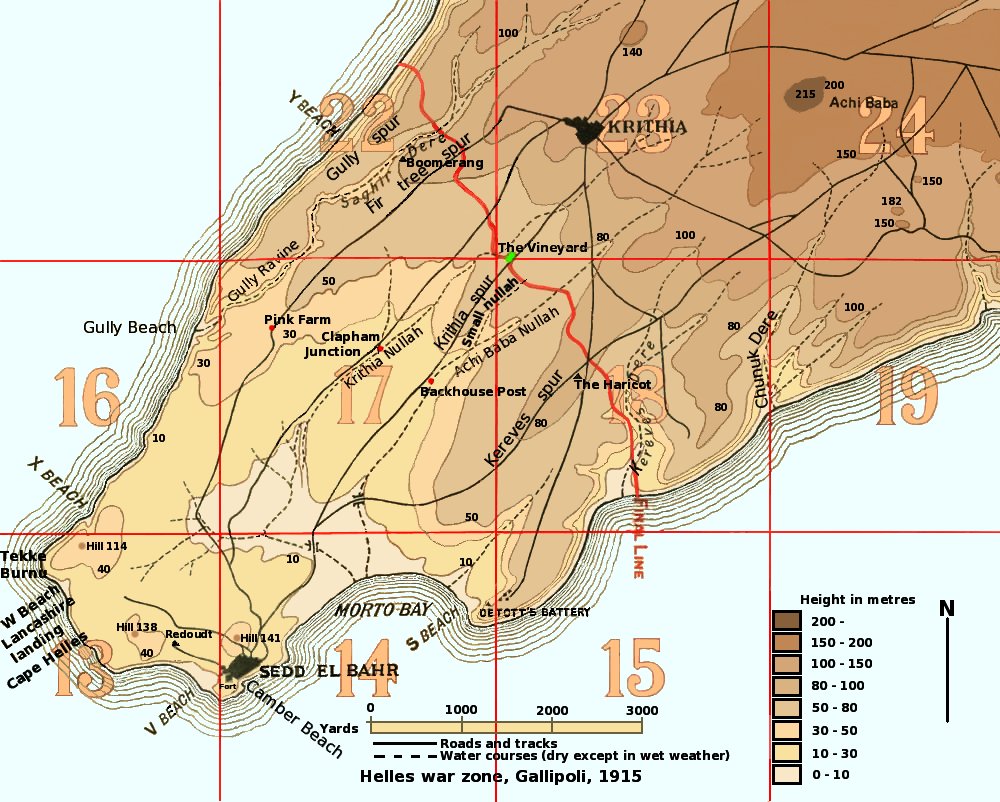
On June 4, the Allies launched another attack for Krithia at Gallipoli. Although their objectives were scaled down from the original April 25 landing timeline, they failed for the third time to reach them, although they outnumbered the Ottoman defenders nearly 2:1. They also suffered more than twice the casualties, losing 6,500 men to the Turks’ 3,000.  It would seem that frontal attacks from beaches will not be a successful tactic for the Allies, as this failure of June 6 has shown…

The Sphynx, a noted feature of the Gallipoli battlefield. From Wikipedia.

On June 5, in response the Austrian Navy’s shelling of Italian cities on the Adriatic coast, several Allied task forces were sent and commenced their own shellings of Austro-Hungarian cities.

A map of the Gallipoli area. Krithia is located in square 23, near the top of the map.


<– Part 44 – May 23, 1915  | Part 45 – May 30, 1915 |  Part 46 – June 6, 1915 –>

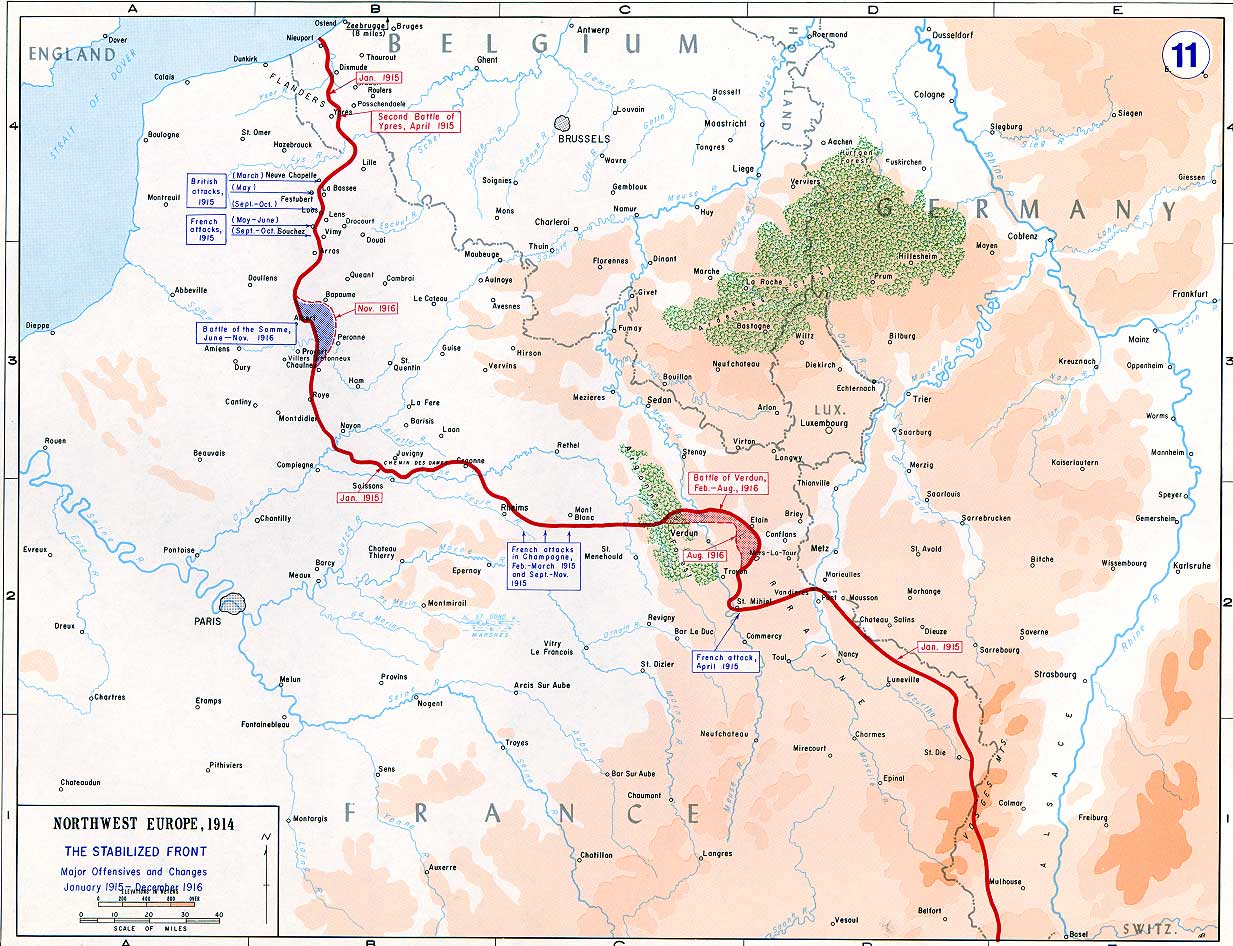
The Western Front, 1915-1916. From Wikipedia.

May 24 opened with a German attack towards Ypres, forcing the British back. The salient is now over 3 miles deep. However, German momentum seems to be waning. The following day saw the fighting near Festubert dying down; it would appear the great offensive at Ypres has ended in stalemate, although the German usage of poison gas indicates a new direction for the war.

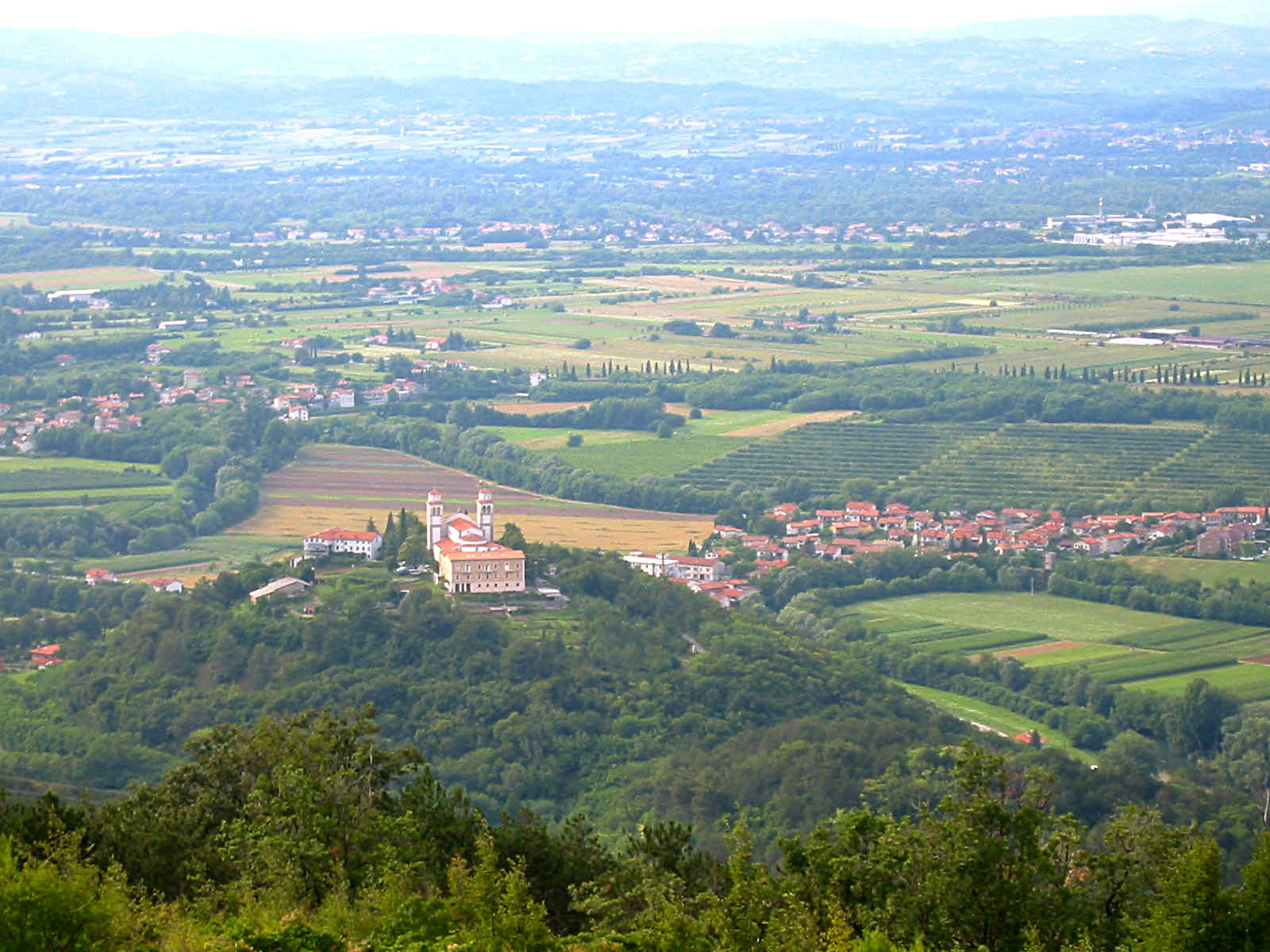
The rolling farmland of Italian attack, northwest Italy.


Further south, Italy has begun her attacks against Austria-Hungary, who has fortified and occupied much of the Alps, forcing any thrust by Italy through the Isonzo River. Austrian ships have been shelling Italy’s east coast; flying boats have dropped bombs on Venice. The Austro-Hungarian SMS Helgoland and 2 destroys sunk the Italian DES Turbine.

Example of an Austro-Hungarian fortification in the Alps, forcing Italy to look elsewhere for an offensive. From Wikipedia.

At Gallipoli, a truce has been called to bury casualties, reminiscent of the Christmas truce the previous winter in Europe.

May 25 saw the HMS Triumph sunk by U-21 in the Narrows, south of the Gallipoli peninsula. However, two days later, HMS Majestic avenged the lost by torpedoing U-21 at Cape Helles.
The British setback there was offset by Gibeon, in German South-West Africa (Deutsche Sud-West Afrika) captured by British-South African General Jan Smuts on May 26.

The Ottoman Empire responded on May 27 to the Russian offensive by ordering a forced deportation of all Armenians in the Caucasus, in response to the quasi-alliance the revolting and oppressed Armenians have formed with the invading Imperial Russian Army.

In the seas around Gallipoli, HMS E11 has been sinking many Turkish ships, and has gained a reputation for itself.

On May 29, the Ottomans detonated a mine at “Quinn’s Post”, part of the ANZAC sector. The Australians were forced back, but through counter-attacks were able to retake it by sundown. Skirmishing continues in the region, and there are reports that the Ottomans are running low on artillery.

British soldiers cheering E11. From Wikipedia.


<– Part 43 – May 16, 1915  | Part 44 – May 23, 1915 |  Part 45 – May 30, 1915 –>

On May 17, hearing news of an imminent Russian advance, the Ottomans retreated from Vans, which had been under siege for nearly one month. The Armenians had succeeded in resisted the Turkish genocide targeted against them. Several days later, the Russian army entered, and strengthened the Armenian government in place.

The Ottomans faced another setback on the 19th. An attack on ANZAC cove – the third such – was repelled with heavy losses. It seems that a British aerial reconnaisance plane had spotted the Turkish movements and the defenders had time to dig-in even further. The Ottomans lost nearly 10,000 men, to about 650 on the Australian side.


On May 23, ignoring prior treaty agreements with the Central Powers, Italy declared war on Austria-Hungary, thereby entering this Great War. Although part of the triple alliance between the German Empire, the Austro-Hungarian Empire, and Italy, Italy has long been an opponent of Austria, fueled by standard revanchism to reclaim northern territories. Italy defended its action by declaring that the alliance was defensive in nature, and that due to Austria & Germany’s declarations of war Italy was not obligated to honor it.

<– Part 42 – May 9, 1915  | Part 43 – May 16, 1915 |  Part 44 – May 23, 1915 –>


Earlier this week, on the 10th of May, Hungarian troops defeated the Russian army at Jarosław and returned control of Lviv to Austria. The following day, to the south, an armistice was called at Gallipoli to bury the dead soldiers scattered around the field. The defenders took the opportunity to dig-in and increase their defensive measures. However, the Ottomans did face a setback in the Caucasus, as Manzikert fell to the Russians.

On May 12, Windhoek, the capital of German South-West Africa, was occupied by South African troops under Louis Botha, who rejected a German offer of surrender of the colony, declared martial law, and split his army into several units to hunt the remaining Germans.

May 13 saw the Battle of Frezenberg Ridge, part of the larger Second Battle of Ypres, finally halt the German offensive, at the cost of enormous casualties among the Allies – one Canadian company of 700 men saw nearly 80% casualties, with only 150 remaining to hold the line. The Germans suffered another irritation in the form of a sternly-worded letter from US President Wilson, following the sinking of the Lusitania by a German sub at the lost of many American lives. Wilson called for the Germans to cease warfare against commercial ships, regardless of the nationality the ship sailed under, as Americans had a right to travel internationally on merchant ships without fear of death.

The Allied offensive around Artois, in northern France, has largely ground to a halt against the Germans. There are rumors that the German Empire may withdraw troops from Ypres to reinforce Artois. On the 15th, seeing the failure of high-speed tactics – a heavy artillery bombardment, followed by swiftly-advancing infantry without definite objectoves – in Artois, the British troops there have begin a slow march towards Festubert, following the French army doctrine of heavy bombardment – 60 hours of artillery – followed by concise, near territorial gains. The British seem to be making minor progress in the area.

On the 16th, the Polish Legions came under attack by the Russian Army, as the Russians attempted a counter-offensive in the Kingdom of Poland, around Konary.

<– Part 41 – May 2, 1915  | Part 42 – May 9, 1915 |  Part 43 – May 16, 1915 –>

On May 3, the major offensive at Gallipoli continues as minor skirmishes, with each side dug in. Meanwhile, in eastern Europe, the opposite has happened, as the minor skirmish at Gorlice–Tarnów has escalated into a major offensive by the German and Austro-Hungarian armies, pushing Russia farther and farther back.

Two days later, the Battle of St. Julien, part of the offensive around Ypres (the second major battle there), has wound down, with the Germans seemingly unable to press their advantages against rapidly-assembled reinforcements.  The British also face probing attacks at the Suez canal, where the superbly-named German Colonel Kreß von Kressenstein was spotted personally leading a charge. In Mesopotamia, the British have begun an advance up the Tigris river.

Louis Botha, prime minister of the Union of South Africa, has succeeded in taking Windhuk, the capital of German South-West Africa. To the north, the Germans are holding back a combined French & British advance on Jaunde, the capital of German Kamerun. Incidentally, France continues fighting the “Zaian Confederacy” of Berber tribes in Morocco, supported by the Germans, with minor skirmishing across the Oum er Rbia River
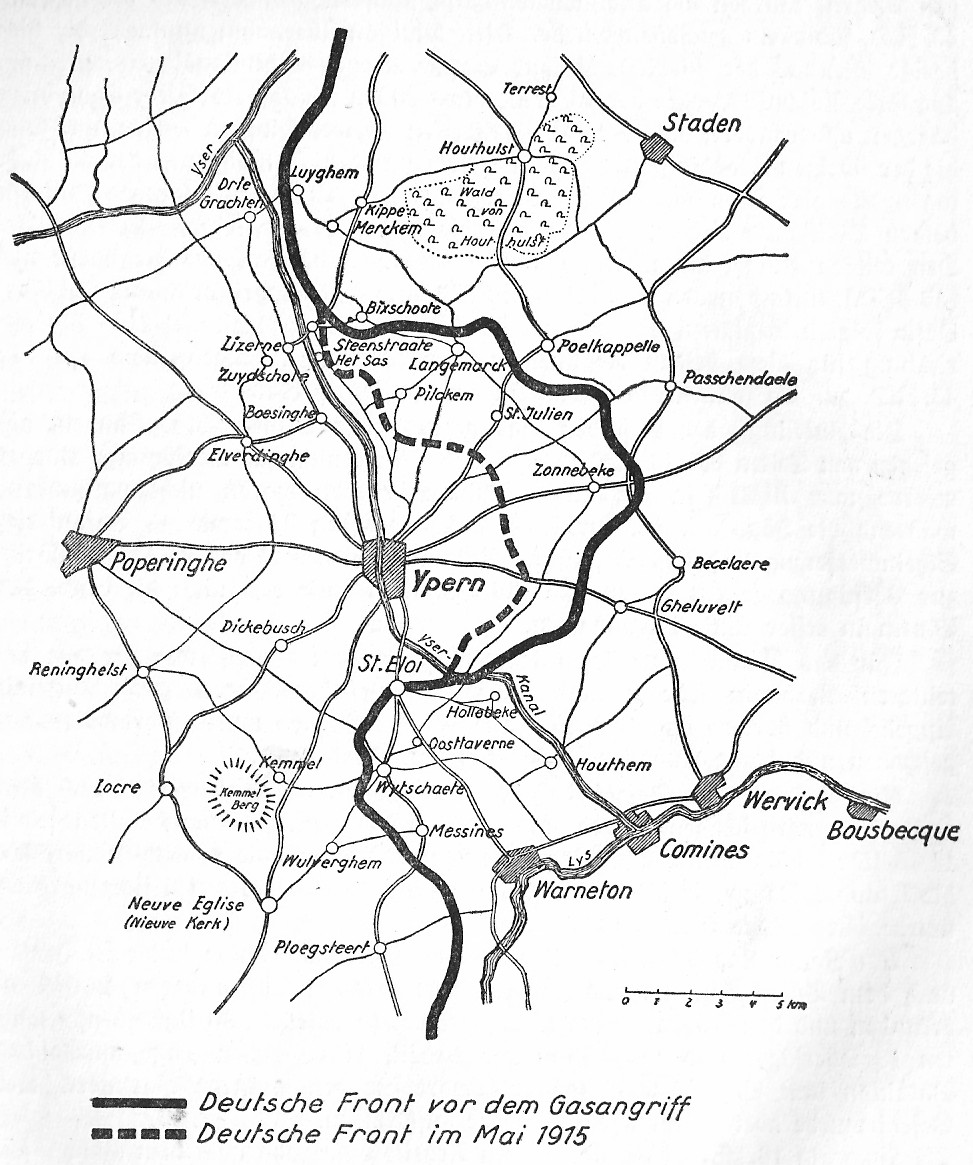
A German map of the area around Ypres, across the northern border of France, showing advances in the past few weeks. Note St. Julien near the center. The Frezenberg Ridge nearly due south of St. Julien, approximately halfway between Ypres and Zonnebeke

On May 6, the Allied troops at Gallipoli attacked a second time aimed at Krithia, but again their advance was thwartde by dug-in Ottomans not sighted by aerial reconnaissance, and the attack was called off two days

Entrenched Ottoman machine gunners. They were an unwelcome surprise to the ANZAC troops who stumbled onto them.

later. The Ottomans faced additional (marginal) success to their north-east, as the Imperial Russian forces began an advance through the Tortum Valley towards Erzurum. Although the Ottoman counter-attack was successful in some areas, the southern thrust by the Russians seems to be gaining strength.

On May 7, the British passenger liner Lusitania was torpedoed by a German submarine (identified as U-20), causing the death of nearly 1,200 civilians. 128 of those were Americans.  World opinion has rapidly turned against Germany; the captain of the sub is being condemned as a war criminal, and many Americans are now loudly clamoring for a declaration of war on Germany. Time will tell if the declared American neutrality will continue.

May 8 saw a renewed German offensive at the Frezenberg Ridge, about one mile south of St. Julien. The Allies are being pushed back, and only a small force of Canadian troops is keeping this from becoming a disastrous rout for the Allies. The Germans also see more success on the Eastern front, as a Russian attempt to hold the line at the Łupków Pass has failed. German forces have crossed the Wisłoka river in south-eastern Poland.

Earlier today, May 9, the Entente launched a massive attack in Artois – quickly dubbed the Second Battle of the same – with an attack by the British at Aubers Ridge. As happened at Krithia, insufficient reconnaissance by the Allies has resulted in a repulse of those forces, although other attacks in the area continue.

<– Part 40 – April 25, 1915  | Part 41 – May 2, 1915 |  Part 42 – May 9, 1915 –>

On the 26th of April, the French cruiser Léon Gambetta was sunk by an Austrian submarine in the Strait of Otranto, just of the “heel” of Italy. There are also reports of some type of secret meeting in London between the Entente powers, and another unsubstantiated report that Italian representatives were present.

On the Gallipoli peninsula, several battles have been fought as the Entente attempts to expand the beachhead against the Ottomans. Most of them, such as the battle of Krithia, have settled into a war of attrition, as has happened on the Western front in Europe. On said front, the offensive at Ypres – now referred to as the Second Battle of Ypres – continues to see heavy fighting as the Germans advance to St. Julian. Reports of Entente troops suffocating, coughing blood, and so on indicates that the Germans are using poison gas.

On the 28th, the British seem to have signed a treaty with the Emirate of Asir, on the eastern coast of the Arabian Peninsula, to secure assistance against the Ottoman Turks. Further north, the Entente advance at Krithia was finally halted.

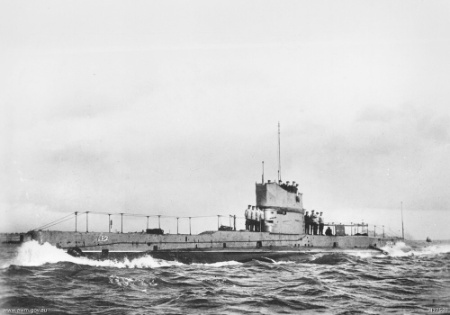
HMAS AE2. From Wikipedia.

In Europe, the German Empire continued her advance into the territory of the Russian Empire and occupied Shavli, in the area of Lithuania, on April 30. Off the Gallipoli peninsula, after forcing her way through the Dardanelles, the HMAS AE2 submarine suffered mechanical troubles, was fired upon after surfacing next to an Ottoman warship, and was scuttled by her captain. However, her mission of showing the power of submarines to disrupt Turkish communications was successful.

The following morning, on May 1, Russia secured a decisive victory against the Turks at Dilman, in northern Persia. Later that evening, the Turks suffered another setback when an attack at Eski Hissarlik failed to drive the Entente off of the Gallipoli peninsula; the British and French troops were dug in and ready for a night attack.

Earlier that afternoon, a US merchant ship, the S.S. Gulflight, was fired upon by a German submarine. Ironically, she was attacked because she was being escorted by two British warships suspicious that she had been refueling the same submarine. The sub captain reported that he saw no markings on the ship, but  broke off his attack after seeing a small US flag. Although damaged, the Gulflight did make it to port, suffering 3 casualties (including her captain, of a heart attack). The are the only US casualties by German submarine (as she is, to date, the only ship attacked).

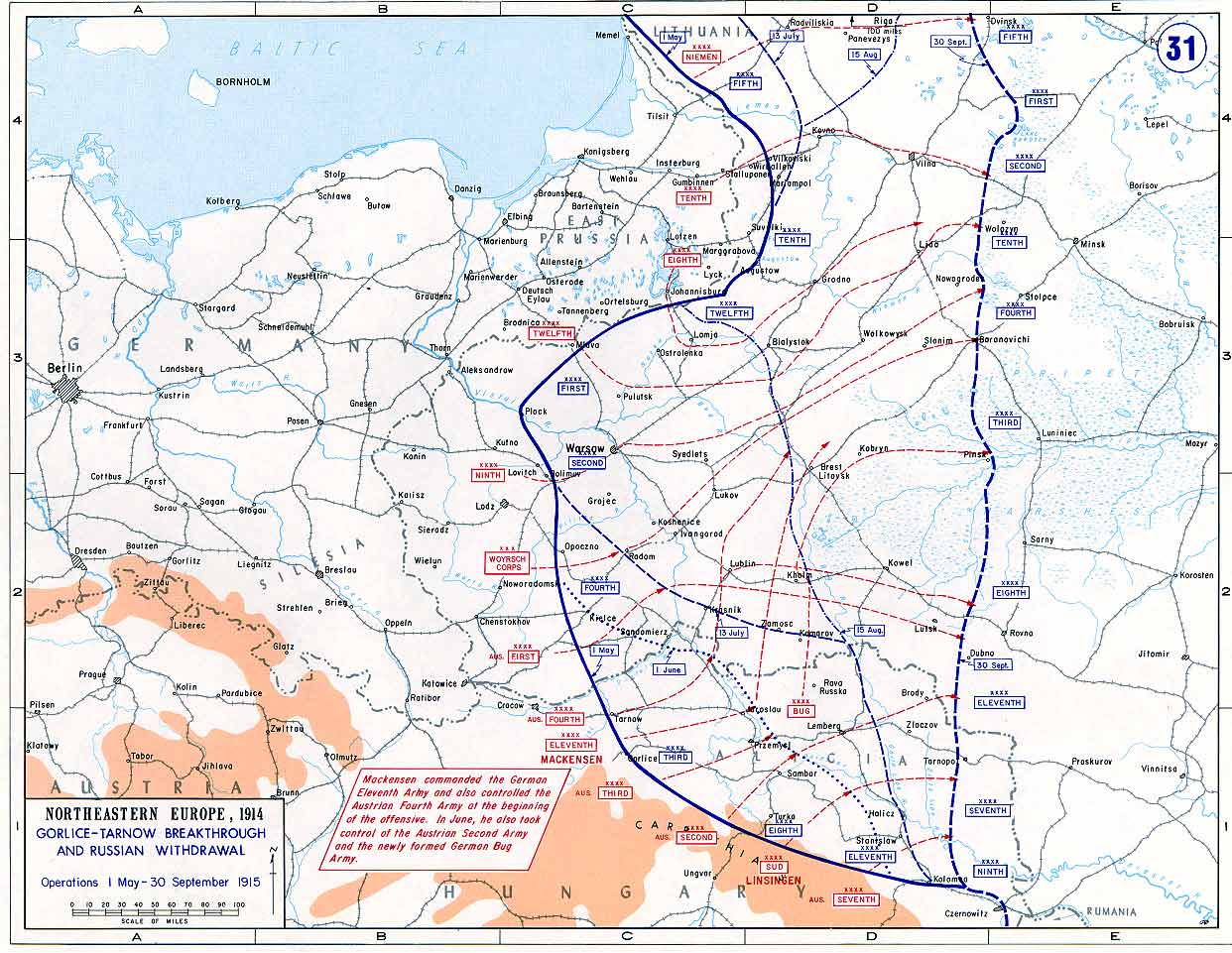
This morning, May 2, the Germans south-east of Krakow at Gorlice-Tarnów launched a minor skirmish to relieve pressure on the Austrian-Hungarians to their south, but it is reported that the Russian line is evaporating, and it seems that the Austro-German forces may follow-up their success with a general offensive.

Gorlice-Tarnow breakthrough earlier today, and “projected progress through the next few months.” From Wikipedia.